
Table of Contents
Introduction
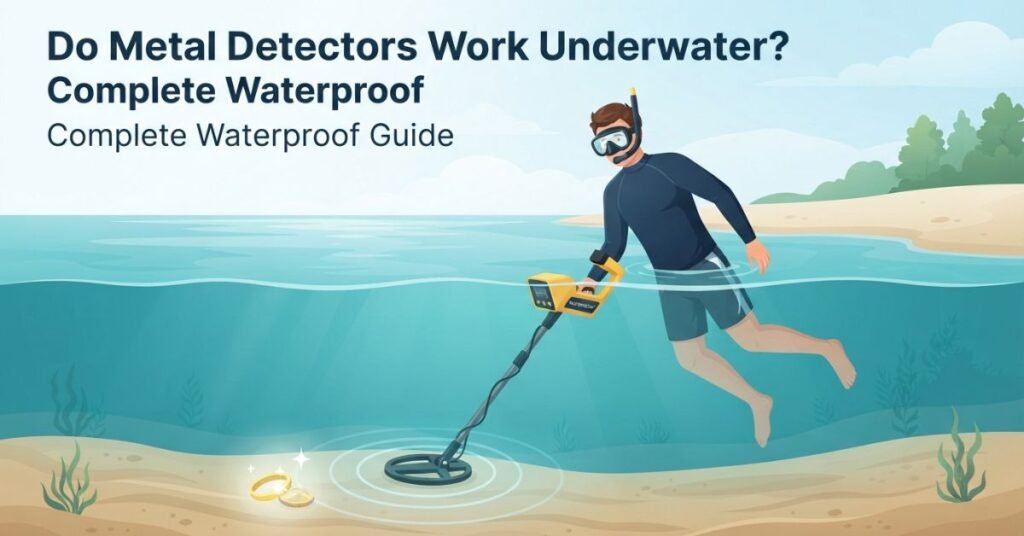
Have you ever wondered if your metal detector can keep searching after you step into the water?
If you enjoy beach trips, lake walks, or shallow-water hunting, water opens new places to explore. But not every metal detector can safely go underwater. Some models only protect the search coil, while others can handle complete submersion.
So, do metal detectors work underwater? Yes, but the detector must have the right waterproof rating. Saltwater also creates challenges that beginners may not expect.
In this guide, you’ll learn exactly what makes a metal detector suitable for underwater use. We’ll compare freshwater and saltwater detecting, explain waterproof and submersible ratings, and cover VLF, PI, and multi-frequency technology.
You’ll also learn how deep different detectors can go and how to avoid common underwater problems. By the end, you’ll know whether your current detector is water-ready or if you need a dedicated underwater model.
Are All Metal Detectors Waterproof?
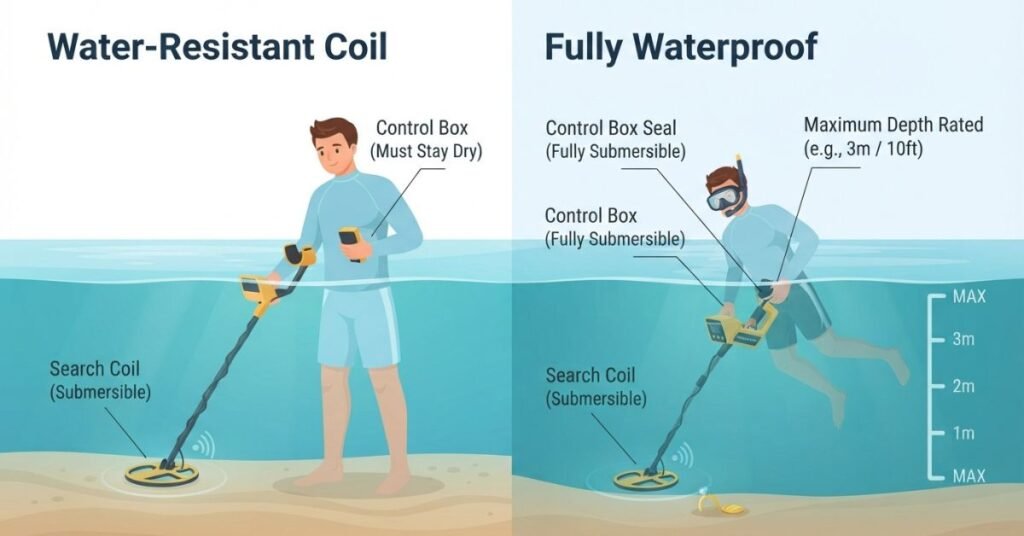
No, not all metal detectors can safely go underwater. Many detectors have waterproof search coils, but their control boxes cannot handle submersion. Always check the manufacturer’s specifications before entering water with your detector.
Water-Resistant vs Fully Waterproof
Water-resistant and waterproof describe different levels of protection. A water-resistant detector may handle splashes, rain, or brief contact with water. However, that does not mean you can submerge it.
A fully waterproof detector protects its sensitive electronics against water at a specified depth. Manufacturers usually provide a maximum submersion depth and time limit. Stay within those limits to avoid damaging the detector.
For beginners, check whether the entire detector is submersible. Don’t assume a waterproof coil makes the complete detector waterproof.
Coil Waterproof vs Control Box Waterproof
The search coil sits closest to the ground and often encounters wet sand or shallow water. That’s why many detectors use waterproof coils.
The control box contains the detector’s main electronics. Water entering this section can cause serious damage. Before detecting in water, confirm that both the coil and control box have a suitable waterproof rating.
Pro Tip: Never rely on phrases like “waterproof coil” when planning underwater hunts. Look specifically for the detector’s maximum submersion depth.
IP Ratings Explained
An IP rating shows how well equipment resists dust and water under standardized testing. The letters stand for Ingress Protection, followed by numbers that describe protection levels.
However, an IP rating doesn’t automatically mean a detector works for underwater detecting. The manufacturer may specify different conditions for immersion, depth, or duration.
Always read the detector’s official specifications before submerging it.
Takeaway: A detector needs more than a waterproof coil for underwater hunting. Check the complete detector’s submersion rating first.
Using Metal Detectors in Lakes and Rivers
Freshwater can offer excellent opportunities for underwater metal detecting. Lakes, rivers, and swimming areas often contain lost jewelry, coins, and other metal objects.
Freshwater generally creates fewer conductivity challenges than saltwater. That can make detector operation easier, especially for beginners learning how to adjust sensitivity and ground balance.
Shallow-water hunting is a practical starting point. You can search along shorelines, wade into shallow areas, or scan popular swimming spots with a properly rated detector. Always stay within the manufacturer’s depth limit.
Common freshwater finds include rings, coins, watches, and small metal jewelry. Busy swimming areas can be especially interesting because people often lose small valuables while entering or leaving the water.
Water conditions still matter. Moving water can make footing unstable, while murky water can reduce visibility. Strong currents can also make recovery difficult.
Expert Tip: Start in calm, shallow water where you can maintain stable footing. Learn your detector’s signals before moving into deeper areas.
Why Saltwater Is More Challenging
Yes, metal detectors can work in saltwater, but saltwater creates more challenges than freshwater. Its high mineral and salt content can interfere with detector signals.
Saltwater Conductivity Problem
Saltwater conducts electricity much better than freshwater. This conductivity can make a detector respond to the water itself instead of nearby metal.
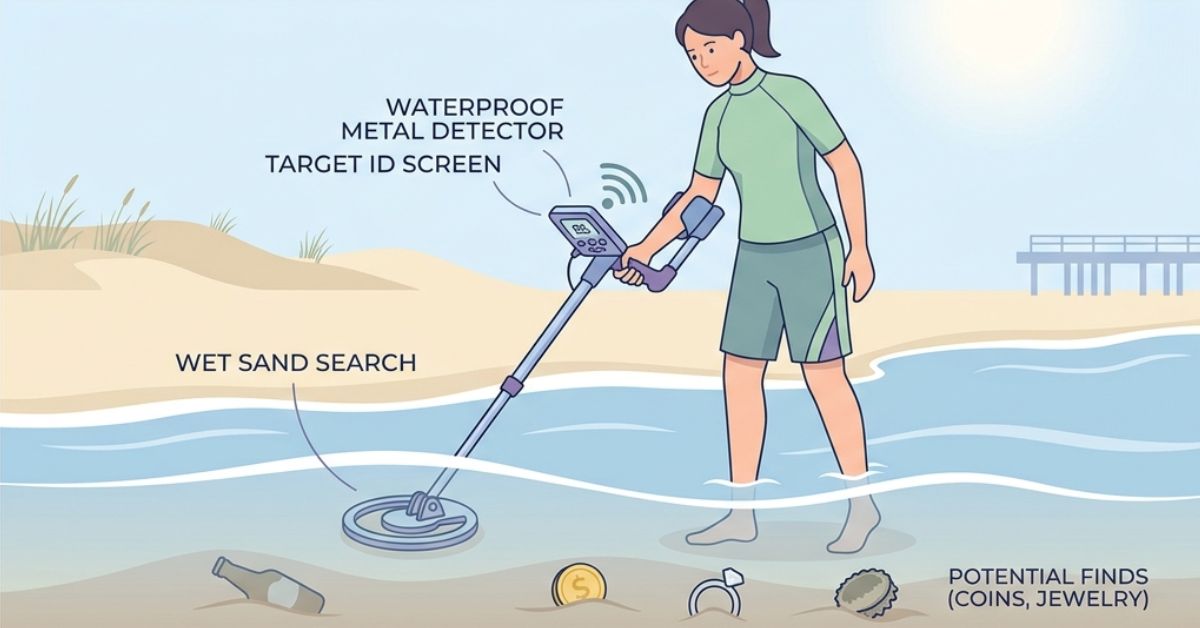
That response can create unstable signals and make targets harder to identify. Beach hunters may notice this problem most in wet sand and shallow surf.
A detector designed for saltwater can handle these conditions more effectively. However, proper settings still matter for stable operation.
False Signals & Mineralization
Saltwater can produce false signals that sound like valuable targets. This can make beginners dig repeatedly without finding anything.
Wet sand can also contain minerals that affect detector performance. High sensitivity settings may increase these unwanted responses.
Reducing sensitivity can sometimes improve stability. Proper ground balancing or a dedicated saltwater mode can also help, depending on the detector.
Why Pulse Induction Works Better at Beaches
Pulse induction (PI) detectors handle conductive saltwater better than many traditional VLF detectors. They send pulses into the ground and measure the returning response.
This design reduces some of the interference caused by saltwater. PI detectors can therefore perform well on wet beaches and in shallow saltwater.
Buyer Tip: If you mainly hunt saltwater beaches, prioritize a detector designed for saltwater conditions. Don’t choose a model based only on its waterproof depth.
What Type of Metal Detector Works Best Underwater?
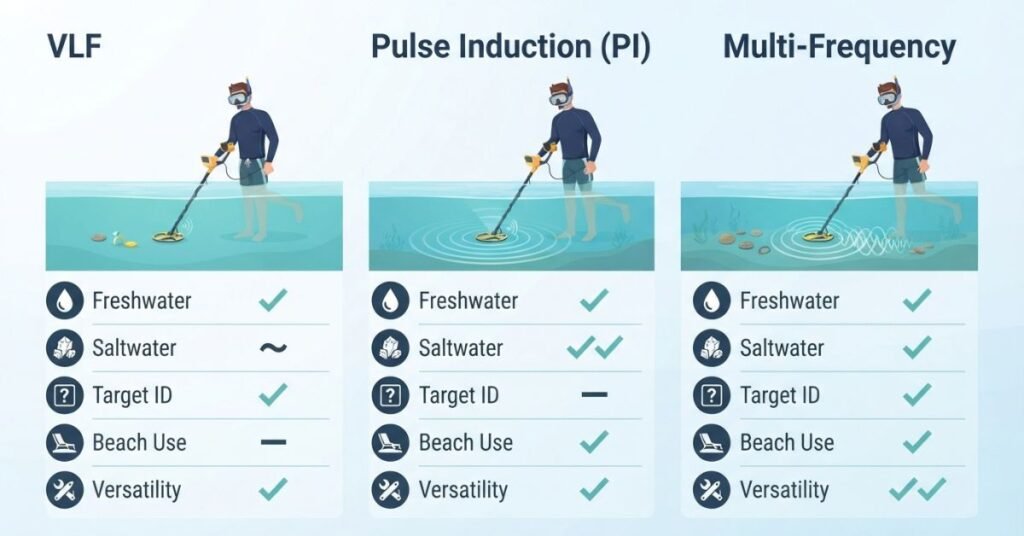
The best underwater metal detector depends on where you plan to hunt. Freshwater, saltwater, and diving conditions can require different technologies.
VLF Detectors in Water
Very Low Frequency (VLF) detectors work well for many freshwater environments. They can provide useful target identification and discrimination features.
However, saltwater can challenge many VLF detectors because of its electrical conductivity. Some advanced VLF models handle saltwater better than basic models.
For freshwater lakes and rivers, a waterproof VLF detector can be a practical choice for beginners.
Pulse Induction (PI) Detectors
Pulse induction (PI) detectors are popular for saltwater beach detecting. They handle conductive ground better and can maintain stable operation in difficult conditions.
PI technology can also provide strong detection depth, depending on the detector and target. However, PI models often provide less target identification than some VLF detectors.
They’re worth considering if saltwater hunting is your main goal.
Multi-Frequency Detectors
Multi-frequency detectors use multiple frequencies to improve performance across different conditions. Many modern models offer better versatility between freshwater and saltwater environments.
They can provide a useful balance between target identification and saltwater handling. For beginners who want one detector for different environments, multi-frequency technology may be worth considering.
📏 SECTION 5: How Deep Can You Use a Metal Detector Underwater? H2: Submersion Depth Ratings Explained 3 feet (shallow wading) 10 feet (snorkeling level) 60–200 feet (diving detectors) Explain manufacturer depth limits clearly. 🛠 SECTION 6: How to Use a Metal Detector Underwater Safely H2: 8 Tips for Underwater Metal Detecting Check waterproof rating Seal battery compartments Use waterproof headphones Rinse after saltwater use Ground balance properly Reduce sensitivity in saltwater Secure detector with strap Move slowly in water
Submersion Depth Ratings Explained
Underwater metal detectors come with different depth ratings. The correct rating depends on how deep you plan to search.
A detector rated for shallow water may handle wading but cannot safely support snorkeling. Likewise, diving detectors need much deeper submersion ratings.
3 Feet: Shallow Wading
A 3-foot rating can suit shallow-water hunting and wading. You can search near shorelines, lake edges, and shallow swimming areas.
This depth works well for beginners who don’t plan to swim with their detector. However, waves or accidental drops can still push the detector beyond its rated depth.
10 Feet: Snorkeling Level
A 10-foot rating provides more flexibility for shallow snorkeling. You can search underwater while remaining relatively close to the surface.
Still, don’t treat the rating as unlimited protection. Follow the manufacturer’s instructions for submersion and operating conditions.
60–200 Feet: Diving Detectors
Some specialized diving detectors have much deeper manufacturer-rated limits. Certain models may support depths ranging from 60 to 200 feet, depending on their design.
These detectors target divers who need equipment for deeper underwater searches. They’re built for conditions that exceed normal beach or wading use.
Manufacturer Depth Limits Matter Most
Never assume one detector’s depth rating applies to another model. Even similar-looking detectors can have very different waterproof specifications.
Always check the official manufacturer rating before submerging your detector. Follow the stated depth limit, battery-cover instructions, and headphone requirements.
8 Tips for Underwater Metal Detecting
Underwater detecting becomes much easier when you prepare your equipment properly. These simple habits can also help prevent expensive water damage.
1. Check the Waterproof Rating
Confirm that the entire detector can handle your planned depth. Don’t rely only on a waterproof search coil.
2. Seal Battery Compartments
Inspect battery doors, seals, and gaskets before entering the water. Make sure every compartment closes securely.
3. Use Waterproof Headphones
Use headphones specifically designed for underwater detecting. Regular headphones may allow water to reach sensitive connections.
4. Rinse After Saltwater Use
Salt can leave deposits on equipment and contribute to corrosion. Rinse your detector with fresh water after every saltwater hunt.
5. Ground Balance Properly
Ground balancing helps the detector handle mineralized conditions. Follow your detector’s instructions for freshwater or saltwater settings.
6. Reduce Sensitivity in Saltwater
High sensitivity can increase false signals in conductive saltwater. Lowering sensitivity may produce more stable operation.
7. Secure the Detector With a Strap
A secure strap can help prevent accidental drops. This matters even more when visibility and footing are poor.
8. Move Slowly in Water
Slow, controlled movements make targets easier to detect. They also reduce accidental bumps against rocks and underwater obstacles.
Why Your Metal Detector May Not Work Properly in Water
Even a waterproof metal detector can behave differently underwater. Water, minerals, settings, and equipment quality can all affect performance.
False Signals in Saltwater
Saltwater can create strong unwanted responses because it conducts electricity. These signals may sound similar to genuine metal targets.
Try lowering sensitivity and using the detector’s recommended saltwater settings. Move the coil steadily and avoid sudden changes in search speed.
Electrical Interference
Nearby electronics can sometimes interfere with detector operation. Power lines, boats, underwater equipment, and other electrical sources may create unstable signals.
If your detector suddenly becomes noisy, move away from potential interference. Then check whether the detector becomes stable again.
Poor Ground Balancing
Incorrect ground balance can make mineralized underwater conditions harder to handle. This problem becomes more noticeable in challenging saltwater environments.
Follow the manufacturer’s instructions for ground balancing. Some detectors also provide automatic settings designed for specific ground conditions.
Cheap “Waterproof” Models
Some inexpensive detectors may advertise water resistance without supporting full submersion. Marketing terms can create confusion for beginners.
Always check the manufacturer’s specifications before buying. Look for a clearly stated submersion depth rather than relying on vague waterproof claims.
When to Buy a Fully Submersible Detector
You may need a fully submersible metal detector if water hunting is a regular part of your hobby. Your planned hunting environment should guide your buying decision.
Beach Hunters
Choose a fully submersible model if you regularly search the surf, wet sand, or shallow ocean water. Saltwater-capable technology becomes especially important for frequent beach hunting.
Snorkelers
Snorkelers need a detector rated for their planned underwater depth. A shallow-water model may not provide enough protection for deeper snorkeling.
Check the manufacturer’s depth rating before taking the detector below the surface.
Divers
Divers need specialized equipment with a suitable deep-submersion rating. Standard waterproof detectors may not withstand the depths used during diving.
Look for a model specifically designed for underwater diving conditions.
River Treasure Hunters
River hunters often deal with changing water levels, currents, rocks, and muddy conditions. A fully submersible detector provides greater flexibility during these searches.
Choose a depth rating that comfortably covers your planned hunting areas.
Buyer Decision Guide
A fully submersible detector makes the most sense when you frequently hunt below the surface. If you only search damp sand or shallow shorelines, you may not need one.
Before buying, compare waterproof depth, saltwater performance, detection technology, controls, and recovery features.
Conclusion
So, do metal detectors work underwater? Yes, but only when the detector has a suitable waterproof rating. Freshwater usually creates fewer challenges than saltwater, while saltwater can cause more interference and false signals.
For beach hunting, pulse induction (PI) detectors often handle conductive saltwater better. Multi-frequency models can also offer a useful balance across different environments. Most importantly, check the manufacturer’s depth rating before submerging any detector.
Choose equipment based on where you plan to hunt. A shallow-water detector may suit wading, while divers need deeper-rated equipment.
Ready to try underwater detecting? Check your detector’s specifications before entering the water. Then share your underwater finds or experiences with other beginners.
Frequently Asked Questions
Yes, some metal detectors work fully underwater, but they must have a manufacturer-rated submersible design. A waterproof search coil alone doesn’t make the entire detector safe to submerge. Check the detector’s maximum depth rating before entering the water. Freshwater hunting is usually easier than saltwater detecting because saltwater creates stronger conductive interference.
You can use your regular metal detector in water only if the manufacturer specifically rates the entire detector for submersion. Some models have waterproof coils but non-waterproof control boxes. These detectors may handle wet grass, rain, or shallow splashes but cannot safely go underwater. Always check the official specifications before using your detector near or in water.
Saltwater conducts electricity and can interfere with a metal detector’s normal operation. This can create false signals that sound like genuine metal targets. Wet beach sand can cause similar problems because it contains conductive saltwater. Lowering sensitivity and using the detector’s recommended saltwater settings can improve stability.
Yes, metal detectors work very well at beaches when you choose equipment suited to the conditions. Dry sand is generally easier to detect than wet sand and saltwater. Saltwater beaches can create more interference, especially for basic VLF detectors. PI and capable multi-frequency detectors often provide better performance in challenging saltwater environments.
The best underwater detector depends on where and how deep you plan to hunt. VLF detectors can work well in freshwater, while PI detectors are often better suited to conductive saltwater. Multi-frequency detectors can provide a useful balance for different environments. Always compare waterproof depth, saltwater performance, target identification, and controls before buying.
Underwater detector depth varies widely by model. Some detectors are designed for shallow wading, while specialized diving detectors support much deeper submersion. You may see ratings around 3 feet, 10 feet, or even 60–200 feet for specialized equipment. Never assume a detector can reach a specific depth. Follow the manufacturer’s stated maximum depth.
Many metal detector coils are waterproof, but that doesn’t mean the complete detector is waterproof. The control box contains sensitive electronics that may not tolerate submersion. Always check whether the manufacturer rates the entire detector for underwater use. If only the coil is waterproof, keep the control box above the water.
Yes, if your detector is rated for the depth and conditions involved. Lakes and rivers can be excellent places to search for lost coins, rings, and jewelry. Start in shallow, calm water if you’re a beginner. Watch your footing and currents, and never exceed the detector’s rated submersion depth.
VLF detectors can work well underwater, especially in freshwater. They often provide useful target identification and discrimination features. However, saltwater can cause more interference because of its high conductivity. If you mainly hunt saltwater beaches, consider a detector designed specifically for those conditions.
PI detectors can be a strong choice for saltwater detecting because they handle conductive ground more effectively. They can maintain stable operation where some VLF detectors struggle. However, PI models may provide less target identification than certain VLF or multi-frequency detectors. Your preferred hunting location and target types should guide your choice.
Saltwater can damage equipment if water enters areas that aren’t properly protected. Salt deposits can also contribute to corrosion over time. Use only equipment rated for your planned conditions and depth. After saltwater hunting, rinse the detector according to the manufacturer’s care instructions and dry it thoroughly.
A fully submersible detector makes sense if you regularly hunt underwater, snorkel, dive, or search the surf. It can also benefit river treasure hunters who expect deeper water. If you only detect dry sand or occasionally search damp ground, you may not need a fully submersible model. Choose based on your actual hunting environment and future plans.
Check the manufacturer’s waterproof rating and maximum depth first. Then inspect battery compartments, seals, connectors, and waterproof headphones. Make sure everything closes securely before entering the water. If you’re detecting in saltwater, use suitable settings and rinse the equipment with fresh water afterward.
Yes, underwater metal detectors can detect gold objects such as rings and jewelry. Detection depends on the object’s size, shape, purity, depth, and the detector’s technology. Saltwater conditions can make detection more challenging. For underwater gold hunting, choose a detector rated for your environment and planned depth.

Ethan Callaway is a passionate metal detecting enthusiast based in Savannah, Georgia, USA. Currently pursuing a B.S. in Archaeology & Historical Preservation at the University of Georgia, he combines his love for treasure hunting with research-backed insights on metal detecting techniques, safety practices, and site guidance.
Through MetalDetectingUSA.com, Ethan shares practical tips, honest product reviews, and beginner-friendly advice to help both new and experienced detectorists explore metal detecting across the United States with more confidence and understanding.