

Table of Contents
Introduction
What happens when your favorite detecting spot is buried under a blanket of snow?
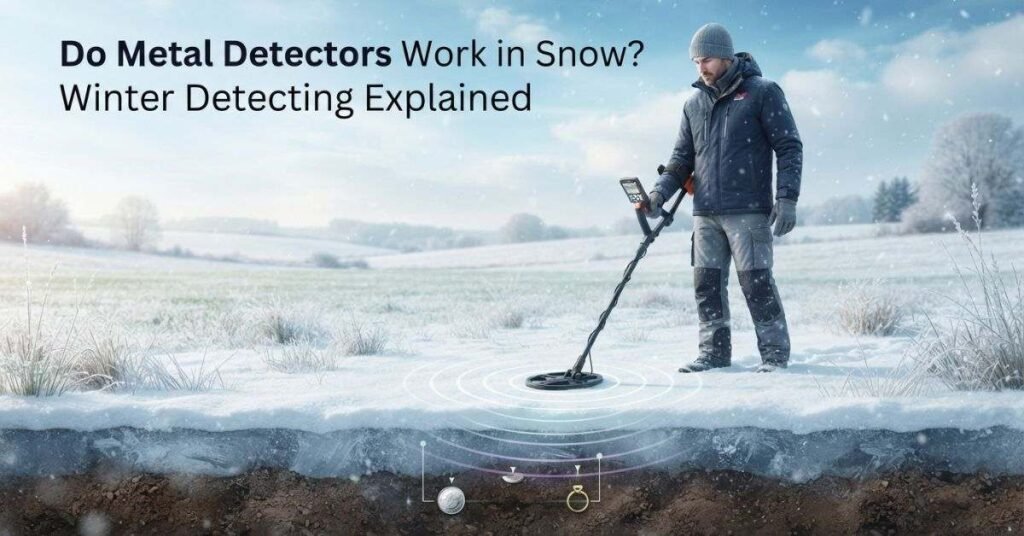
If you’re wondering, do metal detectors work in snow, the answer is yes. Snow itself does not block the signals your detector uses to find metal targets. However, winter conditions can create a few new challenges.
For beginners in the USA, winter detecting can seem risky or ineffective. Frozen soil, wet snow, cold temperatures, and weak batteries can all change your detecting experience. Knowing what to expect helps you avoid frustration and protect your equipment.
This guide explains how metal detectors perform in snow and freezing conditions. You’ll learn what affects detection depth, accuracy, battery life, and overall performance.
We’ll also cover the best winter conditions and practical snow detecting tips. By the end, you’ll know when winter detecting is worth the effort and how to do it safely.
Does Snow Affect Metal Detector Signals?
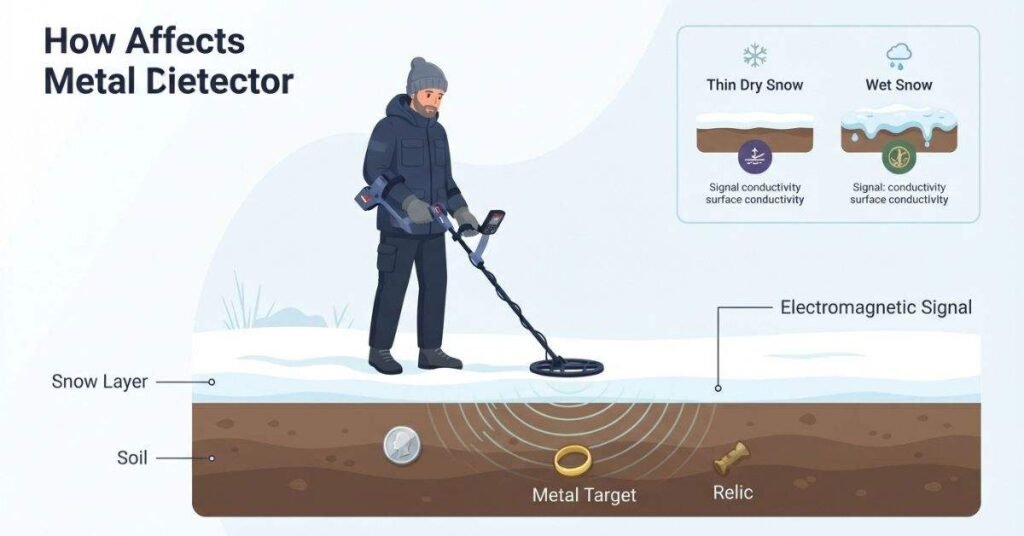
Snow itself does not interfere with a metal detector’s electromagnetic signal. The detector can still transmit and receive signals through a snow layer. The bigger concern is what sits underneath that snow.
Snow vs Soil – What’s the Difference?
Snow and soil affect detecting in very different ways. Snow forms a temporary layer above the ground, while soil directly surrounds buried metal targets. Soil mineralization, moisture, and composition can influence detector performance.
A normal snow layer usually adds little interference. Your detector still sends its signal toward the ground and receives responses from metal targets below.
The challenge starts when winter conditions change the soil itself. Frozen ground can become harder to penetrate and may behave differently from unfrozen, moist soil.
Dry Snow vs Wet Snow
Dry, fluffy snow generally has little effect on metal detection. It contains plenty of air and usually has low electrical conductivity.
Wet snow contains more liquid water, which increases its electrical conductivity. This can make conditions more similar to wet ground, especially when melting snow reaches the soil.
Most detectors will still operate normally through wet snow. However, highly mineralized or changing ground conditions can sometimes produce unstable signals.
For beginners, the key point is simple: wet snow does not automatically block detection. It can change the ground response, but the effect depends on the entire detecting environment.
Why Snow Itself Doesn’t Block Signals
Metal detectors use electromagnetic fields to locate conductive metal objects. A normal snow layer does not act like a barrier that stops those fields.
The detector’s coil can therefore operate above snow and still detect suitable targets beneath it. Detection performance depends more on target size, depth, soil conditions, coil position, and detector settings.
So, don’t assume a snowy field is impossible to detect. If the snow is thin and the ground remains workable, winter detecting can still be productive.
Why Frozen Ground Is the Real Challenge
For most winter detecting, frozen ground causes more problems than snow itself. A detector may identify a target normally, but recovering that target can become difficult.
When soil freezes, digging becomes harder and sometimes impossible with basic tools. Thick ice can also separate the coil from the ground, reducing the effective detection distance.
Hard Soil Makes Digging Difficult
Frozen soil can become extremely hard, especially after prolonged freezing temperatures. A normal hand digger may struggle to break through compacted ground.
This creates an important winter detecting problem. Finding a target is only half the job. You also need a practical way to recover it without damaging your equipment or the ground.
If the soil is deeply frozen, consider moving to areas with thinner snow and less-frozen ground. Parks, fields, and exposed soil may offer better conditions.
Ice Layers Can Reduce Accuracy
A layer of ice can increase the distance between your search coil and the actual ground surface. Even a small increase in coil-to-target distance can reduce detection performance on deeper or smaller targets.
Keep your coil as close to the surface as conditions safely allow. Avoid scraping the coil against hard ice or frozen debris.
Signal Distortion in Frozen Mineralized Soil
Frozen mineralized soil can produce a different ground response than unfrozen soil. In some locations, this may make the detector less stable.
You might notice inconsistent target IDs, unexpected tones, or increased chatter. Lowering sensitivity slightly can sometimes improve stability.
Pro Tip: If your detector becomes noisy in frozen ground, reduce sensitivity gradually instead of immediately changing several settings.
How Cold Temperatures Affect Metal Detectors
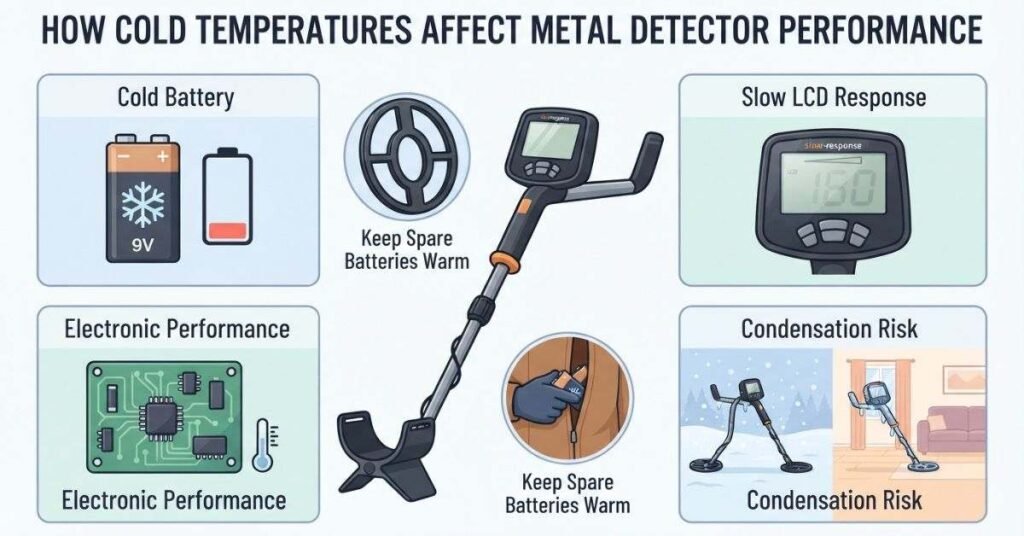
Cold weather can affect several parts of a metal detector, especially its battery and display. The detector may still work, but winter conditions can change how it behaves.
Battery performance is one of the biggest concerns. Cold temperatures can temporarily reduce battery capacity and cause batteries to run down faster. Keeping spare batteries warm in an inside pocket can help.
Some LCD screens may also respond more slowly in very cold conditions. Buttons and controls can feel less responsive too. These effects usually improve after the equipment warms up gradually.
Cold temperatures can also make electronic components behave differently. If your detector becomes unstable, check your settings and battery condition before assuming the detector has a fault.
Condensation creates another winter risk. Moving a cold detector into a warm building can cause moisture to form inside or around electronic components. Let the detector warm up gradually before storing it.
Does Wet Snow Affect Metal Detection?
Wet snow can behave differently from dry snow because it contains more liquid water. Water increases electrical conductivity, which can change the ground response around your detector.
This does not mean wet snow blocks metal detection. Your detector can still transmit and receive signals through the snow. However, melting snow can make the surface wetter and change local soil conditions.
These changes may become more noticeable in mineralized ground. You could experience unstable readings, target ID changes, or occasional false signals. Lowering sensitivity slightly may help stabilize the detector.
Wet snow is different from saltwater conditions. Saltwater contains dissolved salts that create much higher conductivity than ordinary freshwater snowmelt. Therefore, you should not treat wet snow like a saltwater beach.
For beginners, focus on the overall ground conditions rather than snow alone. If your detector becomes unstable, adjust one setting at a time and test the response.
Expert Tip: Sweep the same area slowly in different directions. A consistent response deserves more attention than a single unstable signal.
When Metal Detecting in Snow Works Best
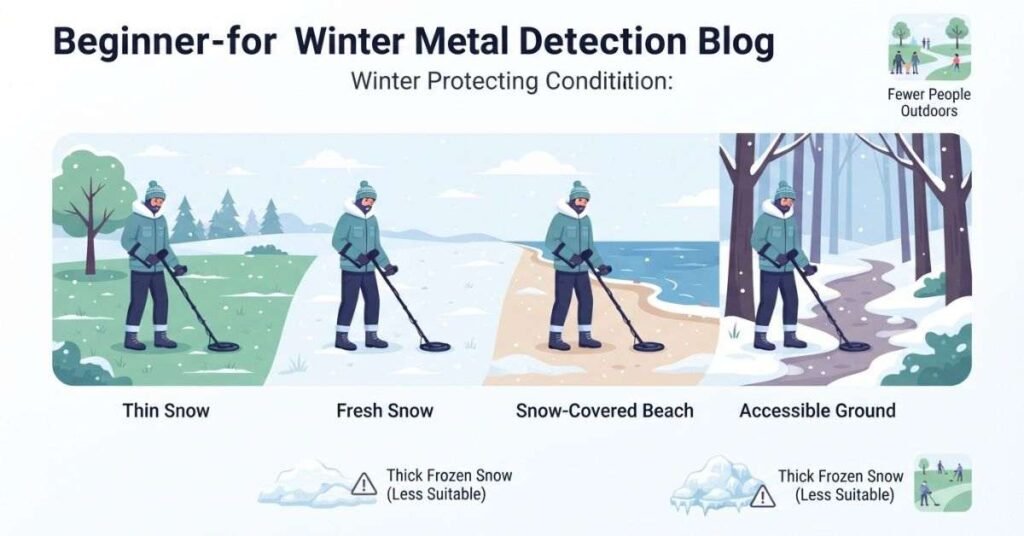
Winter detecting can work surprisingly well when snow conditions remain manageable. The best opportunities usually come when the snow layer is thin and the ground remains accessible.
Recently fallen snow can provide a useful advantage. Fresh snow may cover the ground without creating thick, hard ice layers. This lets you keep the coil relatively close to the surface.
Parks and open fields can also offer good winter opportunities. Look for areas where snow remains shallow and local rules allow metal detecting. Always check property regulations before detecting.
Snow-covered beaches can also be interesting. However, beach conditions vary greatly, especially where saltwater and wet sand are involved. Use detector settings appropriate for the specific environment.
Winter also means fewer people spend time outdoors. That can leave popular detecting areas quieter than during warmer months. You may find less competition for recently exposed or previously missed targets.
Takeaways
The best winter conditions usually include:
- Thin, fresh snow
- Minimal ice buildup
- Accessible ground
- Stable detector operation
- Legal detecting locations
- Comfortable weather for longer searches
10 Tips for Successful Winter Metal Detecting
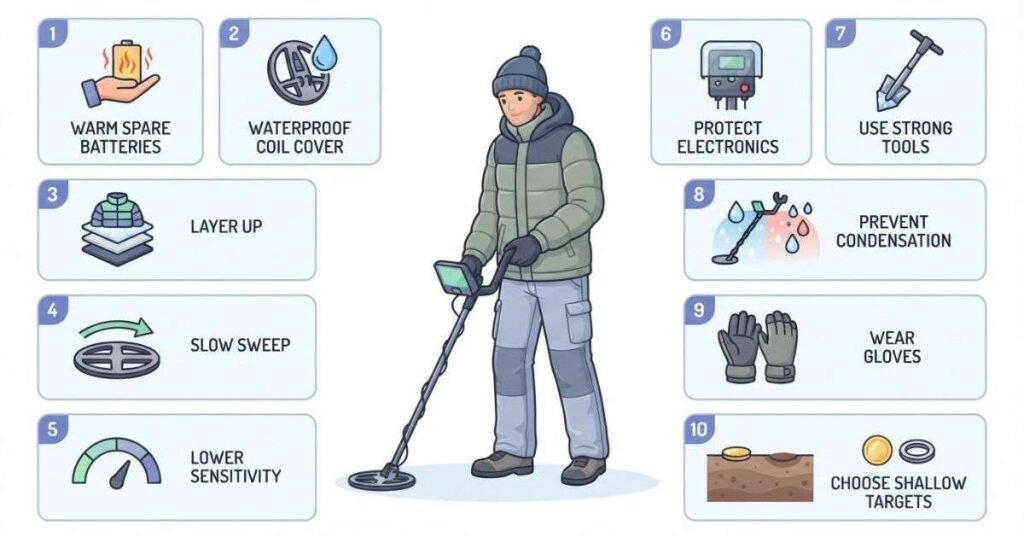
Winter detecting can be rewarding, but snow and freezing temperatures require a few extra precautions. These simple tips can improve comfort and detector stability.
- Keep spare batteries warm. Store backup batteries in an inside pocket. Cold temperatures can reduce battery performance.
- Use a waterproof coil cover. A coil cover helps protect against wet snow, slush, and muddy conditions.
- Dress in layers. Layered clothing lets you adjust easily as your body temperature changes.
- Slow your sweep speed. Snow and uneven ground can make coil control harder. A slower sweep helps maintain consistent coverage.
- Reduce sensitivity slightly. If frozen or wet ground causes instability, lower sensitivity gradually.
- Protect the control box from moisture. Keep snow and melting moisture away from buttons, ports, and openings.
- Use suitable digging tools. Frozen soil may require a stronger digging tool than normal loose ground.
- Watch for condensation indoors. Let cold equipment warm gradually before storing it in a warm room.
- Wear insulated gloves. Choose gloves that keep your hands warm while allowing you to operate detector controls.
- Choose shallow targets. Shallow targets are easier to recover when the ground has frozen.
Why Your Metal Detector May Struggle in Winter
A metal detector can work in winter, but several conditions may affect its performance. Most problems come from the environment rather than snow itself.
Frozen mineralized soil can produce unstable ground responses. You may notice changing target IDs, extra chatter, or inconsistent tones. Reducing sensitivity slightly can sometimes improve stability.
Battery failure can happen when batteries become very cold. A weak battery may cause shorter operating time or unusual detector behavior. Always check the battery before troubleshooting other settings.
Ice interference can also become a problem. Thick ice increases the distance between the coil and the actual ground surface. That extra distance can make small or deep targets harder to detect.
Wet electronics create another concern. Snow and melting ice can reach control boxes, connectors, and other vulnerable areas. Moisture can also create condensation when cold equipment enters a warm building.
Can Metal Detectors Detect Through Snow?
Yes, metal detectors can detect through snow. A normal snow layer causes little signal loss compared with the effects of the ground underneath.
The detector coil sends an electromagnetic field through the snow toward the ground. The snow does not normally block that field. Target detection still depends mainly on the metal object’s size, depth, orientation, and surrounding soil.
The thickness and condition of the snow can still matter. Deep snow may force you to hold the coil farther from the ground. That increased coil-to-target distance can reduce the detector’s ability to find small or deeper objects.
Wet snow can also change surface conductivity. This may slightly alter the detector’s ground response, particularly in mineralized areas. However, wet snow does not automatically prevent successful detecting.
For the best results, keep the coil as close to the surface as practical. Avoid dragging it through hard ice or exposing the detector to unnecessary moisture.
Expert Tip: If deep snow prevents proper coil control, wait for conditions that let you maintain a consistent coil height.
Conclusion
Snow does not stop a metal detector from finding targets beneath the surface. The bigger challenges come from frozen ground, cold batteries, ice, and moisture.
So, do metal detectors work in snow? Yes, they can work well when conditions are manageable. Keep your coil close to the ground and adjust sensitivity when needed. Protect your detector from moisture and keep spare batteries warm.
Winter can also create excellent detecting opportunities. Popular parks and fields often see fewer detectorists during colder months. Thin snow and recently fallen snow can make some locations easier to explore.
If you’re a beginner, start with shallow targets and accessible ground. Share your winter detecting experience in the comments, or explore more metal detecting guides for practical tips.
Frequently Asked Questions
Yes, metal detectors can work in deep snow. However, deep snow increases the distance between the coil and ground. Small or deeper targets may become harder to detect. Deep snow can also make coil control difficult. For the best results, detect where snow is shallow enough to keep the coil close to the surface.
Frozen ground does not completely block a metal detector’s signal. However, frozen or highly mineralized soil can change the ground response and create unstable signals. The bigger problem is target recovery because frozen soil becomes difficult to dig. Lowering sensitivity slightly can sometimes improve detector stability.
Cold weather does not automatically damage a metal detector. However, extreme cold can affect batteries, LCD displays, and electronic performance. Moisture creates another risk when a cold detector enters a warm building. Let your detector warm gradually before storing it indoors to reduce condensation risks.
Winter can be a good time for metal detecting when snow remains thin and the ground is accessible. Fewer people may detect during colder months, which can make popular locations quieter. Parks, fields, and some snow-covered beaches can offer opportunities. Always check local detecting rules before searching.
Not necessarily, but melting snow can improve detecting conditions. Less snow lets you keep the coil closer to the ground. Thawed soil also makes target recovery much easier than frozen ground. However, wet soil can change detector responses and sometimes increase instability. Test your settings after conditions change.
Wet snow can affect ground conditions because it contains more liquid water. This increases conductivity around the surface and may change the detector’s response. Mineralized areas can become more challenging, sometimes causing unstable readings. Wet snow does not block detection, though. Adjust sensitivity gradually if your detector becomes noisy.
Yes, you can metal detect on some snowy beaches. However, beach conditions require extra attention, especially around wet sand and saltwater. Saltwater has much higher conductivity than ordinary snowmelt. Use settings suitable for the beach environment and protect your detector from moisture. Always confirm that detecting is permitted before searching.
Keep the coil close to the surface and sweep at a controlled speed. Carry warm spare batteries and protect the control box from moisture. If frozen or wet ground causes instability, reduce sensitivity slightly. Choose shallow, accessible targets when the ground is difficult to dig. These steps can make winter detecting easier for beginners.

Ethan Callaway is a passionate metal detecting enthusiast based in Savannah, Georgia, USA. Currently pursuing a B.S. in Archaeology & Historical Preservation at the University of Georgia, he combines his love for treasure hunting with research-backed insights on metal detecting techniques, safety practices, and site guidance.
Through MetalDetectingUSA.com, Ethan shares practical tips, honest product reviews, and beginner-friendly advice to help both new and experienced detectorists explore metal detecting across the United States with more confidence and understanding.