
Table of Contents
Introduction
Ever wondered what treasures might be hiding just beneath your feet?
Many people across the United States are discovering metal detecting as a fun outdoor hobby. It combines adventure, history, and the excitement of uncovering lost objects. From old coins in parks to jewelry on beaches, beginners often start with simple tools and curiosity.
If you’re wondering how to start metal detecting, the process is easier than most people think. With the right basic equipment and a few smart tips, anyone can begin exploring this hobby. This beginner-friendly guide explains everything you need to know before your first hunt. You’ll learn what you need to start metal detecting, where beginners usually search, and the best way to build skills quickly.
By the end of this guide, you’ll understand how to start metal detecting confidently and avoid common beginner mistakes. Whether you plan to search for parks, beaches, or private land, this guide will help you get started the right way.
What Is Metal Detecting and Why Is It So Popular in the USA?
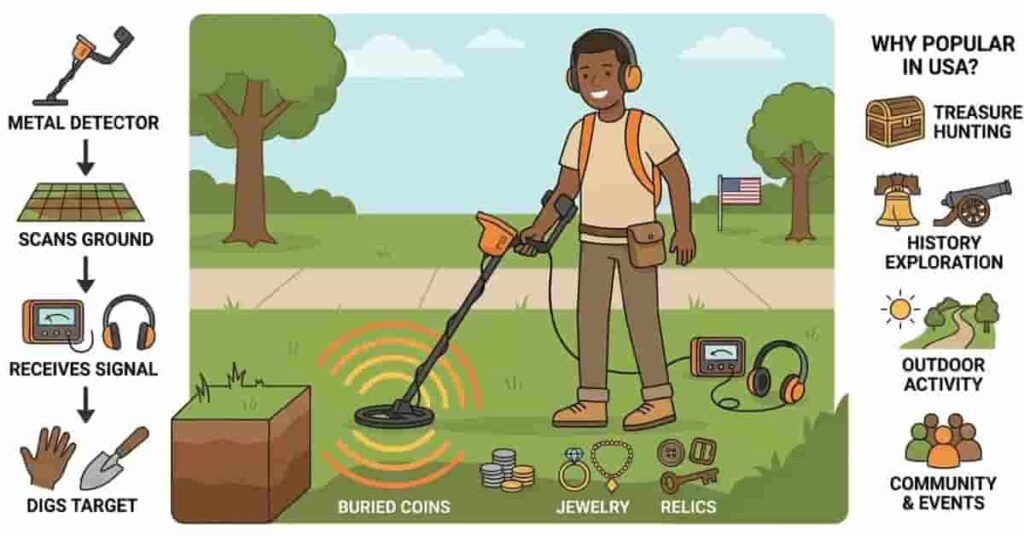
Metal detecting is a hobby where people use a metal detector to find buried metal objects. Many beginners start because it feels like real-life treasure hunting. When the detector beeps, it indicates the presence of metal underground. That moment of discovery makes the hobby exciting and addictive.
To begin with, learning to use a metal detector means understanding how it works. The device emits signals into the ground and, when it detects metal, emits a sound. As users gain experience, they recognize different signals and learn to dig up only the most promising targets.
Furthermore, in the United States, metal detecting has become a popular outdoor activity. Many people are drawn to it because it brings together history, exploration, and fresh air. Parks, beaches, and old properties can hide forgotten items from another time, and enthusiasts often join local metal detecting clubs to exchange tips and discoveries.
Beginners like metal detecting because of its gentle learning curve. A basic detector and simple digging tools are enough to start. Over time, hobbyists improve and explore new locations. On top of this, variety plays a big role in the hobby’s appeal. The range of discoveries is vast—some finds are everyday objects, while others become memorable keepsakes.
Common finds include:
- Old coins from past decades
- Lost rings and jewelry
- Historic relics like buttons or buckles
- Small metal tools or artifacts
Ultimately, each signal in the ground could reveal a story from the past. This constant mix of curiosity and surprise is what keeps many people returning for more hunts.
Takeaways
- Metal detecting is a beginner-friendly hobby for treasure hunting.
- The hobby is popular in the U.S. due to its history and outdoor exploration.
- Many beginners start with simple equipment and basic locations.
- Finds can range from coins to jewelry and historical relics.
Why Start Metal Detecting? (Is It Worth It?)
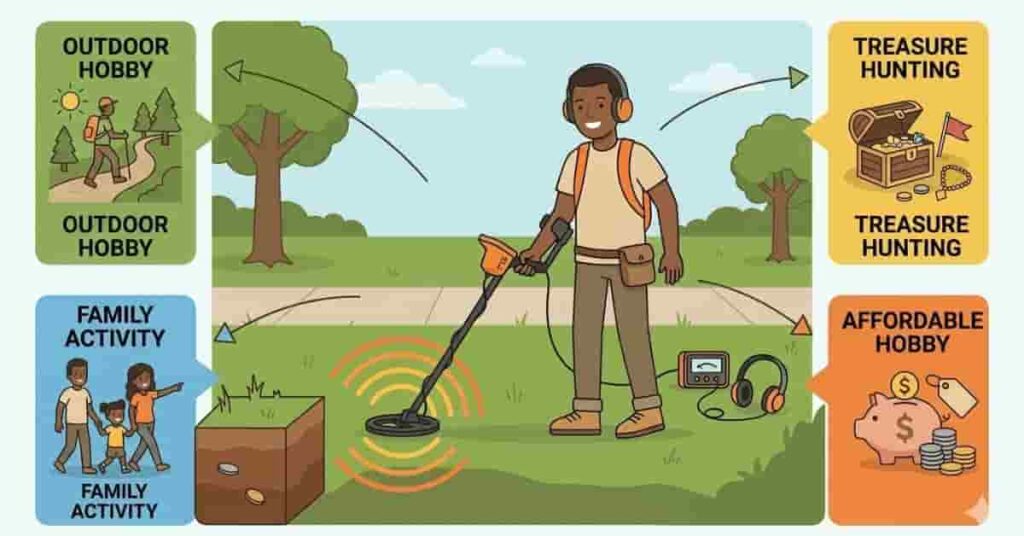
Many beginners ask a simple question: Why should I start this hobby? The answer often surprises them. Metal detecting mixes outdoor adventure, history, and discovery in one activity.
Unlike many hobbies, metal detecting encourages time outside. Searching for signals, you walk through parks, beaches, and open fields. The fresh air combined with light exercise makes the experience both relaxing and rewarding.
The excitement of treasure hunting also plays a big role. Each signal from the detector could lead to something interesting under the soil. Sometimes it’s just a coin or a bottle cap. Other times, it could be an old ring or a historic relic.
This surprise keeps beginners engaged. Even small finds feel exciting because you never know what each signal will reveal.
Another reason people enjoy starting metal detecting is that it works well for families. Parents often bring children along during hunts. Kids enjoy digging for targets and learning about objects from the past. It becomes both a fun activity and a learning experience.
Compared to many hobbies, the starting cost is low. You don’t need expensive gear. Many start with a basic detector and a few simple tools.
Basic beginner setup usually includes:
- Entry-level metal detector
- Small digging tool or trowel
- Finds a pouch for coins or relics
- Headphones for clearer signals. As skills improve, hobbyists may upgrade gear, but starting simply works best for beginners.s.
Takeaways
- Metal detecting offers relaxation, excitement, and the fun of discovering hidden treasures outdoors.
- Beginners enjoy the surprise of finding hidden objects.
- Families often treat it as a shared weekend hobby.
- Entry costs are lower than those of many outdoor hobbies.
Pro Tip
Start with easy locations like parks or beaches. These areas often produce signals quickly and keep beginners motivated.
What Do You Need to Start Metal Detecting?
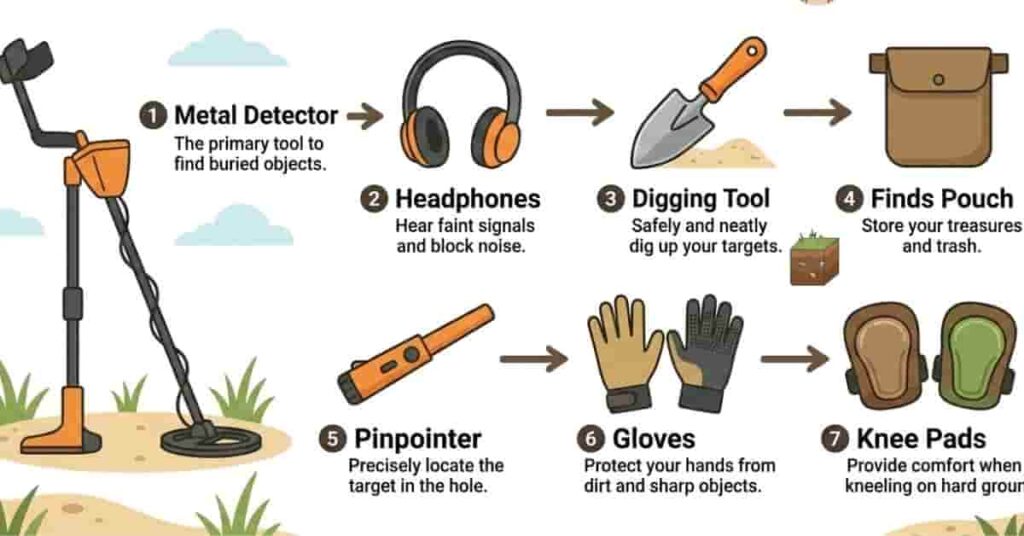
Many beginners ask the same question: What do I need to start metal detecting? The good news is that you don’t need much gear. A few basic tools are enough to get started on your first hunt.
When learning to start metal detecting, focus on simple, reliable equipment. Beginners often succeed with entry-level tools and basic accessories. Expensive gear does not guarantee better finds.
The goal is to detect signals, recover targets, and store your finds safely. Most starter setups stay lightweight and easy to carry. This helps beginners focus on learning detector signals and digging clean plugs.
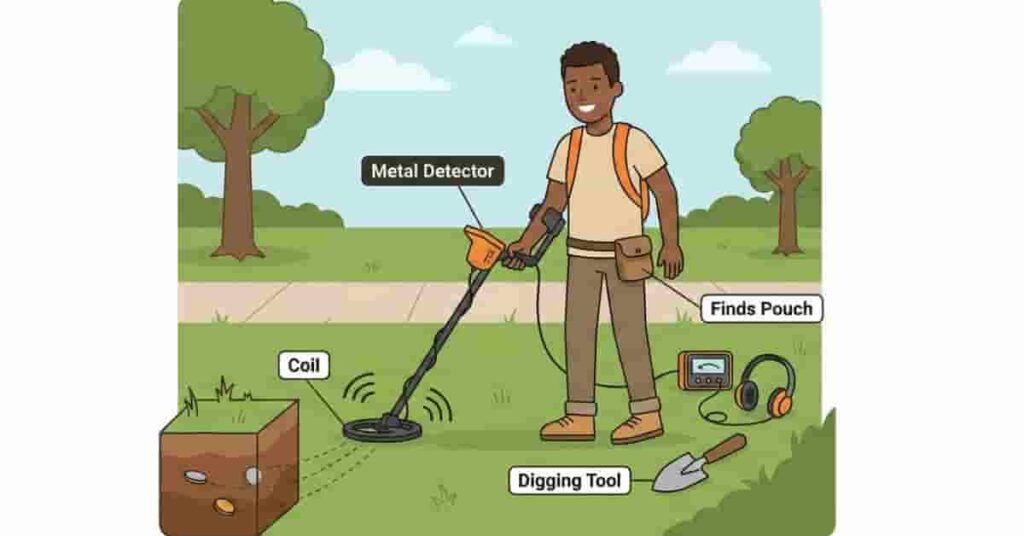
A basic metal detecting kit usually includes:
- Metal detector
- Headphones
- Digging tool
- Finds pouch
The essential steps are: first, use the detector to locate a signal. Then, use your digging tool to carefully recover the target. Finally, place the found item in your pouch for safe storage.
As you gain experience, you may add extra gear. Optional accessories can make hunts easier and more comfortable. However, beginners should start simple and upgrade slowly.
Takeaways
- Start metal detecting with just a few essential tools.
- A simple gear lets you learn detector signals effectively.
- Add accessories later for improved comfort on longer hunts.
- Now that you know the basics, gather your gear and start your first metal detecting adventure today!
Essential Equipment for Beginners
The most important item in metal detecting is the detector itself. Beginners usually choose an entry-level model; these offer simple controls and stable performance. With a less complex detector, users can learn signals without feeling overwhelmed by numerous settings. In addition to the detector, headphones are also helpful during hunts. They allow you to hear faint signals clearly, especially in windy areas or busy parks. Many detectors support wired or wireless headphones.
As you locate signals, a digging tool becomes necessary for recovering targets. Small hand trowels or digging knives work well for parks and yards. Always dig carefully and replace soil neatly to protect the location.
A finds pouch keeps recovered items organized during the hunt. Most pouches include two sections. One side stores valuable items such as coins or jewelry. The other side holds trash items like bottle caps.
Pro Tip
Practice digging neat plugs in your yard before visiting public areas. By doing so, you protect grass and help keep detecting locations open to hobbyists.
Optional Gear That Makes It Easier
Beyond basic gear, optional accessories can make metal detecting more comfortable and efficient. While beginners do not need them immediately, many hobbyists add these tools after a few hunts.
A pinpointer is one of the most popular upgrades. This small handheld device lets you locate the exact position of metal inside a hole, saving time and reducing unnecessary digging.
Gloves protect your hands while digging in soil, sand, or rocky areas. They also come in handy when recovering sharp or rusty metal objects. Knee pads are useful during long hunts. Metal detecting often requires kneeling while digging for targets. Pads reduce strain and make extended hunts more comfortable.
Optional gear improves the overall experience, but it should not replace learning basic skills first. Understanding detector signals and proper digging techniques always matters more than extra equipment.
Pro Tip
Many beginners tell us the pinpointer is their first purchase. It can really speed up finding your targets and make each hunt feel even more rewarding!
Best Way to Start Metal Detecting as a Beginner
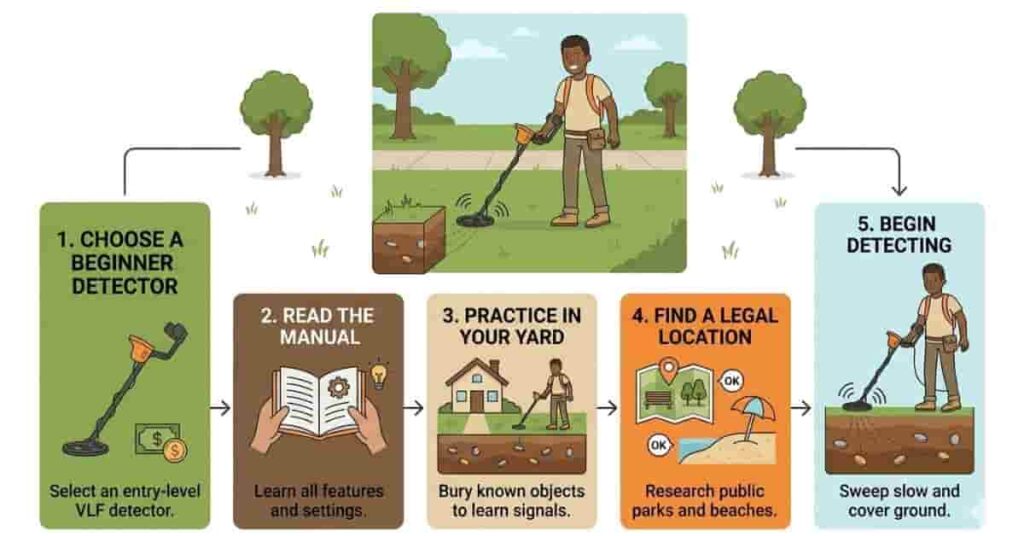
The best way to start metal detecting is to keep it simple. Avoid complex settings and expensive gear, which can cause confusion.
Instead, spend time learning the basics first. Use a simple detector and find a quiet practice area; you’ll understand signals quickly this way. This approach builds confidence, making it easier to search larger locations later.
When learning how to start metal detecting, try your own yard. Bury a few coins at different depths, then scan them. It’s an excellent way to recognize the sound and signal pattern of real targets.
Spend time reading your detector’s manual as well. Many beginners skip this step, but it can save hours of trial and error. The manual explains tones, sensitivity settings, and basic controls.
It also helps to avoid advanced modes at first. Complex discrimination settings or manual ground balancing can confuse new users, so use only the simple preset modes until you understand how your detector responds.
A smart beginner approach usually includes:
- Practice scanning slowly and evenly.
- Listen carefully to signal tones.
- Dig most signals during early practice.
- Learn how deep targets appear on the screen.
These habits build strong detection skills. Over time, you will start recognizing valuable targets more easily.
Takeaways
- The best way to start metal detecting is to learn basic skills first.
- Practice in your yard to quickly learn signal patterns.
- Reviewing your detector manual helps you avoid typical mistakes.
- Use only basic modes until you gain detector experience.
Where to Start Metal Detecting in the United States
Choose easy, permitted locations to start metal detecting. Some places offer better finds and fewer legal issues for beginners.
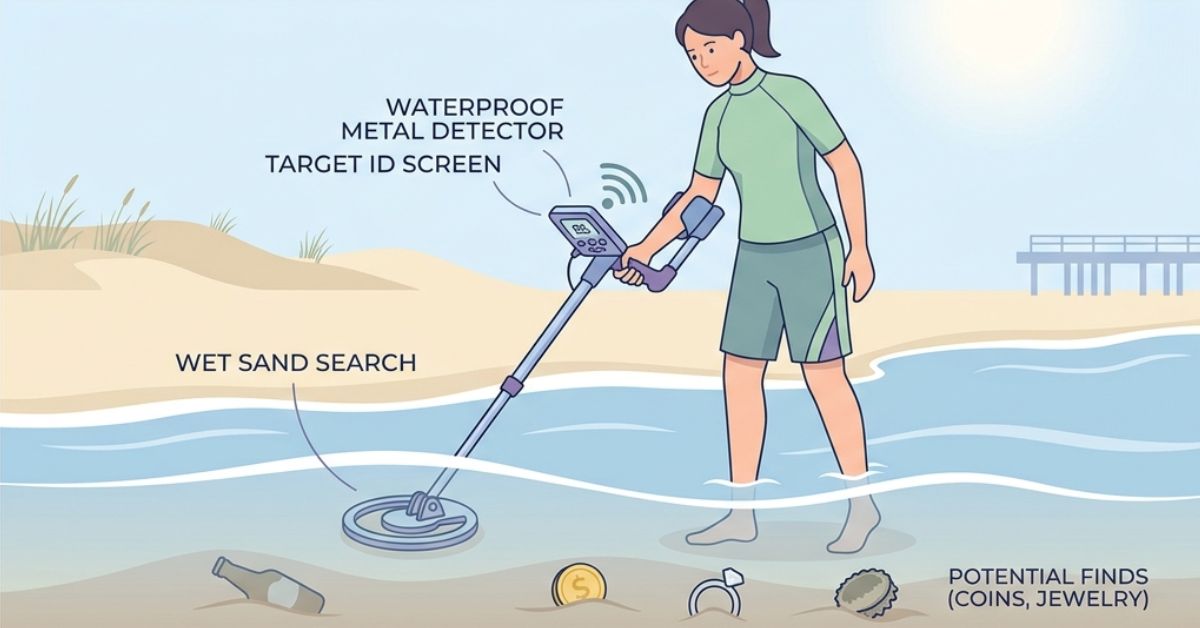
Public parks are among the most common starting points. Many hobbyists search older parks where people have gathered for decades. Coins, jewelry, and small relics often appear in these areas. However, always check local rules before detecting. For beginners, beaches serve as another ideal location. Digging is easier in the sand, and many people lose jewelry while swimming or lounging. Often, dry sand near seating spots yields coins and small valuables.
Private property can provide excellent finds, but it’s essential to get permission. Always ask the owner before searching. Interesting items often surface in older yards or farmland after consent is given. While many places allow detection, some locations are strictly restricted. Federal lands, protected historic sites, and certain public areas often prohibit metal detecting.
Keep these rules in mind: Metal detecting and artifact removal are usually banned in National Parks.
- State park rules vary by state.
- Local city laws may have their own rules for parks or public spaces. A quick check helps everyone enjoy the hobby.
Doing a bit of research before you hunt protects your hobby—and the special places you explore.
Pro Tip
Look for older locations where people gathered. Picnic areas, sports fields, and old pathways often produce more signals.
Things You Must Consider Before Starting Metal Detecting
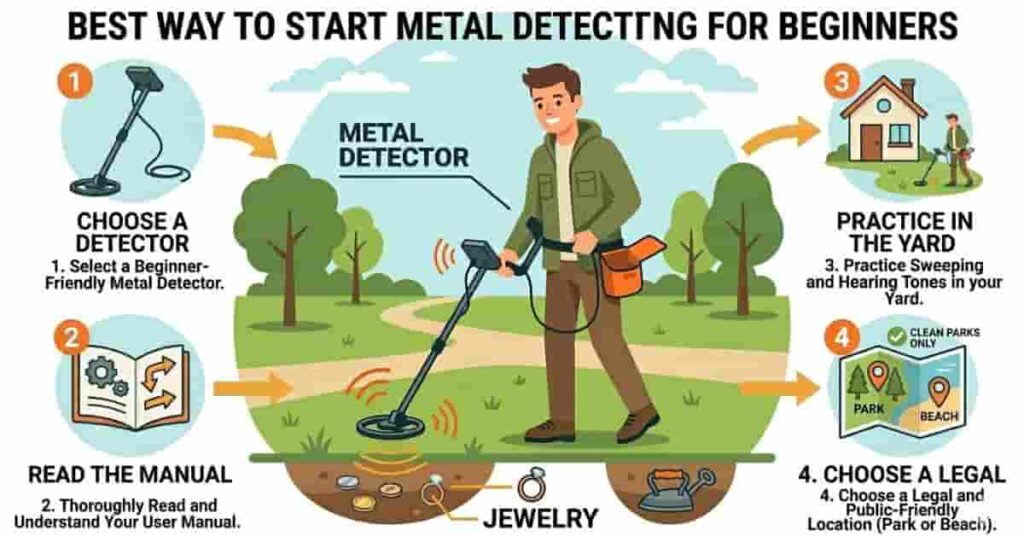
Before starting metal detecting, know your basic responsibilities. Enjoy the hobby, but respect laws, property, and the environment.
One of the first things you’ll want to check is whether detecting is allowed in your area. Rules can differ quite a bit. Some parks say yes, others have restrictions on digging or removing finds. Take a moment to review your local city, county, or state guidelines before heading out!
Get permission before detecting on private land. Clear communication with landowners preserves the hobby’s reputation. Always refill holes to keep areas safe and undamaged.
Many hobbyists use a small plug-cutting method when digging in grass. The plug can be replaced neatly after the target is recovered. When done correctly, the ground looks almost untouched. And here’s another tip: always watch out for historical artifacts. Some finds might be protected by law, so it’s a good idea to know your area’s rules to avoid any legal trouble.
- Here are a few beginner safety tips to make your hunts more enjoyable: Wear gloves when digging up unknown metal objects.
- Be cautious around sharp or rusty items.
- Avoid detecting during severe weather.
- Stay aware of your surroundings in public areas.
By being responsible, you help protect both our wonderful hobby and the beautiful places where we detect.
Takeaways
- Always check local laws before metal detecting.
- Ask permission when detecting on private property.
- Fill all holes and leave locations clean.
- Follow safety precautions during every hunt.
Common Beginner Mistakes to Avoid
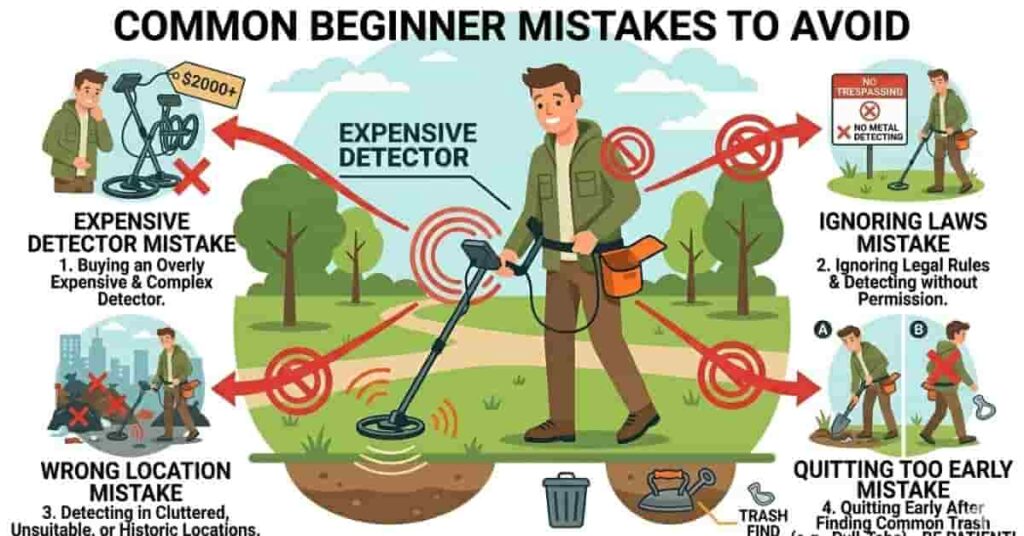
Many beginners feel excited when they first learn metal detecting. But early mistakes can slow progress and cause frustration. Knowing these common problems helps new hobbyists improve faster.
A frequent mistake is buying an expensive metal detector right away. Beginners often think better equipment leads to better finds. In reality, learning detector signals matters far more than price. A simple entry-level detector usually works best for early practice. Another mistake is ignoring local rules and regulations. Some public areas completely restrict digging or metal detecting. Failing to check these rules can lead to fines or loss of access to good locations. Responsible hobbyists always verify local laws before starting a hunt.
Location research is also important. Many beginners choose random spots without thinking about history. Older parks, beaches, and gathering places usually produce better signals. Spending a little time researching local history can greatly improve your chances of success.
Patience is another challenge for new detectorists. Early hunts may turn up trash like bottle caps or pull tabs. Some beginners quit after a few tries. Most experienced hobbyists agree that persistence leads to better discoveries. Avoiding these mistakes can make it much easier to learn how to get started in metal detecting. Practice, patience, and smart location choices often bring the best results.
Takeaways
- Paying more for a metal detector does not mean you will automatically find better or more valuable items. Focus on learning how to use your detector effectively.
- Always review and follow local rules before you begin metal detecting in an area. This helps you avoid fines or being asked to leave.
- Look for locations with documented historical activity. Researching the history of parks, beaches, or other public spaces can greatly improve your chances of finding interesting items.
- Be patient and persistent, as most beginners find common trash items before valuable objects. Over time, patience will help you improve your metal detecting skills.
Pro Tip
Dig most signals during your first few hunts. This helps train your ear to recognize different metal tones.
Step-by-Step: How to Get Started in Metal Detecting Today
A step-by-step plan makes starting metal detecting easier. Beginners can feel overwhelmed by equipment, settings, and finding locations. A clear checklist builds confidence.
First, learn the basics and gradually build skills. Many hobbyists start with simple tools and practice before exploring new areas. This approach reduces mistakes and improves results. Choose a beginner-friendly detector with simple controls and preset search modes. These features help new users learn signals without complex settings.
Read the detector manual carefully. It explains tones, sensitivity, and sweep techniques. Knowing these helps improve accuracy and reduce confusion. Practice at home. Bury a few coins or metal objects in your yard. Sweep the detector over each to learn signal sounds and screen displays.
Once you feel comfortable with the basics, choose a legal detection location. Parks, beaches, or private property with permission are good starting points. Always check local rules before digging.
Begin your first hunt. Move slowly, listen to signals, and dig targets neatly. Each hunt improves your skills and confidence.
Simple Beginner Checklist
- Choose an entry-level metal detector.
- Read the manual and learn basic settings.
- Practice detecting coins in your yard.
- Pick a legal location to search.
- Start detecting and digging targets carefully.
Takeaways
- A step-by-step approach helps beginners learn faster.
- Reading the manual improves detector accuracy.
- Practice sessions help identify real target signals.
- Legal locations ensure safe and responsible detection.
Pro Tip
Keep the coil close to the ground while sweeping. This boosts signal strength and enables deeper target detection.
Conclusion
Metal detecting is an exciting hobby that combines outdoor exploration with the thrill of discovery. In this guide, you learned how to start metal detecting, what equipment beginners need, where to search, and the mistakes to avoid.
Starting is easier than most people expect. With a basic detector, simple tools, and a legal location, beginners can begin exploring parks, beaches, and other promising spots. The key is patience, practice, and learning how detector signals work.
Curious about metal detecting? Now is a great time to start. Every signal could lead to a new discovery.
Share your metal detecting stories or questions in the comments below—it’s your turn to inspire and connect! For more tips and guides, dive into our website and elevate your next hunt.

Ethan Callaway is a passionate metal detecting enthusiast based in Savannah, Georgia, USA. Currently pursuing a B.S. in Archaeology & Historical Preservation at the University of Georgia, he combines his love for treasure hunting with research-backed insights on metal detecting techniques, safety practices, and site guidance.
Through MetalDetectingUSA.com, Ethan shares practical tips, honest product reviews, and beginner-friendly advice to help both new and experienced detectorists explore metal detecting across the United States with more confidence and understanding.