

introduction
Do metal detectors find everything underground? Not exactly.
Many beginners assume a metal detector will detect every piece of metal. In reality, it’s more complicated. The truth is that some materials and metals are very hard to detect. Understanding what metals metal detectors cannot detect helps you set realistic expectations before you start searching.
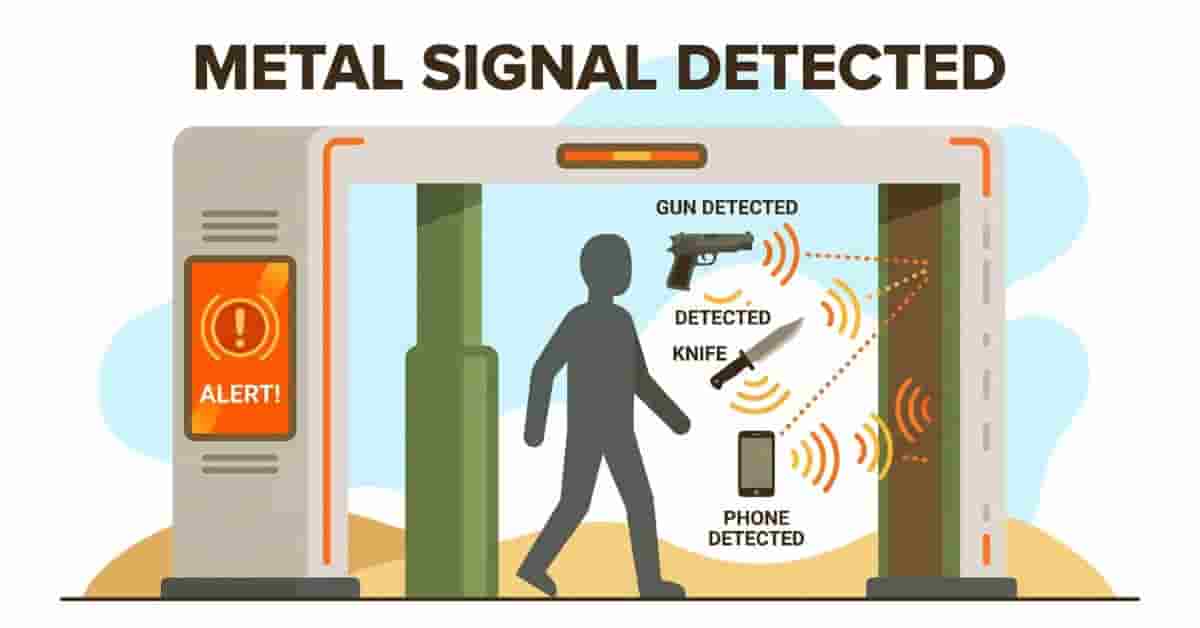
This topic matters whether you are a hobbyist using a metal detector for outdoor fun in the United States or someone curious about how detection works in security settings. Metal detecting is popular in parks, beaches, and old sites, and also plays a role in security at places like airports, stadiums, and government buildings. Yet both uses have their limits.
For beginners, this confusion often leads to frustration. You might think your detector is broken when it misses something. In most cases, the issue relates to metal size, conductivity, soil conditions, or detection depth.
In this guide for beginner hobbyists, you’ll discover which metals and materials detectors struggle to find. The guide also explains why some objects appear “undetectable.” By the end, you’ll understand how metal detectors work and how to improve your chances of finding valuable targets.
How Do Metal Detectors Actually Work?
Metal detectors may look simple, but the science behind them is fascinating. If you want to understand what metals metal detectors cannot detect, you first need to know how these devices work.
Sometimes the problem isn’t the metal itself but the device settings or hardware. If you’re facing detection issues, read this guide on why your metal detector might not be working properly.
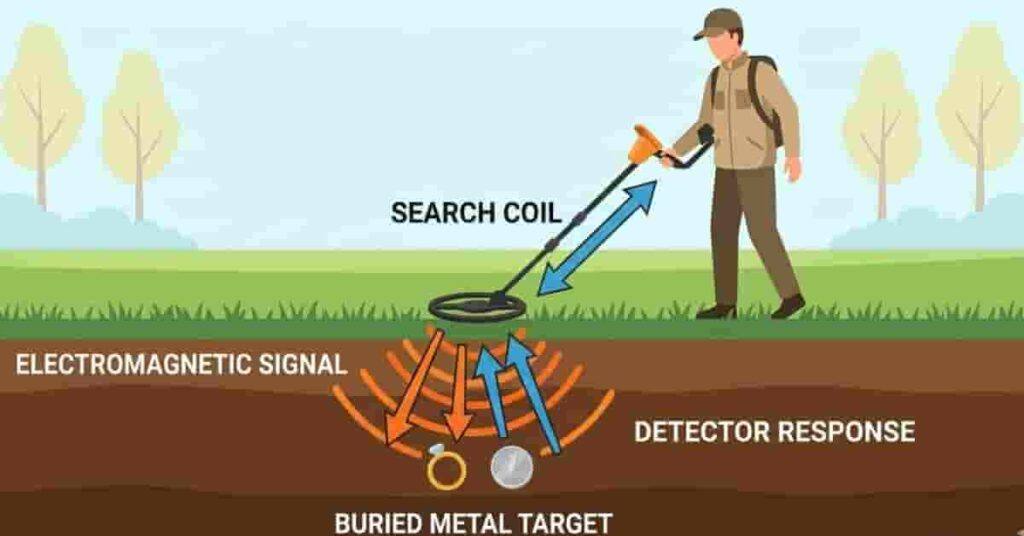
Most metal detectors rely on electromagnetic energy. The search coil sends a signal into the ground. When that signal hits metal, the metal reacts and sends a response back to the detector.
The detector then alerts the user with a sound, vibration, or visual signal. The strength of this response depends on several factors, including metal type, size, depth, and soil conditions. This explains why some metals are easy to find while others remain difficult to detect. Modern detectors used by hobbyists across the United States also include features like target identification, sensitivity control, and ground balancing. These tools help the machine separate valuable targets from junk metal or mineralized soil.
However, even advanced detectors still follow the same basic rule: they can only detect materials that interact with electromagnetic fields.
Takeaways
- Metal detectors send electromagnetic signals into the ground.
- Metal objects disturb that signal and create a detectable response.
- Detection strength depends on metal type, size, depth, and soil conditions.
- Non-conductive materials usually produce no signal.
Electromagnetic Fields Explained (Simple Terms)
Every metal detector creates a small electromagnetic field through its search coil. When you swing the detector over the ground, this field spreads beneath the surface.
If the field passes over a metal object, the metal disrupts the signal. This disturbance creates a secondary magnetic field around the object. The detector senses this change and alerts the user. Think of it like dropping a stone in water. The ripples move outward until they hit something. When they bounce back, you notice the change.
The same concept applies to metal detecting. The detector sends energy into the ground and waits for a response. If the response is strong enough, the machine produces a beep or visual signal.
Different detectors use different technologies. The most common types include
- VLF (Very Low Frequency) detectors for hobby use
- Pulse Induction (PI) detectors for deep searching and beaches
Both technologies rely on electromagnetic fields to locate metal objects underground.
Takeaways
- Metal detectors create electromagnetic fields through the search coil.
- Metal objects disturb this field and create a detectable signal.
- The detector reads the signal and alerts the user.
Pro Tip
Keep your coil close to the ground while sweeping. A lower coil improves signal strength and detection accuracy.
Ferrous vs Non-Ferrous Metals
Another key concept in metal detecting is the difference between ferrous and non-ferrous metals. Understanding this helps explain why detectors respond differently to certain objects.
Ferrous metals contain iron. Common examples include
- Iron nails
- Steel objects
- Old tools and hardware
These metals are magnetic. Many detectors easily identify them, but hobbyists often filter them out. That’s because iron objects usually represent junk targets rather than valuable finds.
Non-ferrous metals do not contain iron. These are the metals most treasure hunters want to find.
Examples include:
- Gold
- Silver
- Copper
- Aluminum
- Brass
Non-ferrous metals conduct electricity well. Because of this, they often produce cleaner and more stable signals on a detector.
Many modern detectors include discrimination settings. These settings allow users to ignore ferrous metals while focusing on valuable non-ferrous targets.
Takeaways
- Ferrous metals contain iron and are usually magnetic.
- Non-ferrous metals include gold, silver, and copper.
- Metal detectors can filter out unwanted ferrous signals.
Why Conductivity Matters
Conductivity plays a major role in how well a metal detector can find an object. Conductivity refers to how easily electricity moves through a material.
Metal detectors rely on electrical signals. When a conductive metal enters the electromagnetic field, it produces a stronger response. This makes the object easier to detect.
Highly conductive metals often produce the clearest signals. Examples include:
- Silver
- Copper
- Brass
These metals allow electrical energy to move freely, which creates strong detector signals.
Low-conductivity metals behave differently. They still react to electromagnetic fields, but the response is weaker. Examples include:
- Small gold pieces
- Thin aluminum foil
- Certain stainless steel alloys
Object size also affects conductivity signals. A large metal object produces a stronger signal than a tiny fragment of the same metal.
This is why detectors sometimes struggle with tiny gold flakes or micro jewelry.
In many cases, beginners think certain metals are undetectable when the real problem is a setup or hardware issue. This detailed guide explains common problems that stop metal detectors from detecting targets.
What Metals Can Metal Detectors NOT Detect?
Many beginners ask the same question: what metals can metal detectors not detect? The simple answer is that most metal detectors can find many metals, but not every object produces a clear signal.
Detection depends on three main factors: conductivity, size, and depth. If an object does not conduct electricity well, the detector may struggle to recognize it. Very tiny metal pieces can also produce signals that are too weak for the detector to notice. In other cases, the metal is detectable, but conditions make it difficult to find. Deep burial, heavy soil minerals, or thick barriers can weaken the electromagnetic signal before it reaches the search coil.
It is also important to understand that some materials people think are metals are actually non-conductive. These materials cannot interact with the detector’s electromagnetic field at all. The sections below explain the most common materials and situations where metal detectors struggle. Understanding these limits helps beginners avoid confusion and improves their success while metal detecting.
Non-Conductive Materials (Not Metals at All)
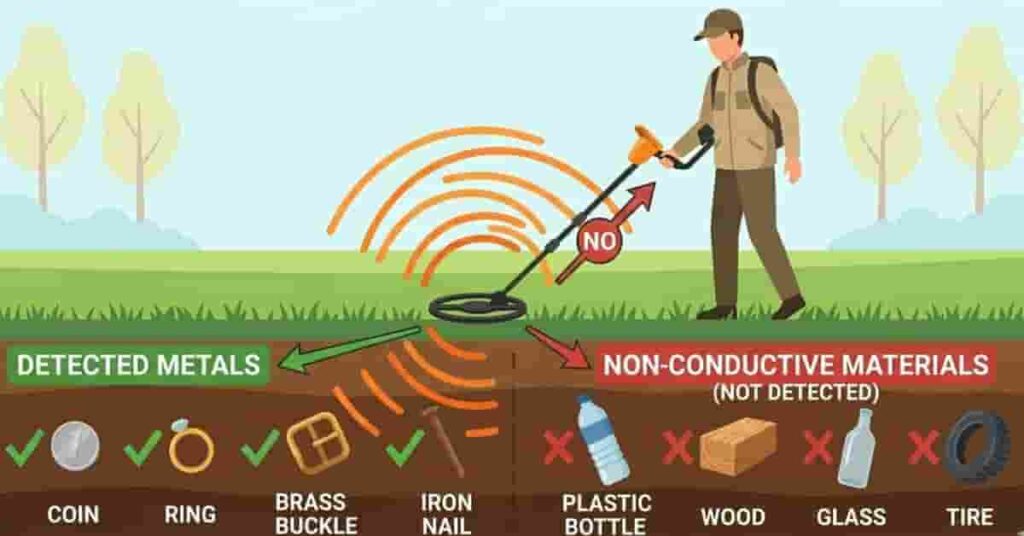
Some objects people expect a detector to find are not metals at all. Metal detectors cannot detect these materials because they do not conduct electricity. Without conductivity, the electromagnetic field passes through the object with no reaction.
Common non-conductive materials include:
- Plastic
- Wood
- Rubber
- Glass
- Ceramic
- Electrical insulators
These materials do not create a magnetic or electrical response. As a result, the detector receives no signal and stays silent.
For example, a plastic container buried in soil will remain invisible to most detectors. The same applies to wooden boxes or ceramic objects. However, if these items contain metal parts, the detector may still detect the metal component.
This explains why detectors sometimes locate objects like buried electronics. The plastic casing is invisible, but the internal metal parts trigger the signal. Understanding this limitation helps beginners avoid unrealistic expectations when searching with a metal detector.
Takeaways
- Non-conductive materials do not interact with electromagnetic fields.
- Plastic, wood, glass, and rubber cannot trigger a detector signal.
- Only metal parts inside these objects may be detected.
Extremely Low Conductivity Metals
Some metals technically conduct electricity but still produce weak signals. These metals fall into the low conductivity category. Metal detectors may struggle to detect them under certain conditions.
Examples include:
- Certain stainless steel alloys
- Very thin aluminium foil
- Extremely small metal particles
Stainless steel creates confusion for many beginners. Some types contain iron and are easier to detect. Other grades are nearly nonmagnetic and have weaker conductivity. Thin aluminum foil also creates challenges. The metal itself conducts electricity, but the thin size reduces the signal strength. This makes detection inconsistent, especially at deeper depths.
Very tiny metal fragments behave the same way. Even if the metal is detectable, the signal may be too small for the detector to recognize clearly. Modern detectors can still find these metals in some situations. However, sensitivity settings, coil size, and search frequency all play important roles.
Takeaways
- Low-conductivity metals produce weaker signals.
- Some stainless steel grades are harder for detectors to recognize.
- Thin or tiny metal pieces reduce signal strength.
Tiny Gold Flakes & Micro Jewellery
Gold is one of the most desired metals in metal detecting. However, tiny gold pieces can be difficult to detect.
Small gold flakes often appear in natural gold fields or river deposits. These pieces may weigh only a fraction of a gram. Because of their tiny size, they create extremely weak electromagnetic responses. Micro jewelry behaves the same way. Small gold earrings, thin chains, and tiny charms may fall below the detector’s signal threshold.
Frequency plays a major role here. Higher-frequency metal detectors respond better to small targets. That is why specialized gold detectors use higher operating frequencies. Coil size also matters. Smaller coils concentrate the electromagnetic field into a tighter area. This increases sensitivity to tiny targets.
Even with the right equipment, extremely small gold flakes may still remain difficult to detect.
Takeaways
- Very small gold pieces create weak signals.
- Higher frequencies detect small targets more effectively.
- Small coils improve sensitivity to micro jewelry.
Deeply Buried Metals Beyond Detection Range
Depth is another major factor that affects detection. Every metal detector has a maximum detection range. If an object sits deeper than this limit, the detector may not recognize it. Most hobby detectors find coin-sized objects at depths between 6 and 12 inches, depending on soil conditions and equipment. Larger objects may be detected deeper.
However, several factors can reduce detection depth:
- Heavy soil mineralisation
- Wet saltwater sand
- Rocks containing magnetic minerals
- Interference from nearby metal
Mineralized soil can absorb part of the electromagnetic signal. When this happens, the signal returning to the detector becomes weaker.
As a result, deeply buried metal objects may appear invisible to the detector. The metal is still present, but the machine cannot receive a strong enough response. Advanced detectors with ground balancing can reduce this problem, but they cannot eliminate it completely.
Takeaways
- Metal detectors have limited depth ranges.
- Mineralized soil can weaken electromagnetic signals.
- Deep objects may remain undetected even if they are metal.
Pro Tip
Use proper ground balance settings when detecting in mineralized soil to improve depth performance.
Can Stainless Steel Be Detected?
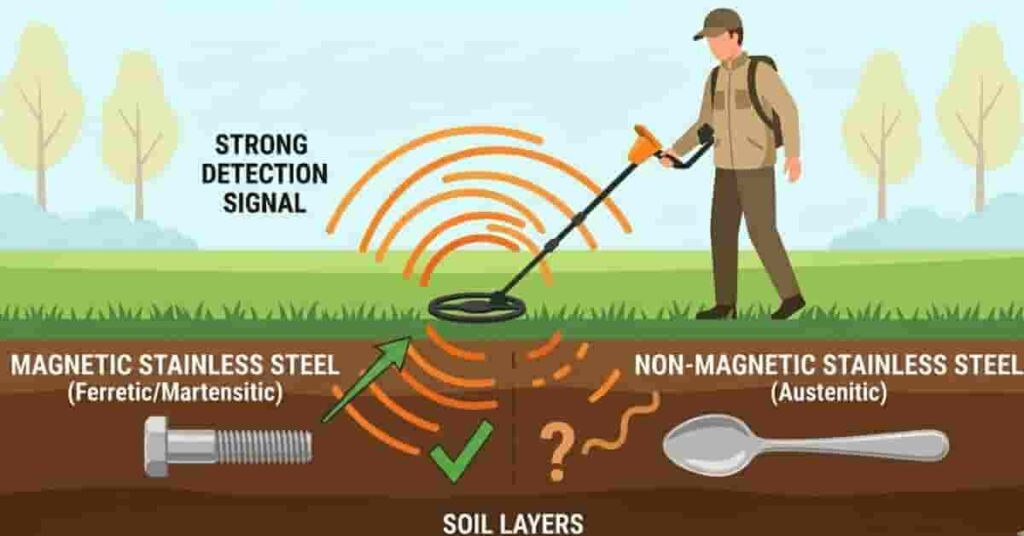
Many beginners wonder if stainless steel triggers a metal detector. The short answer is sometimes. Stainless steel behaves differently from most metals because its composition changes between grades. Some types of stainless steel contain iron and respond strongly to metal detectors. Other types contain more chromium or nickel and react weakly. Because of this variation, detection results can differ from one object to another.
This confusion often leads people to believe stainless steel is invisible to detectors. In reality, the problem usually relates to magnetic properties, conductivity, and object size. A large stainless steel tool may be easy to detect, while a small stainless steel screw may produce a weak signal. For hobby metal detecting, stainless steel targets appear less often than metals like copper, aluminum, or iron. However, detectors can still locate many stainless steel objects under the right conditions.
Understanding the different grades of stainless steel helps explain why detection sometimes works and sometimes fails.
Takeaways
- Some stainless steel types trigger metal detectors.
- Detection depends on the metal’s composition and magnetic properties.
- Object size and detector sensitivity also affect results.
Magnetic vs Non-Magnetic Stainless Steel
Stainless steel comes in several grades, and each grade behaves differently in a metal detector. The key difference is whether the metal is magnetic or non-magnetic.
Magnetic stainless steel usually contains a higher percentage of iron. These grades interact more strongly with electromagnetic fields. Because of this, metal detectors often recognize them more easily.
Common magnetic grades include 400-series stainless steel. These materials appear in tools, screws, and industrial hardware. Non-magnetic stainless steel behaves differently. These grades contain more chromium and nickel. As a result, they produce weaker electromagnetic responses.
Examples include 300-series stainless steel, often used in kitchen equipment, appliances, and jewelry. While detectors may still find these items, the signal may be weaker or inconsistent. Another reason for confusion is object size. A large stainless steel object may still trigger a clear signal. A very small piece, however, might fall below the detector’s sensitivity level.
Expert Tip:
Professional detectorists often test unknown metals using a magnet first. Magnetic metals usually produce clearer detector signals.
Why Some Metals Seem “Undetectable”
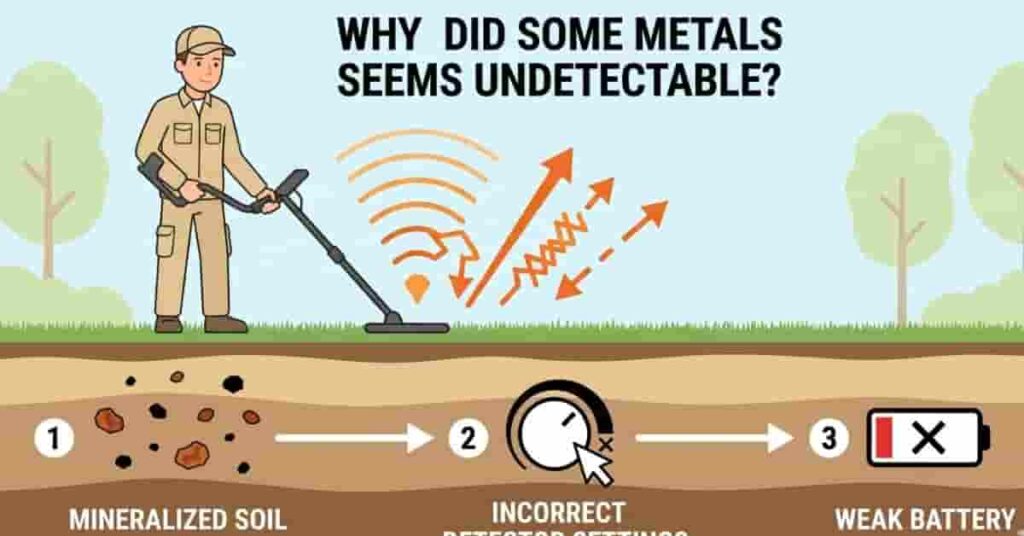
Many beginners assume their detector missed a target because the metal is impossible to detect. In reality, that is rarely the case. Most metals can be detected under the right conditions.
The real problem often comes from environmental factors or incorrect detector settings. Soil minerals, poor calibration, and weak batteries can all reduce detection performance. When this happens, even a detectable metal may appear invisible. Understanding these issues helps explain why people sometimes believe certain metals cannot be found. In many cases, the detector simply cannot receive a strong signal.
Small mistakes during setup can also affect results. Sensitivity settings that are too low, improper ground balance, or unstable power levels may weaken the detector’s response.
Once you learn how these factors work, you can greatly improve your success rate while metal detecting.
Takeaways
- Most metals are detectable in the right conditions.
- Soil minerals and incorrect settings can hide metal signals.
- Proper setup improves detection accuracy.
Ground Mineralization
Ground mineralization is one of the biggest challenges in metal detecting. Many soils contain natural minerals such as iron oxides and magnetic particles. These minerals interact with the detector’s electromagnetic field. Instead of receiving a clear signal from metal, the detector receives signals from the soil itself.
Highly mineralized soil can create background noise. This noise makes it harder for the detector to separate real metal targets from ground interference.
Common locations with strong mineralization include:
- Red clay soil
- Volcanic ground
- Certain gold prospecting areas
- Saltwater beaches
When mineralization becomes too strong, the detector may reduce sensitivity automatically. As a result, deeper or smaller metal objects may remain undetected.
Modern detectors include ground balance systems to reduce this interference. However, extremely mineralized soil can still limit detection depth.
Takeaways
- Mineralized soil can interfere with detector signals.
- The detector may confuse ground minerals with metal targets.
- Ground balancing helps reduce this problem.
Pro Tip
If your detector becomes noisy or unstable, adjust the ground balance before continuing your search.
Wrong Sensitivity Settings
Sensitivity controls how strongly your metal detector reacts to signals. If sensitivity is set too low, the detector may ignore weaker signals from small or deep metals. This can make some metals seem undetectable even when they are present.
Low sensitivity settings reduce the detector’s ability to pick up faint signals. Beginners sometimes have lower sensitivity to reduce noise. While this can make the detector quieter, it can also reduce detection depth. On the other hand, extremely high sensitivity can create false signals. Electrical interference, mineralized soil, and nearby metal can trigger random beeps.
The goal is to find a balanced setting. Most hobby detectors work best with a sensitivity set high enough to detect weak signals but stable enough to avoid constant noise.
Takeaways
- Low sensitivity can hide small or deep metal targets.
- Extremely high sensitivity may create false signals.
- Balanced settings improve detection accuracy.
Improper Ground Balancing
Ground balance is a setting that helps the detector ignore mineral signals from the soil. When ground balance is not set correctly, the detector may struggle to identify real metal targets. Without proper ground balancing, the machine may treat soil minerals as metal signals. This can create false alerts or hide actual targets.
Different soil types require different ground balance adjustments. For example, mineralized red soil behaves differently from sandy beach soil. Modern metal detectors often include automatic ground balancing. Some advanced models also allow manual adjustments for greater accuracy.
If the ground balance is incorrect, the detector may lose depth and sensitivity. As a result, deeper metal objects may appear undetectable.
Takeaways
- Ground balance helps detectors ignore soil minerals.
- Incorrect settings can hide real metal targets.
- Proper adjustment improves depth and stability.
Low Battery Issues
Battery power also affects metal detector performance. When battery levels drop too low, the detector may lose signal strength. Metal detectors rely on stable electrical power to generate electromagnetic fields. A weak battery reduces the strength of these signals.
This can lead to several problems:
- Reduced detection depth
- Slower response time
- Weak audio signals
- Unstable operation
Because of this, metal targets that were detectable earlier may suddenly seem invisible. Many beginners mistake this problem for equipment failure.
Fortunately, the solution is simple. Replacing or charging the battery often restores full performance. Some modern detectors include battery indicators that warn users before the the power drops too low.
Takeaways
- Low battery power reduces signal strength.
- Detection depth can decrease whenthe power is weak.
- Fresh batteries improve performance and stability.
What Can Metal Detectors Not Detect Through?
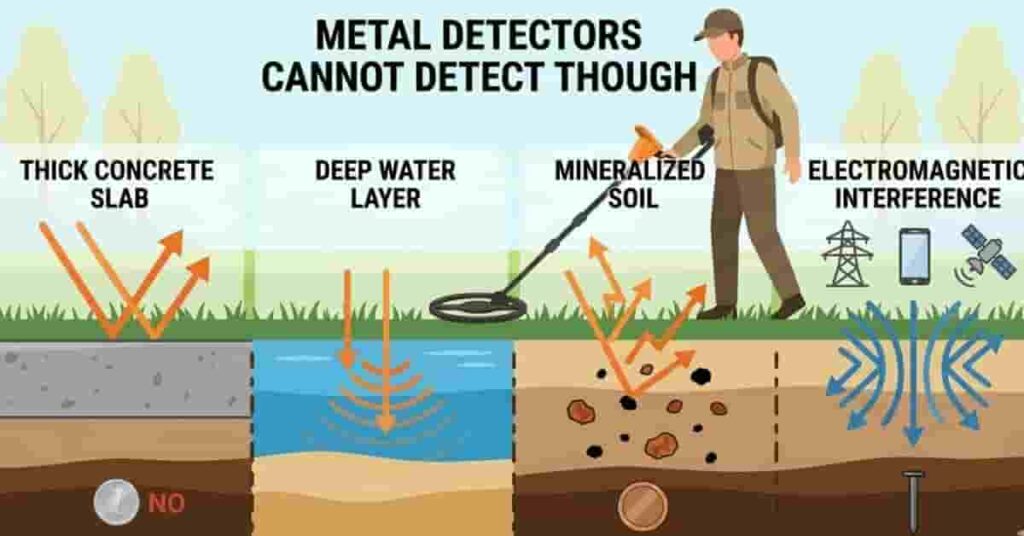
Metal detectors work by sending electromagnetic signals into the ground. These signals travel through many materials, but some barriers weaken or block them. When the signal becomes too weak, the detector cannot recognize the metal.
This limitation often causes confusion. People assume the detector cannot find the metal itself. In reality, the barrier between the coil and the object reduces the signal strength.
Several materials and conditions can interfere with detection. Thick concrete, deep water, heavy mineralization, and electromagnetic interference can all affect performance. These obstacles either absorb the signal or create background noise.
Understanding these limits helps beginners use metal detectors more effectively. While most detectors work well in soil or sand, certain environments can reduce accuracy and depth.
Below are some common situations where metal detectors struggle to detect objects through barriers or environmental conditions.
Takeaways
- Metal detectors rely on clear electromagnetic signals.
- Certain materials weaken or block these signals.
- Environmental conditions can reduce detection depth.
Thick Concrete
Concrete can reduce a metal detector’s ability to detect objects beneath it. The thickness of the concrete plays the biggest role.
Thin concrete layers usually allow signals to pass through. However, thick concrete slabs can weaken the electromagnetic field before it reaches the metal.
Another issue comes from reinforced concrete. Many structures contain steel rebar inside the concrete. These metal bars create strong signals that overwhelm the detector.
When this happens, the detector may only respond to the rebar instead of the object below the slab. This makes it difficult to isolate smaller metal targets.
Because of this limitation, standard hobby detectors are not designed to search beneath thick building foundations or structural concrete.
Water Depth Limits
Metal detectors can work in shallow water, but deep water creates challenges. The deeper the metal object sits, the weaker the signal becomes.
Water itself does not completely block electromagnetic signals. However, depth increases the distance between the search coil and the target. This reduces detection strength.
Saltwater environments add another difficulty. Salt minerals conduct electricity and can create background interference. This interference may mask weaker metal signals.
Because of this, detectors designed for beaches often include special settings for saltwater conditions.
For deeper underwater searches, divers use specialized waterproof detectors built for scuba metal detecting. Highly mineralized soil can make detection more difficult. Soil containing iron minerals or magnetic particles creates strong background signals.
When the detector receives these signals, it may struggle to separate real metal targets from mineral noise.
Common locations with mineralized soil include:
- Gold prospecting regions
- Red clay areas
- Volcanic ground
- Certain desert locations
In these environments, the detector may lose depth or become unstable. Small metal objects may remain undetected because the soil interference masks their signals.
Ground balancing and lower sensitivity settings can help reduce this effect. However, extreme mineralization can still limit detection performance.
Takeaways
- Mineralized soil creates background electromagnetic noise.
- The detector may confuse minerals with metal signals.
- Proper ground balancing improves detection stability.
Lead Shielding
Lead is a dense metal often used for shielding against radiation. Because of its density, thick lead layers can reduce electromagnetic signal strength.
If a metal object sits behind a thick lead barrier, the detector may struggle to detect it clearly. The lead absorbs part of the electromagnetic energy before it reaches the target.
However, this does not mean lead makes objects completely invisible. In many cases, the detector may still respond to the lead itself.
The real challenge appears when another metal object sits behind a thick lead plate. The shielding effect may weaken the signal enough to hide the target.
Takeaways
- Lead is dense and can weaken electromagnetic signals.
- Thick lead barriers may reduce detection strength.
- Detectors may respond to the lead instead of the hidden object.
Electromagnetic Interference
Electromagnetic interference can disrupt metal detector signals. Many electronic devices produce electromagnetic waves that interfere with detectors.
Common sources include:
- Power lines
- Wi-Fi routers
- Cell towers
- Nearby electronic equipment
When interference occurs, the detector may produce random beeps or unstable readings. These false signals make it harder to recognize real metal targets.
Most modern detectors include noise-canceling features to reduce this issue. Adjusting sensitivity or changing frequency settings can also help stabilize the detector.
Moving a short distance away from the interference source often improves performance.
Takeaways
- Nearby electronics can interfere with detector signals.
- Interference can cause false alerts or unstable readings.
- Noise-canceling settings help reduce this problem.
Pro Tip
If your detector becomes unstable near buildings or power lines, move to a quieter area before continuing your search.
Can Modern Security Metal Detectors Miss Certain Metals?
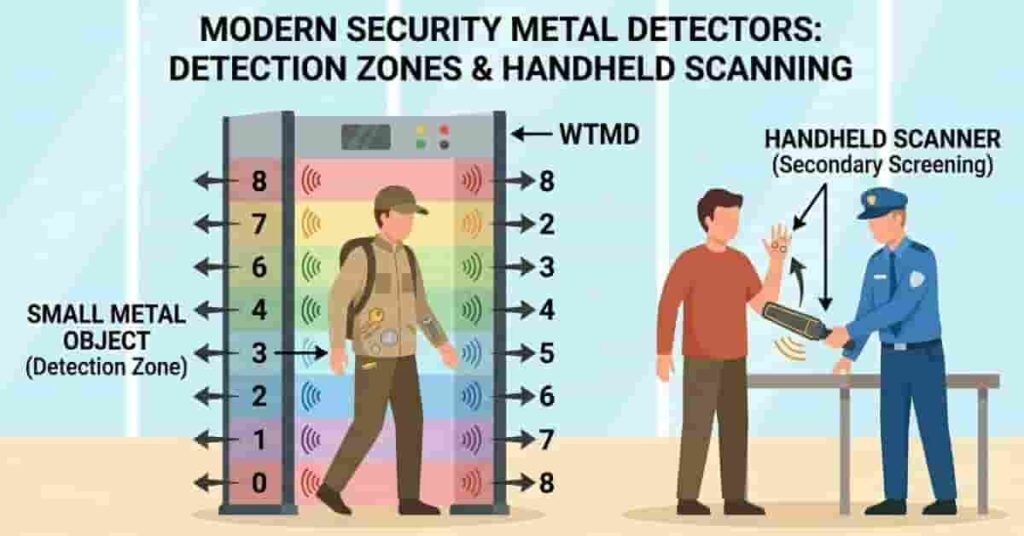
Modern security metal detectors are designed to detect a wide range of metal objects. You often see them in airports, stadiums, schools, and government buildings across the United States. These systems help security teams identify potential threats quickly and efficiently.
However, like all detection technology, they still have limitations. This does not mean metals are invisible to the system. Instead, certain factors can affect how strongly a detector responds. Small metal objects may produce weaker signals. Object position also plays a role because detectors scan specific zones of the body or bag. In addition, security detectors rely on proper calibration to maintain accuracy.
Because of these variables, detection strength can vary depending on the object and the scanning conditions. Security systems are carefully designed to minimize these gaps through multiple sensors and routine calibration.
Understanding these factors helps explain why detection results may differ in certain situations.
Small Metal Objects
Very small metal objects can produce weaker electromagnetic signals. Security detectors are tuned to recognize items that could pose safety risks, but extremely tiny pieces of metal may generate minimal responses.
Examples of small objects include:
- Tiny screws or fasteners
- Small jewellery pieces
- Very thin metal fragments
Detection systems typically focus on identifying objects large enough to trigger concern. Because of this, very small metal pieces may produce weaker signals compared with larger items.
Modern security systems reduce this limitation by combining multiple sensors. Advanced detectors can analyze signal strength and location to identify suspicious objects more accurately.
Positioning of the Metal Object
The position of a metal object can influence how strongly a detector responds. Security metal detectors scan specific zones as a person walks through the frame. If the metal object sits in an area where the signal path is weaker, the response may vary. Movement speed can also affect how clearly the detector reads the signal.
For example, objects placed close to the body or hidden among other materials may produce slightly different signal patterns. Security systems compensate for this by using multiple detection zones. Security staff also use handheld detectors when additional scanning is needed. These tools help confirm signals and identify the location of metal objects.
Detector Calibration
Security metal detectors must be calibrated properly to maintain reliable performance. Calibration adjusts the sensitivity level and signal thresholds used by the system. When detectors are set correctly, they can recognize metal objects with high accuracy. If calibration changes, detection performance may also change.
Facilities such as airports and stadiums follow strict procedures for testing and maintaining their equipment. Regular inspections help ensure detectors operate within required safety standards. Calibration also helps reduce false alarms from harmless items while still identifying objects that require attention.
Because of this ongoing maintenance, modern security systems remain effective tools for public safety.
Takeaways
- Calibration controls how detectors respond to metal signals.
- Proper settings improve accuracy and stability.
- Regular maintenance keeps security systems reliable.
Myths About “Undetectable Metals”
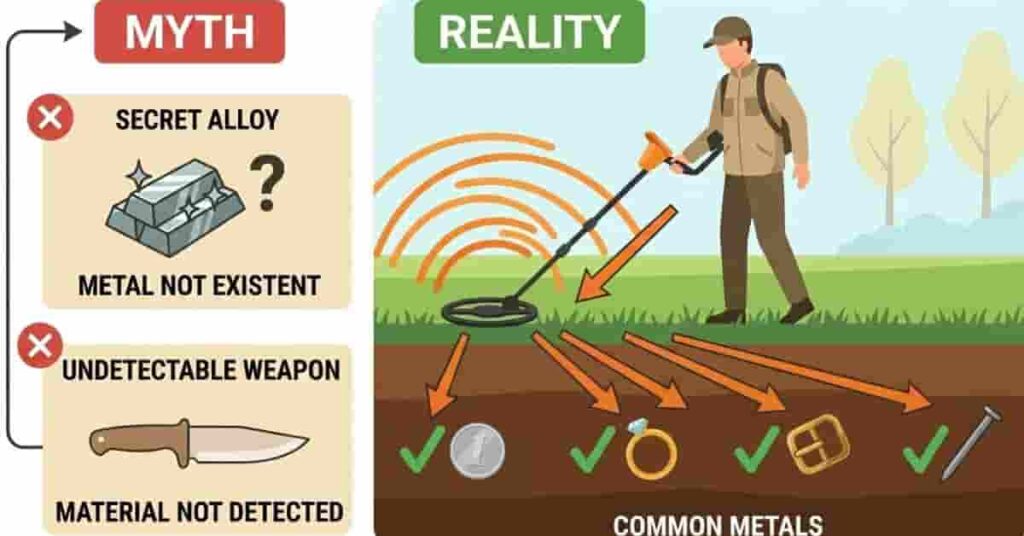
Stories about “undetectable metals” appear often online. Many claims suggest certain materials can bypass metal detectors completely. In reality, most of these claims are based on misunderstandings or marketing hype.
To understand what metals metal detectors cannot detect, it helps to separate science from speculation. Metal detectors rely on electromagnetic fields. If a material conducts electricity or reacts magnetically, the detector can usually detect it.
Many myths come from confusion between metals and non-metal materials. Some products advertise special alloys or advanced materials that supposedly avoid detection. However, real-world physics still applies. Security detectors and hobby metal detectors operate using proven electromagnetic principles. These systems detect conductive metals regardless of marketing claims.
Below are two common myths about “undetectable” materials and why they are misleading.
“Carbon Fibre Weapons”
Carbon fiber often appears in discussions about undetectable weapons. Carbon fiber is a lightweight material used in sports equipment, vehicles, and aerospace parts.
However, carbon fiber is not a metal. It is a composite material made from carbon strands bonded with resin. Because it does not behave like conductive metal, a standard metal detector may not respond to it strongly. This does not mean objects made with carbon fiber are invisible to security systems. Many items that contain carbon fiber still include metal components. Screws, internal supports, or hardware can easily trigger detectors.
In addition, modern security systems use more than metal detection alone. X-ray scanners and other technologies can identify objects regardless of the material.
The key point is simple: carbon fiber itself is not metal, so it reacts differently to detectors.
“Special Alloys”
Another common myth claims that secret alloys exist that metal detectors cannot detect. Some online discussions suggest certain metal blends avoid detection entirely.
In reality, all metal alloys still follow the laws of physics. If the alloy conducts electricity or reacts to electromagnetic fields, a metal detector can respond to it. Alloys simply combine two or more metals to change strength, corrosion resistance, or weight. Stainless steel is a good example. Some grades produce weaker signals, but they are not invisible to detectors.
Detection strength depends on several factors:
- Electrical conductivity
- Magnetic properties
- Object size
- Distance from the detector
Even if a metal produces a weaker signal, modern detectors can often identify it when conditions are favorable.
This is why claims about “undetectable alloys” usually come from misunderstanding detector limitations.
Takeaways
- Metal alloys still conduct electricity and interact with detectors.
- Detection strength varies by composition and size.
- No known alloy completely avoids electromagnetic detection.
How to Improve Detection of Hard-to-Find Metals
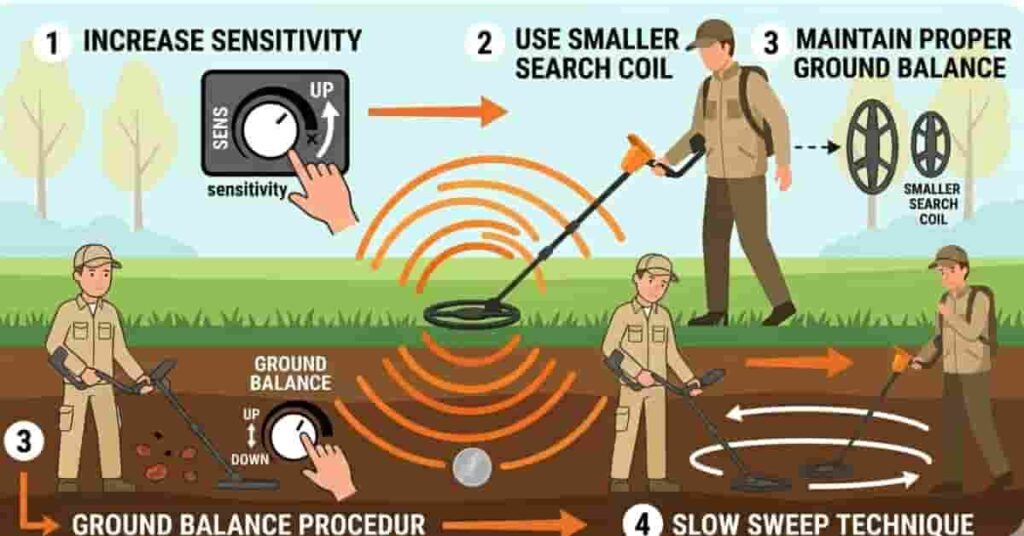
Some metals are harder to detect because of size, depth, or conductivity. However, a few simple adjustments can greatly improve your chances. If you understand what metals metal detectors cannot detect, you also learn how to find the difficult ones.
Many beginners miss targets because their detector settings are not optimized. Sensitivity, frequency, coil size, and sweep technique all influence detection performance. Small changes can help the detector pick up weaker signals. These adjustments are especially useful when searching for tiny jewelry, thin metal pieces, or low-conductivity targets like small gold. They can also help when detecting in challenging environments such as mineralized soil or wet sand.
The following tips focus on practical changes you can apply immediately in the field.
Increase Sensitivity
Sensitivity controls how strongly the detector reacts to signals. Higher sensitivity allows the machine to detect weaker signals from small or deep metal objects.
If sensitivity is too low, the detector may ignore faint signals completely. Increasing it helps the detector respond to metals that normally produce weak electromagnetic reactions.
However, extremely high sensitivity can cause instability. Electrical interference or mineralized soil may create false alerts. The goal is to find a balanced setting that improves detection without making the detector too noisy. Many hobbyists gradually increase sensitivity while testing the detector on known targets. This method helps identify the strongest stable setting for the environment.
Use a Higher Frequency Detector
Detector frequency affects how well the machine responds to different metals. Higher frequencies are more sensitive to small or low-conductivity targets.
This makes high-frequency detectors useful when searching for:
- Tiny gold flakes
- Small jewelry
- Thin metal fragments
Lower-frequency detectors often work better for deeper and larger objects. However, they may struggle with very small targets.
Some modern detectors allow users to switch between multiple frequencies. This flexibility helps hobbyists adjust their detectors based on the type of metal they are searching for.
Use a Smaller Search Coil
Search coil size plays a major role in metal detection performance. Smaller coils concentrate the electromagnetic field into a tighter area.
This focused field improves sensitivity to small objects. Tiny metal targets that larger coils miss may produce clearer signals with a smaller coil. Smaller coils also help when detecting in areas filled with junk metal. The detector can isolate individual targets more easily.
The trade-off is depth coverage. Larger coils scan more ground and detect deeper objects, while smaller coils provide greater precision for small targets.
Proper Ground Balance
Ground balance helps the detector ignore signals from mineralized soil. When ground balance is set correctly, the detector focuses on real metal targets instead of ground interference.
Mineralized soil can hide weak metal signals. Without proper balancing, the detector may treat the soil as a target or miss deeper objects. Modern detectors include automatic ground balance features. Some advanced models allow manual adjustments for better accuracy in difficult soil conditions.
Checking ground balance regularly improves signal clarity and detection depth.
Slow Sweep Speed
Sweep speed affects how well the detector processes signals. Moving the search coil too quickly can cause the detector to miss weak signals.
A slow and steady sweep allows the machine more time to analyze each signal. This increases the chances of detecting small or deep metal targets. Slow sweeping is especially important when searching for tiny gold or micro jewelry. These targets produce faint signals that require careful scanning.
Maintaining a consistent coil height close to the ground also improves detection accuracy.
Many beginners also wonder whether detectors can miss important items. Here’s a detailed explanation of whether metal detectors can miss objects like phones or guns.
Conclusion
Metal detectors are powerful tools, but they do have limits. In this guide, we explored how detectors work and why some metals or materials are harder to find. Factors like conductivity, object size, depth, and soil conditions all affect detection results.
If you’ve ever wondered what metals metal detectors cannot detect, the answer is simpler than many people think. Most conductive metals can be detected under the right conditions. The idea of completely “undetectable metal” is largely a myth.
For beginners in the United States, understanding these limits helps set realistic expectations. With the right settings, technique, and equipment, metal detecting can be both exciting and rewarding.
Curious to learn more? Explore other metal detecting guides on our site. You can also share your detecting experiences or tips in the comments below.

Ethan Callaway is a passionate metal detecting enthusiast based in Savannah, Georgia, USA. Currently pursuing a B.S. in Archaeology & Historical Preservation at the University of Georgia, he combines his love for treasure hunting with research-backed insights on metal detecting techniques, safety practices, and site guidance.
Through MetalDetectingUSA.com, Ethan shares practical tips, honest product reviews, and beginner-friendly advice to help both new and experienced detectorists explore metal detecting across the United States with more confidence and understanding.