
Table of Contents
Introduction
Ever spent hours detecting and found only trash?
Many beginners across the USA start metal detecting in parks, beaches, and old relic sites with high hopes. But simple mistakes can waste time and make you miss valuable finds like silver coins. Even with popular machines like the Garrett AT Pro or Minelab Equinox 800, results depend on how you use them.
That’s why understanding the most common Metal Detecting Mistakes to avoid is so important, especially if you’re just starting out. Small errors in technique, settings, or location can quietly ruin your success.
In this guide, you’ll learn practical, field-tested tips to avoid beginner metal detecting mistakes and improve your finds fast. Whether you’re hunting in city parks or on coastal beaches, these insights will help you detect more effectively and with greater confidence.
1. Choosing the Wrong Metal Detector
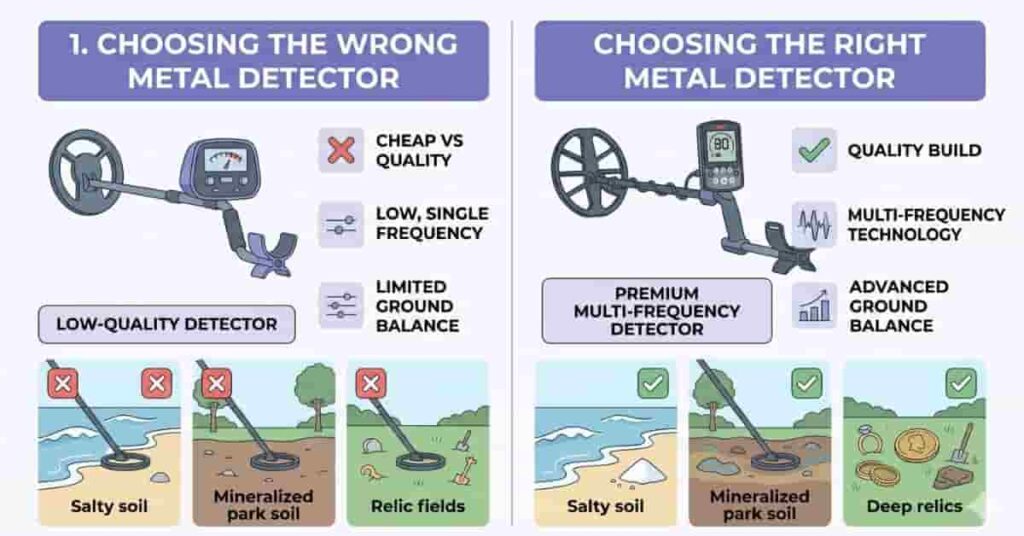
Many beginners can improve their results by choosing a detector that fits their needs. The right choice can lead to stronger signals and more exciting finds.
While cheap detectors from online marketplaces may seem attractive, investing in higher-quality brands ensures better performance, stability, and long-term reliability—so you can find valuable targets like coins and rings and enjoy the hobby more fully.
Beyond the detector itself, your hunting location also matters more than you think. For example, a detector that works well in parks offers exciting opportunities, while beach detecting can be very rewarding with machines that handle mineralized sand. Relic hunting gives you the chance to discover deeper treasures with better depth and sensitivity. And park detecting benefits from good target separation, making it enjoyable even in trashy areas.
Frequency is another key factor beginners often ignore. Lower frequencies work better for deeper coins and relics. Higher frequencies are more sensitive to small targets, such as gold jewelry. Multi-frequency detectors can handle different environments more effectively.
💡 Pro Tip
Prioritize selecting a detector based on your main hunting environment, rather than solely on price or popularity.
2. Not Learning Your Detector Settings
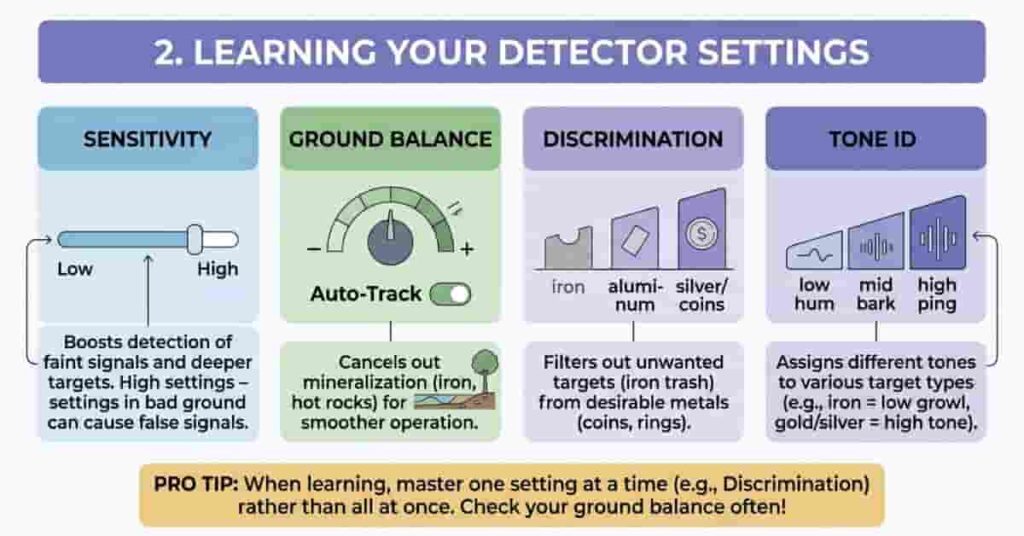
Many beginners turn on their detectors and start swinging right away. This simple mistake can cost you valuable finds.
Every metal detector has key settings that control its performance. If you ignore them, you may miss coins, rings, or deeper targets. Even high-quality machines won’t help if the settings are wrong.
Sensitivity controls how deep your detector can scan. Too high can cause false signals, especially in mineralized soil. Too low may miss deeper targets.
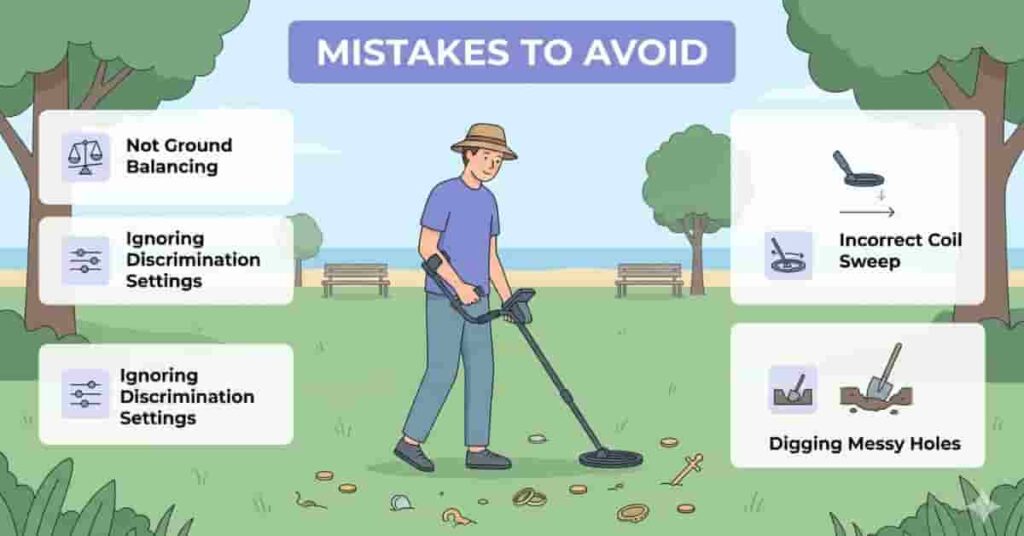
Ground balance helps your detector adjust to soil conditions. Without it, you lose depth and get unstable signals, especially on beaches or clay-heavy areas.
Discrimination filters out unwanted metals, such as iron. But using too much can make you miss valuable items like gold rings.
Tone ID provides audio clues about what’s underground. Learning these tones helps you decide what to dig and what to ignore.
💡 Pro Tip
Start with factory preset settings, then slowly adjust one setting at a time. This helps you understand what each change does.
3. Ignoring Ground Balancing
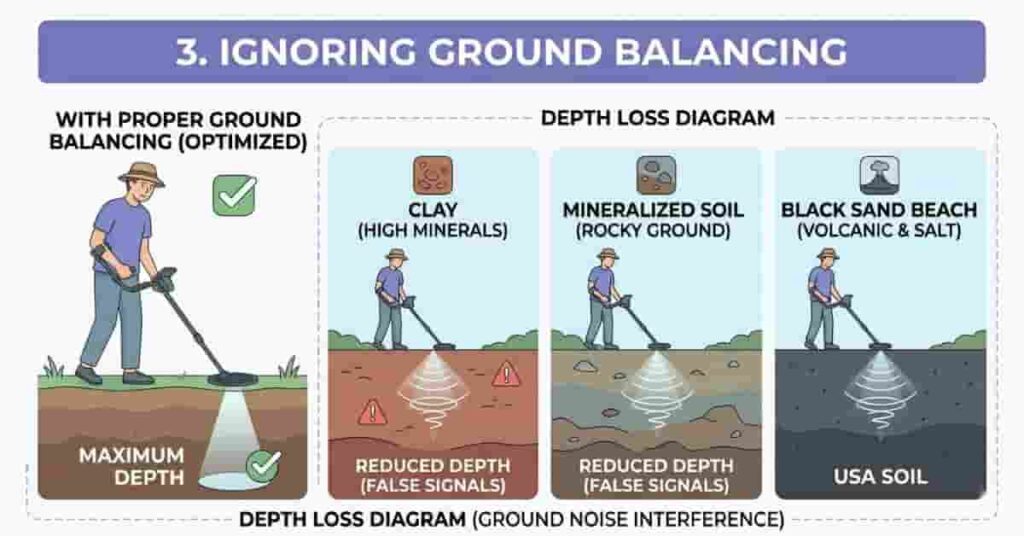
Failing to ground balance is one of the biggest mistakes in metal detecting. It directly affects your depth and signal clarity.
Soil conditions across the USA vary a lot. Many areas have clay-heavy ground, which can cause signal interference. Some regions have highly mineralized soil that confuses your detector. Beach hunters often deal with black sand, which is rich in minerals and very challenging to work with.
If your detector is not properly balanced to the ground, it struggles to separate real targets from soil noise. This leads to false signals, missed targets, and poor depth. Beginners often think their detector is weak, but the real issue is improper setup.
When the ground balance is correct, your detector runs more smoothly and detects deeper objects more clearly. You’ll notice cleaner signals and better target identification, especially in difficult environments.
4. Swinging the Coil Too Fast
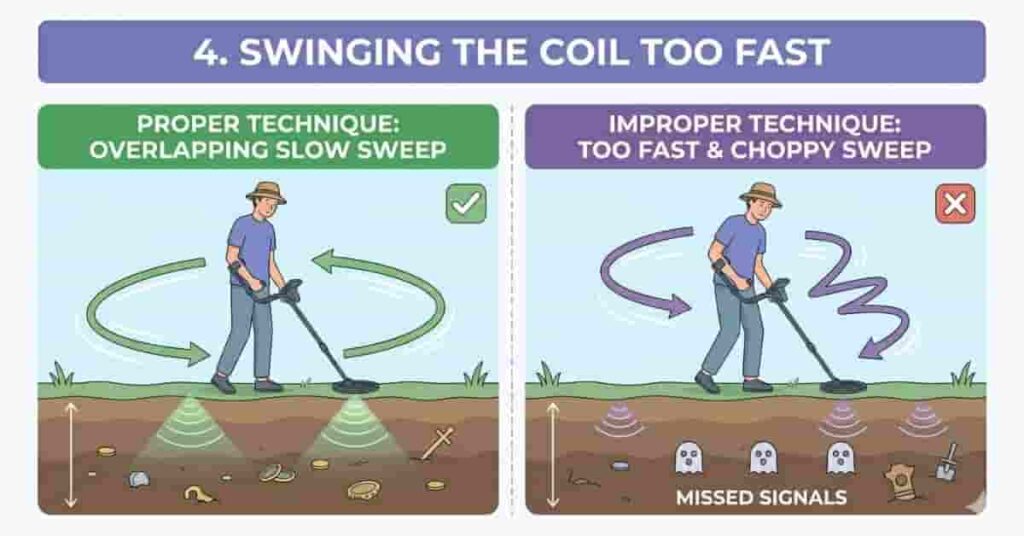
Many beginners swing the coil too fast, hoping to cover more ground quickly. This habit often leads to missed targets.
Metal detectors need time to process signals under the coil. When you swing too fast, the detector can skip over small or deep objects. This means you might walk right past coins, jewelry, or relics without knowing.
A proper sweep technique is slow, steady, and controlled. Keep your coil moving at a consistent speed, close to the ground. This allows the detector to accurately read signals and provide clear audio feedback.
Overlapping your swings is just as important. Each pass should slightly cover the previous one. This ensures there are no gaps in your search area. Without overlap, you can easily miss targets between swings.
5. Lifting the Coil While Swinging
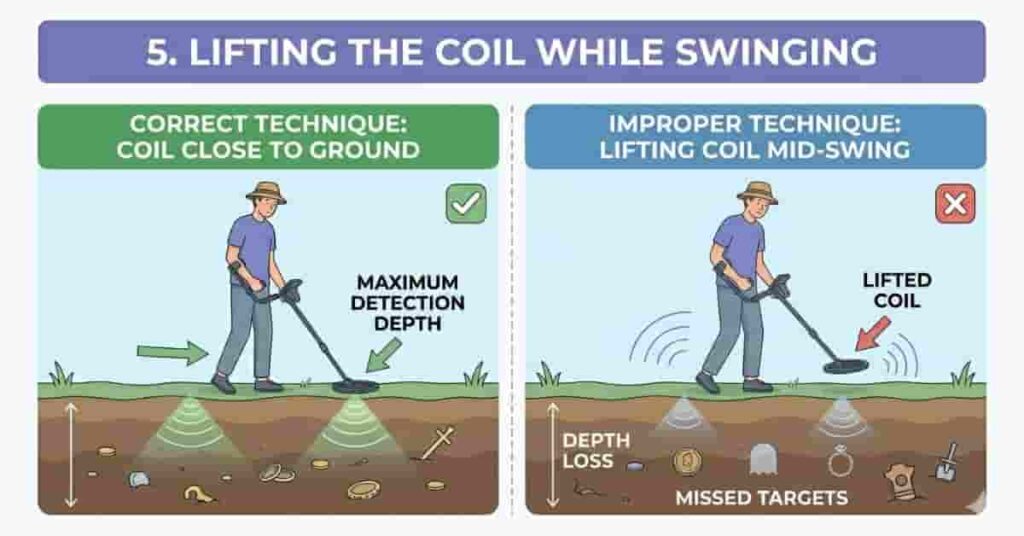
Lifting the coil while swinging is a common beginner mistake that reduces detection depth. Many nMany new detectorists don’t realize that even a few inches off the ground can cause them to miss targets.l detectors sense metals best when the coil is parallel and close to the ground. Lifting it mid-swing weakens the signal, especially for deeper objects like silver coins or relics. Even a brief lift can make your detector ignore smaller or older finds.
To maintain maximum depth, keep the coil steady and at a consistent height above the ground. Focus on smooth, level swings from side to side. Pairing this with proper sweep speed and overlapping swings ensures you don’t leave valuable items undetected.
6. Digging Every Single Signal
One of the most common beginner mistakes to avoid is digging every signal. Not every beep indicates a valuable target, and blindly digging wastes time and energy.
Metal detectors produce different tones depending on the type of metal. Iron usually gives a low, flat sound, while coins and silver items produce higher, sharper tones. Learning to recognize these differences helps you focus on worthwhile signals. Ignoring this step leads to digging lots of trash—old nails, bottle caps, and other junk—which can get frustrating fast.
It’s better to practice target identification with your detector before digging everything. Use tone ID, discrimination settings, and even a small test patch to differentiate trash from treasures. Over time, you’ll develop confidence in deciding which signals are worth pursuing.
7. Not Digging “Jumpy” Signals
Beginners often ignore “jumpy” or unstable signals, thinking they’re just trash. This mistake can cost you valuable finds, especially old silver coins.
Jumpy signals occur when the detector gives fluctuating beeps or inconsistent tones. Older coins, worn relics, or slightly buried metals often produce this behavior. Many beginners assume it’s just an iron or a false reading and move on. In reality, some of the most rewarding finds can hide behind these tricky signals.
To handle jumpy signals, slow down your sweep and pinpoint carefully. Repeated passes over the same spot can help stabilize the reading. Using a pinpointer tool can also confirm if a real target is present before digging.
8. Hunting in the Wrong Locations
Choosing the right location is crucial for successful metal detecting. Many beginners waste hours in areas with little potential, only to feel frustrated by empty finds.
The USA is full of hotspots where treasures are more likely to be found. Old parks, fairgrounds, Civil War battlefields, and beaches often hide coins, jewelry, and relics. These sites can be especially productive because they’ve witnessed decades, if not centuries, of human activity. However, the key is knowing where you’re allowed to search.
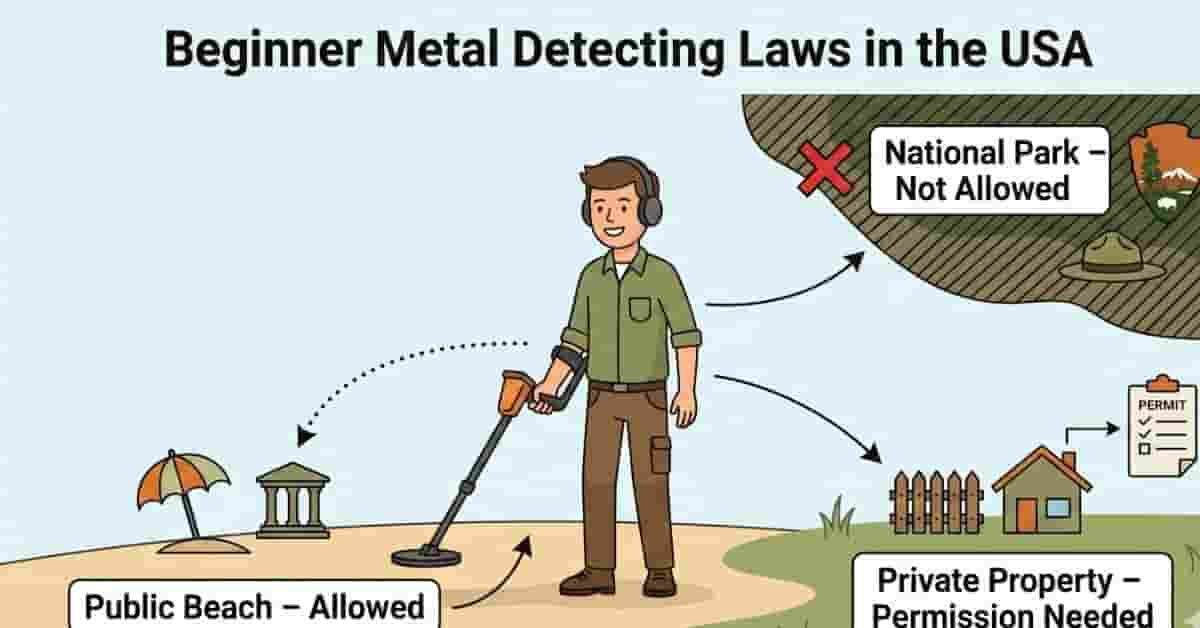
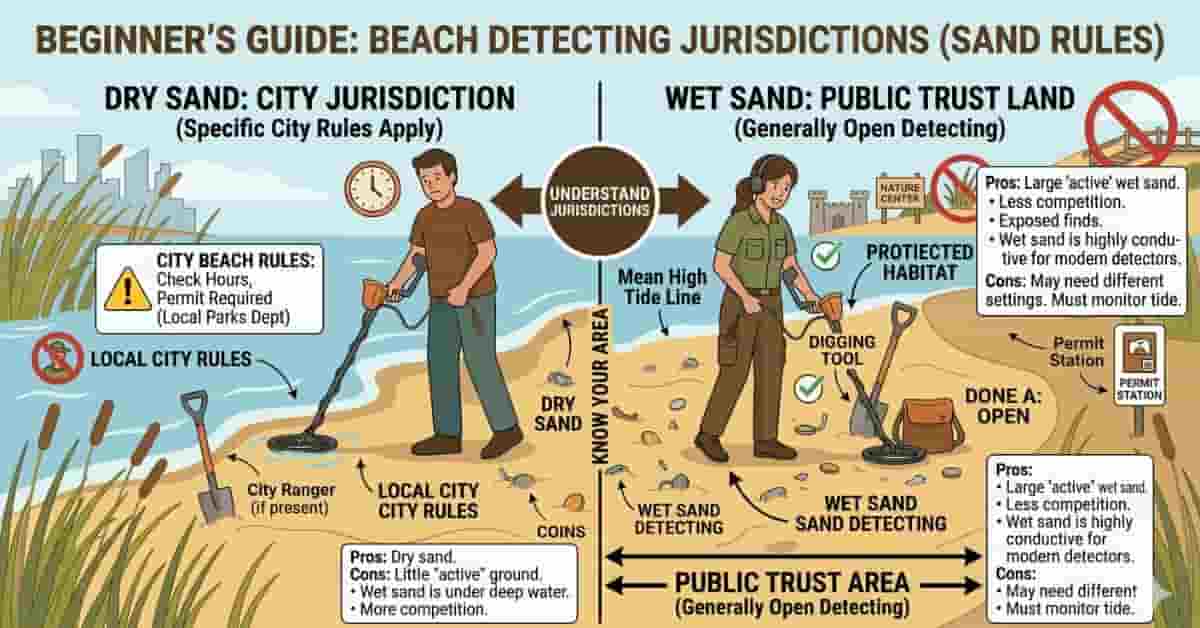
Always check local laws and property rules before you hunt. Many parks and historical sites require permits, and national parks often forbid metal detecting entirely. Ignoring these regulations can lead to fines or confiscation of your equipment. Being responsible ensures the hobby stays safe and legal for everyone.
Focus on high-potential areas where you have permission to act. Pair this with smart detecting techniques, and you’ll increase your chances of exciting finds while respecting the law.
9. Not Checking Local Laws
One of the most costly mistakes in metal detecting is ignoring local laws. Beginners often assume any park or beach is fair game, but in the USA, rules vary widely.
State parks often have restrictions or require permits. National parks strictly prohibit metal detecting, and city-owned lands may need special permission. Digging without proper authorization can lead to fines, confiscated equipment, or even legal trouble. Following the law protects both you and the hobby.
Before heading out, research the specific rules for your target location. Check state park websites, city ordinances, and federal regulations. Local metal-detecting clubs can also provide guidance on legal issues and common pitfalls. By confirming your permissions in advance, you can focus on hunting without worrying about breaking the law.
Responsible detecting ensures that historical and public sites are preserved while you enjoy your hobby safely. Being informed is just as important as your technique in finding valuable targets.
10. Not Using Headphones
Don’t skip headphones. They improve signal clarity and enhance detection efficiency.
Headphones help you hear faint or distant signals that speakers may miss. Subtle tones from coins, rings, or relics can easily be missed without them. Using headphones also blocks out background noise, letting you focus on what matters.
Save battery life by listening through headphones instead of the built-in speaker at high volume. Hunt longer without swapping batteries, even during extended beach or park sessions.
11. Skipping Research Before Hunting
Skipping research is a mistake that can turn a promising hunt into wasted time. Many beginners head straight to a site without knowing its history or potential.
Research helps you target areas with a higher chance of finds. Old maps reveal locations of past buildings, fairgrounds, or pathways where coins and relics may have been lost. Historical aerial images show changes in the landscape over time, helping you identify spots that were once heavily trafficked. County records and local archives can also uncover information about old homes, schools, or parks where treasures may hide.
By doing a little homework, you save hours of unnecessary searching and increase your chances of finding valuable items. Even a 15–20 minute research session can direct you to high-potential areas and make your detecting more efficient.
12. Giving Up Too Soon
One of the most common metal detecting mistakes to avoid is quitting after a few unsuccessful hunts. Beginners often expect instant results and get discouraged when they don’t find treasure right away.
Metal detecting is a hobby that rewards patience. Realistic expectations are key. Most new detectorists don’t find valuable coins or relics on their first few outings. It often takes several sessions to learn the signals, understand your detector, and identify productive locations.
Adopting a “first five hunts” mindset can help. Treat your early hunts as practice—focus on improving technique, learning target tones, and understanding soil conditions. Each outing builds experience, even if the finds are mostly trash. Persistence eventually leads to rewarding discoveries and a deeper understanding of your detector’s capabilities.
13. Not Filling Holes Properly
Failing to fill your holes is a mistake that can harm both the environment and your reputation as a detectorist. Beginners sometimes dig and leave holes, thinking it won’t matter—but it does.
Properly filling holes is a key part of responsible metal detecting. Exposed holes can be a safety hazard for other visitors, especially in parks and public beaches. In the USA, many parks and recreational areas require detectorists to restore the ground to its original condition. Following these rules ensures that hunting remains legal and welcomed by landowners.
Always backfill your holes carefully and tamp down the soil to prevent erosion. Replace any displaced grass or sand to leave the site looking as it was before. Not only does this protect the environment, but it also builds trust in the metal detecting community.
14. Ignoring Pinpointer Tools
Ignoring pinpointer tools is a mistake that slows down your hunts and reduces accuracy. Beginners often rely solely on their detector’s coil, which can make pinpointing targets frustrating.
A pinpointer, like the Garrett Pro-Pointer AT, helps you locate buried items quickly and precisely. Instead of digging blindly, you can narrow down the exact spot of a coin, ring, or relic. This saves time, reduces hole size, and prevents damage to valuable finds.
Using a pinpointer also improves your overall efficiency, especially in trashy areas or tight spaces. It’s a small investment that dramatically increases success and makes detecting more enjoyable. Even experienced detectorists rely on pinpointers for precision and speed.
15. Using Wrong Digging Tools
Using the wrong digging tools is a common metal detecting mistake to avoid. Beginners often try to dig with makeshift tools, which can slow progress and even damage finds.
Different locations require different tools. Beaches are best suited for a sand scoop, which easily moves loose sand without damaging buried coins or jewelry. Parks and grassy areas, however, often need a Lesche digger or sturdy trowel to cut through soil cleanly and efficiently. Using the right tool makes digging faster, safer, and less disruptive to the environment.
Proper tools also help preserve the integrity of your finds. A coin or relic can be scratched or bent if dug with a sharp knife or a flimsy utensil. Investing in location-appropriate tools ensures that your hunting is both productive and responsible.
💡 Pro Tip
Carry both a sand scoop and a Lesche digger if you hunt multiple locations, so you’re always prepared for the terrain.
16. Not Cleaning Finds Properly
Failing to clean your finds properly can damage valuable coins, jewelry, and relics. Beginners often scrub everything with harsh tools or chemicals, thinking it will make items look shiny—but this can lower their value.
Silver and copper require different care. Silver coins are soft and can be scratched easily, so avoid abrasive materials. Gentle soap, water, and a soft cloth are usually enough. Copper items, such as pennies or relics, may have corrosion that requires careful soaking rather than scrubbing.ng method can permanently damage patina, historical markings, or even the metal itself.
17. Detecting in Extreme Conditions Without Prep
Skipping prep in extreme conditions ruins your hunt and equipment. Many beginners ignore the impact of weather and terrain, which can affect performance and safety.
Cold and snow freeze the coil and numb your hands, reducing control. Heat causes fatigue, dehydration, and heatstroke. Wet, salty beach sand corrodes your detector if you don’t clean it. Short sessions in these settings are tough without prep.
Prepare: dress for the weather, stay hydrated, and cover or clean your detector. Plan hunts for cooler hours in the heat or take short breaks in the cold. Readiness keeps you safe and protects your detector.
.
💡 Pro Tip
Carry spare batteries and a small cleaning kit when hunting in harsh conditions to maintain performance and prevent damage.
18. Not Logging Your Finds
Forgetting to log your finds? It’s a common misstep that can hold you back from growing as a metal detectorist. Many beginners skip this step, missing out on learning from their adventures.
Keeping detailed records of each hunt helps you track locations, soil conditions, detector settings, and types of finds. Over time, this information reveals patterns—like which areas are most productive or which techniques work best. Logging also prevents the repetition of low-yield spots and increases efficiency for future hunts.
You don’t need anything fancy—a notebook, spreadsheet, or handy app will do the trick. Be sure to jot down the date, location, depth, and what you uncovered. Snap some photos to add a personal touch and track your progress. With good recordkeeping, your hobby becomes more strategic, structured, and fun, leading to even greater adventures and finds!
💡 Pro Tip
Before each hunt, take a moment to check out your past logs. This will help you zero in on your favorite spots and tweak your approach for even better results!
19. Overusing Discrimination
Overusing discrimination can lead beginners to miss valuable targets. Many new detectorists set their machines to ignore certain metals completely, thinking it will save time.
Discrimination removes unwanted metals like iron, but if you use too much, you might miss small gold rings, jewelry, or coins made of different metals. If you filter too much, your detector might stay quiet over hidden treasures you could find easily. Beginners often rely on discrimination rather than learning the sound clues that indicate whether something is valuable.
A balanced approach works best. Adjust the discrimination to filter out obvious trash while still allowing signals from valuable items. Combining discrimination with tone ID and proper sweep techniques ensures you don’t skip over hidden treasures.
💡 Pro Tip
Start with low discrimination settings in mixed areas. Learn the tones first, then slowly filter out unwanted metals so you don’t lose gold or silver finds.
20. Not Upgrading Coil When Needed
Sticking with the stock coil is a common mistake. Upgrading your coil improves depth and efficiency.
Use a larger coil for more depth and ground coverage—ideal for open fields, parks, and relic hunting. Rely on a smaller coil in tight spaces to separate signals and cut false alarms.
Upgrade your coil to match your environment. This boosts your detector’s precision, efficiency, and your chances for finds.
💡 Pro Tip
Carry a smaller coil for crowded or trashy sites, and switch to a larger coil for open or deeper areas.
21. Expecting Instant Treasure
Expecting instant treasure is a common mistake in metal detecting. Beginners often picture finding coins, jewelry, or relics right away. When results fall short, frustration and quitting can follow.
Metal detecting rewards patience and persistence. Valuable finds come after many hunts and close observation. Focus on progress over time to stay motivated, even if you mostly find trash at first.
Every hunt teaches you about your detector, the soil, and identifying targets. Treat every find as a win and use each session to build skill. Your persistence will lead to more exciting discoveries and a better grasp of the hobby.
💡 Pro Tip
Celebrate progress, stay patient, and keep practicing.
Conclusion
In this guide, we covered the top mistakes beginners make while metal detecting in the USA. By learning how to avoid these mistakes, you will be able to find more valuable items, save time, and enjoy a safer, more rewarding metal detecting experience.
Remember to research locations, use the right settings and tools, and maintain patience on every hunt. Applying these beginner metal detecting tips increases your chances of finding coins, jewelry, and relics while keeping your detecting responsible and fun.
Share your experiences below or read more guides!

Ethan Callaway is a passionate metal detecting enthusiast based in Savannah, Georgia, USA. Currently pursuing a B.S. in Archaeology & Historical Preservation at the University of Georgia, he combines his love for treasure hunting with research-backed insights on metal detecting techniques, safety practices, and site guidance.
Through MetalDetectingUSA.com, Ethan shares practical tips, honest product reviews, and beginner-friendly advice to help both new and experienced detectorists explore metal detecting across the United States with more confidence and understanding.