

Table of Contents
Introduction
Ever wonder what separates ordinary days from the thrill of unearthing lost coins and relics?
Many beginners in the USA start excited but don’t see results. They often use incorrect settings, choose poor locations, or overlook good signals. Without effective tips, it’s easy to feel frustrated after several hunts.
Success relies on simple techniques, smart habits, and understanding your detector. With the right approach, even beginners can find valuable items quickly.
This guide shares 21 proven metal-detecting tips for both beginners and experts. You’ll learn to improve technique, pick better locations, and avoid mistakes. By the end, you’ll feel confident and ready for a successful hunt.
Why Most Beginners Struggle With Metal Detecting
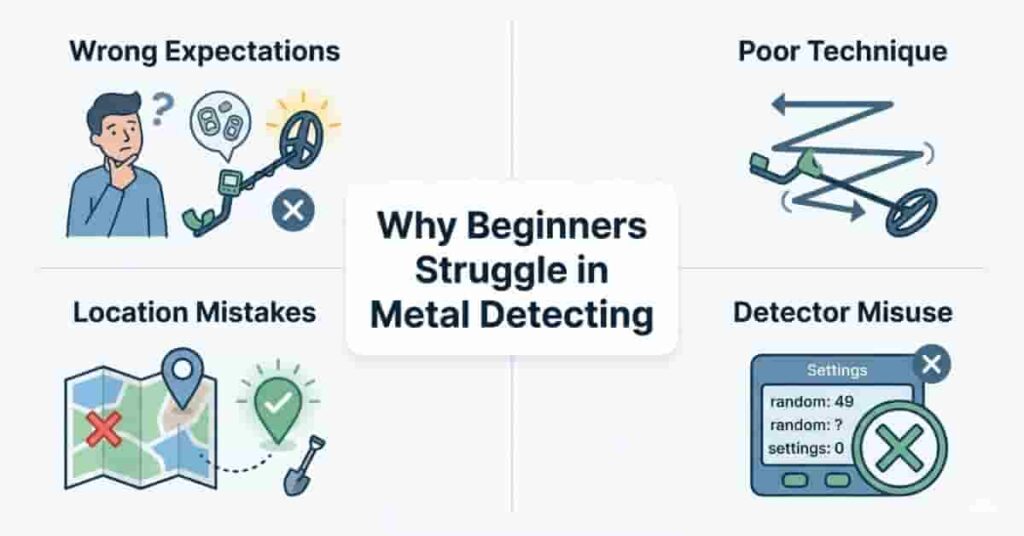
Many beginners jump into the hobby expecting quick treasure, but that rarely happens. Without the right tips for metal detecting, it’s easy to feel lost after a few hunts. Most early struggles come from simple mistakes, not bad luck.
Let’s break down the most common reasons beginners fail—and how you can avoid them, moving step by step through the key challenges.
Wrong Expectations
Many people think metal detecting will bring instant rewards. Movies and videos often show big finds, but real success takes time. You might dig through trash before finding anything valuable, and that’s normal.
Start with a realistic mindset. Focus on learning your detector and understanding signals first. The finds will come with practice.
Pro Tip: Treat your first few hunts as practice sessions, not treasure missions.
Poor Technique
Swinging too fast or lifting the coil can make you miss targets. Beginners often rush, which reduces accuracy and depth.
Keep your coil low and move it slowly across the ground. Overlap your swings to cover more area. Good technique alone can double your chances of finding targets.
Pro Tip: Imagine mowing grass in straight lines—steady and controlled.
Location Mistakes
Even the best detector won’t help in the wrong place. Beginners often search random areas without research.
Focus on places with past human activity, like parks, old homes, or event grounds. These spots are more likely to contain hidden items.
Pro Tip: Always ask, “Why would something valuable be here?”
Detector Misuse
Many users rely on default settings and never adjust them. This limits performance in different soil conditions.
Learn basic settings, such as sensitivity and discrimination. Small adjustments can make a big difference in what you find.
Pro Tip: Spend time testing your yard’s settings before heading out.
21 Metal Detecting Tips That Actually Work
These metal-detecting tips have been proven to help beginners and experienced users find more targets. If you want better results, focus on simple habits that improve accuracy and consistency.
Below are beginner-friendly techniques you can apply on your next hunt.
🔹 Basic Metal Detecting Tips (Beginner Foundation)
If you’re just starting, these basic metal-detecting tips will lay a strong foundation. Master these first before moving to advanced techniques.
1. Start With the Right Detector Settings
Using the wrong settings can miss good targets or create excessive noise. Many beginners rely on factory presets, which may not suit every location.
Start with moderate sensitivity and low discrimination. This helps you hear more signals without overload. Adjust settings slowly based on your environment.
Pro Tip: Test your settings on known metal objects before each hunt.
2. Learn Your Machine Before Upgrading
Many beginners think a better detector will fix their problems. In reality, skill matters more than equipment.
Spend time learning your current machine’s sounds and signals. Each detector has unique tones and target IDs. The more you understand it, the better your results will be.
Pro Tip: Use the same detector for several hunts before considering an upgrade.
3. Dig More Signals When Learning
Ignoring signals too early can make you miss valuable finds. Beginners often depend too much on target ID numbers.
Digging more signals helps you learn what different metals sound like. Over time, you’ll recognize patterns and improve accuracy.
Pro Tip: Treat every signal as a learning opportunity, even if it turns out to be trash.
4. Use Headphones for Clearer Audio
Background noise can make faint signals hard to hear. Wind, traffic, or people can distract you during a hunt.
Headphones help you focus and catch deeper or weaker targets. They also save battery life on many detectors.
Pro Tip: Choose comfortable headphones with volume control for long sessions.
5. Practice in Your Own Yard First
Jumping into unknown locations can feel overwhelming. A simple practice area helps you build confidence.
Bury coins, nails, and small objects in your yard. Then scan them to learn how your detector responds. This improves your skills quickly.
Pro Tip: Create a small “test garden” to practice different signals anytime.
🔹 Smart Location & Research Tips
Finding the right spot is just as important as using the right detector. These metal detecting tips and techniques focus on location and research, helping you find areas where valuable items are more likely to be found.
6. Research Old Maps and Historical Sites
Random searching rarely brings great results. The best finds come from places with a history of human activity.
Look at old maps, local records, and historical landmarks. Focus on areas like old schools, fairgrounds, or abandoned homes. These spots often hide coins and relics.
Pro Tip: Compare old maps with modern ones to find forgotten locations.
7. Focus on High-Traffic Areas
Places where people gather usually hold more lost items. Parks, picnic areas, and sports fields are great starting points.
Think about where people sit, walk, or relax. These areas often have dropped coins, jewelry, or small valuables.
Pro Tip: Start near benches, walkways, and entrances for better results.
8. Hunt After Events or Holidays
Timing can make a big difference in your success. After events or holidays, the ground is often full of fresh drops.
Look for areas used during festivals, fairs, or gatherings. These locations can yield quick, easy finds.
Pro Tip: Detect early in the morning after an event, before others arrive.
9. Get Proper Permission
Detecting without permission can lead to legal trouble. Always check local rules before starting.
Ask property owners or local authorities if needed. Being respectful helps protect the hobby and builds trust.
Pro Tip: Carry a small card explaining your hobby when asking for permission.
10. Revisit Productive Sites
Many beginners leave a site after one visit. This is a mistake, as good locations often hold more targets.
Return to spots where you already found items. Use different settings or search patterns to uncover missed targets.
Pro Tip: Wait a few weeks before revisiting to uncover any new items.
🔹 Advanced Metal Detecting Tips
Once you understand the basics, these advanced metal detecting tips can take your skills to the next level. Small adjustments and smarter techniques often lead to better finds.
11. Master Ground Balancing
Ground minerals can affect how your detector reads signals. If your machine isn’t balanced, you may miss deep or small targets.
Use manual or automatic ground balancing based on your detector. Adjust it whenever the soil changes, especially in new locations.
Pro Tip: Recheck ground balance when you notice unstable or noisy signals.
12. Adjust Sensitivity for Soil Conditions
High sensitivity sounds powerful, but it can generate excessive noise in mineralized soil. Low sensitivity, on the other hand, may miss deeper targets.
Start with medium sensitivity and adjust slowly. Increase it in clean areas and reduce it in noisy grounds.
Pro Tip: Stable signals matter more than maximum depth.
13. Understand Target ID Numbers
Target ID numbers help identify the type of metal underground. However, they are not always perfect.
Learn the common ranges for coins, pull tabs, and junk. Over time, you’ll recognize patterns and make better digging decisions.
Pro Tip: Always double-check signals that repeat clearly, even if the ID seems off.
14. Use Discrimination Strategically
Discrimination helps filter out unwanted metals, such as iron. But using too much can hide valuable targets.
Keep discrimination low in new areas to hear more signals. Increase it slightly in trash-heavy spots to stay efficient.
Pro Tip: When in doubt, dig uncertain signals to avoid missing good finds.
15. Grid Your Search Pattern
Random searching leads to missed areas and uneven coverage. A grid pattern ensures you scan every part of the ground.
Walk in straight lines and overlap each swing. Then turn and scan the area again from a different angle.
Pro Tip: Mark your path mentally or use visual markers to stay consistent.
🔹 Efficiency & Recovery Tips
Finding targets is only half the job. These metal detecting tips and tricks focus on saving time and recovering items cleanly. Better recovery means faster hunts and better results.
16. Use a Pinpointer to Save Time
A pinpointer helps you locate the exact spot of a target in the hole. Without it, you may waste time digging around blindly.
It speeds up recovery and reduces frustration, especially for small items. Most experienced detectorists rely on one for every hunt.
Pro Tip: Check the hole and the dirt pile with your pinpointer before moving on.
17. Cut Clean Plugs (Leave No Trace)
Messy digging can damage grass and attract complaints. Clean recovery keeps areas looking untouched.
Cut a neat plug and place it back carefully after digging. This protects the ground and keeps metal detecting welcome in public spaces.
Pro Tip: Use a horseshoe-shaped cut so the grass stays attached and heals faster.
18. Carry the Right Digging Tools
Using the wrong tools slows you down and makes digging harder. A strong digging tool can save time and effort.
Carry a hand digger for small targets and a stronger shovel for deeper ones. Choose tools based on your location and soil type.
Pro Tip: Keep your tools lightweight but durable for long detecting sessions.
19. Secure and Organize Your Finds
Loose items can get lost or damaged during your hunt. Staying organized helps protect your finds.
Use separate pouches for trash and valuables. This keeps your gear clean and makes sorting easier later.
Pro Tip: Check your pouch regularly to avoid losing small or valuable items.
🔹 Mindset & Strategy Tips
Success in metal detecting isn’t just about tools or techniques. The right mindset and strategy often make the biggest difference. These metal-detecting tips will help you stay consistent and improve over time.
20. Be Patient — Big Finds Take Time
Many beginners quit too early because they don’t see quick results. In reality, valuable finds often come after many average hunts.
Stay patient and keep practicing. Each signal you dig teaches you something new. Over time, your skills improve, and better finds follow.
Pro Tip: Focus on progress, not just results. Even small finds mean you’re learning.
21. Keep a Detecting Journal
Tracking your hunts can help you improve faster. Most beginners rely on memory, which leads to repeated mistakes.
Write down locations, settings, and what you find. This helps you understand what works best in different conditions. Over time, patterns will become clear.
Pro Tip: Note the weather, soil type, and successful signals for better future decisions.
Common Mistakes That Kill Your Finds
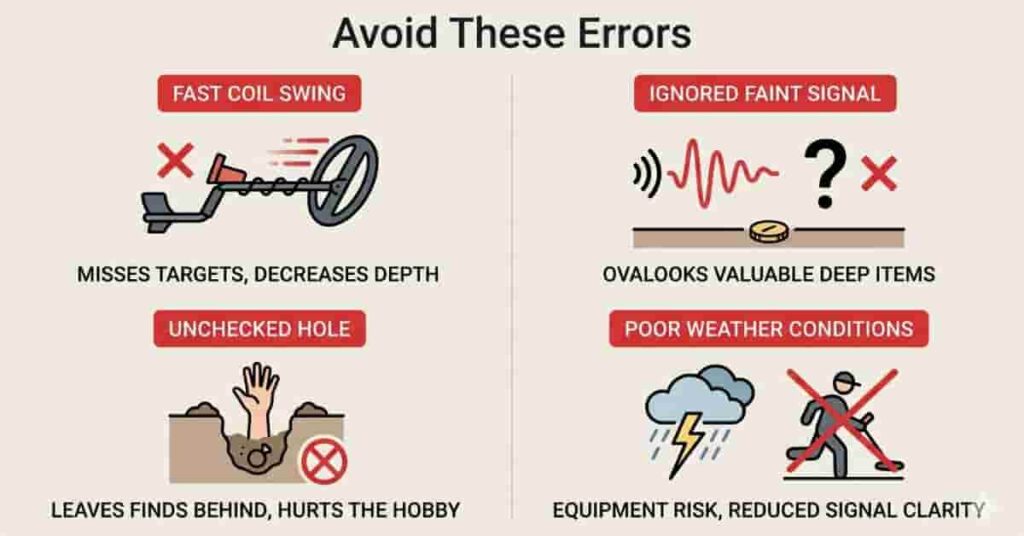
Many beginners miss good targets because of simple errors. These mistakes can cost you coins, jewelry, and deeper finds. The good news is they are easy to fix once you know them.
Avoiding these issues will instantly improve your results.
Swinging Too Fast
Moving the coil too quickly reduces your detector’s ability to read signals. Fast swings can skip over small or deep targets.
Slow down and keep your movements steady. A controlled swing helps your detector process signals more accurately.
Pro Tip: If you feel rushed, pause and reset your pace before continuing.
Ignoring Faint Signals
Weak or broken signals often get ignored by beginners. However, these can be deeper or more valuable targets.
Train your ear to notice soft tones. Some of the best finds don’t sound perfect.
Pro Tip: If a signal repeats, even faintly, it’s worth checking.
Not Checking the Hole Again
Many people stop after finding one item. This can lead to missed targets still in the hole.
Always scan the hole and remove dirt again. Multiple items can be close together.
Pro Tip: Re-scan from different angles to catch hidden signals.
Detecting in Poor Conditions
Bad conditions, such as heavy mineralization or wet, noisy ground, can affect your results. Beginners often don’t adjust for this.
Learn to recognize when conditions are limiting your detector. Adjust settings or change location if needed.
Beginner vs Advanced Strategy – What Changes?
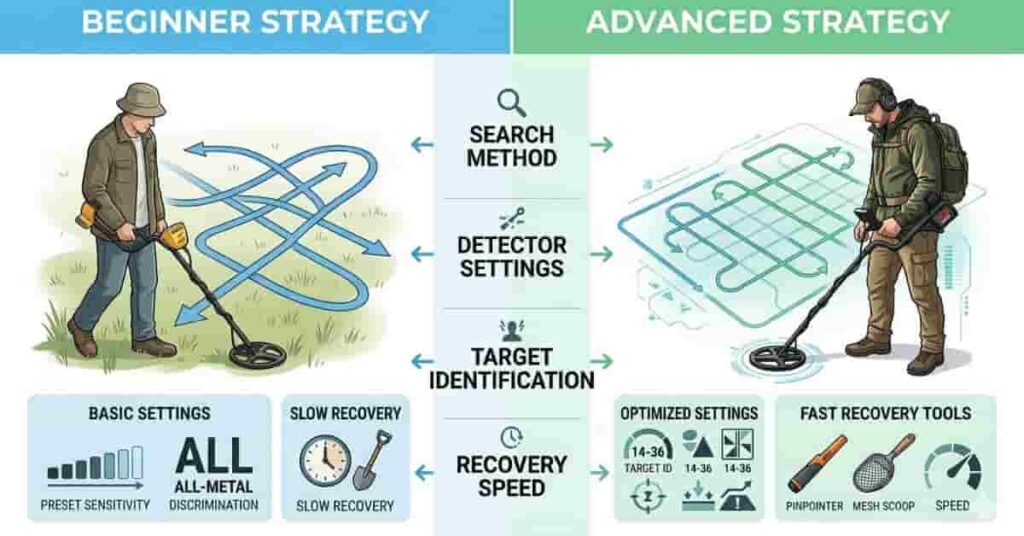
As you improve at metal detecting, your strategy changes significantly. Beginners focus on finding anything. Advanced detectorists focus on finding the right targets faster. These metal-detecting tips for beginners will show you how your mindset shifts over time.
Signal Interpretation
Beginners often rely heavily on target IDs and clear tones. If the signal is weak or unclear, they usually skip it.
Advanced users listen for subtle changes in tone and repeat signals. They understand that good targets don’t always sound perfect, especially at depth.
Site Selection
Beginners usually search random parks or open areas without much research. This often leads to low-quality finds.
Advanced detectorists study history, maps, and patterns of human activity. They chose locations where people gathered for years.
Equipment Choice
Beginners often depend on default settings and basic gear. They may think expensive detectors guarantee success.
Advanced users fine-tune settings based on soil type, noise levels, and target type. They also carry specialized tools for different conditions.
Recovery Speed
Beginners dig slowly and sometimes struggle to locate targets. They may also waste time re-digging the same spot.
Advanced users work faster with pinpointers and clean recovery methods. They know how to locate and extract targets efficiently.
How to Improve Faster Than Other Detectorists

If you want to get better quickly, you need more than just time in the field. Smart learning habits separate fast-improving detectorists from slow ones. These metal-detecting tips will help you improve your skills much faster than the average person.
Join Local Groups
Metal detecting groups are one of the fastest ways to improve. You learn real-world techniques from experienced hunters.
You also get access to group hunts where people share locations, strategies, and feedback. This significantly shortens your learning curve.
Study Successful Hunters
Watch how skilled detectorists work in the field. Notice how they swing, choose spots, and respond to signals.
You can learn a lot from videos, forums, and real-life hunters. Pay attention to patterns, not just big finds.
Review Your Settings
Many beginners set their detector once and never change it. This slows down progress.
Check your settings after each hunt. Small adjustments can improve depth, accuracy, and stability.
Analyze Failed Hunts
Every bad hunt has a lesson. Most beginners ignore mistakes and move on too quickly.
Think about what went wrong—wrong location, poor settings, or missed signals. This helps you avoid repeating errors.
Conclusion
Metal detecting becomes easier when you focus on the right habits and simple techniques. This guide covered 21 practical tips, common mistakes, and strategies to help beginners improve faster and find better targets.
With the right metal detecting tips, you can avoid beginner errors, choose better locations, and improve your detecting skills step by step. Success comes from patience, practice, and learning how your detector responds in different conditions.
Start applying these techniques on your next hunt and track your progress as you go. Small improvements quickly add up to better results in the field.
If you found this guide helpful, share it with other beginners or leave a comment with your own experience. You can also explore more metal detecting guides on our site to keep improving your skills.

Ethan Callaway is a passionate metal detecting enthusiast based in Savannah, Georgia, USA. Currently pursuing a B.S. in Archaeology & Historical Preservation at the University of Georgia, he combines his love for treasure hunting with research-backed insights on metal detecting techniques, safety practices, and site guidance.
Through MetalDetectingUSA.com, Ethan shares practical tips, honest product reviews, and beginner-friendly advice to help both new and experienced detectorists explore metal detecting across the United States with more confidence and understanding.