
Table of Contents
Introduction
Could your next metal detecting adventure accidentally land you in legal trouble?
Many beginners start treasure hunting unaware of all the metal detecting rules. In the United States, regulations vary by location. Federal lands, state parks, beaches, and private property often have different requirements. Ignoring these can result in fines, equipment confiscation, or legal trouble.
For hobbyists, understanding basic regulations is as important as choosing the right metal detector. A little knowledge can protect both your finds and your hobby. This guide covers how metal detecting laws work in the United States. You’ll learn where detecting is allowed, restricted, and when permits are needed. We’ll also address common mistakes beginners make and how to avoid them.
By the end, you’ll know the essential legal steps for metal detecting—where you can search, what permissions you may need, and tips to avoid common legal mistakes. This knowledge will help you hunt confidently and legally.
Are There Laws Against Metal Detecting?
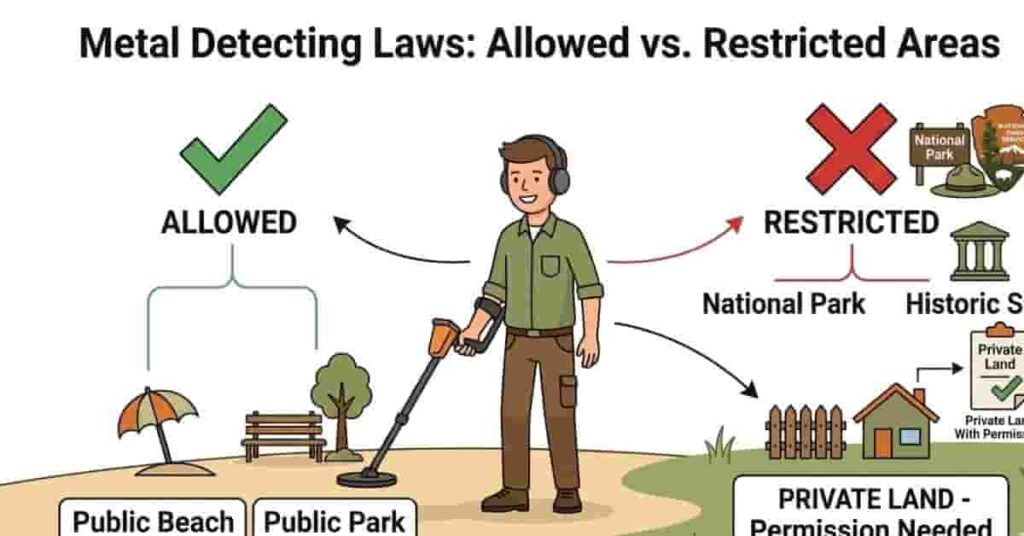
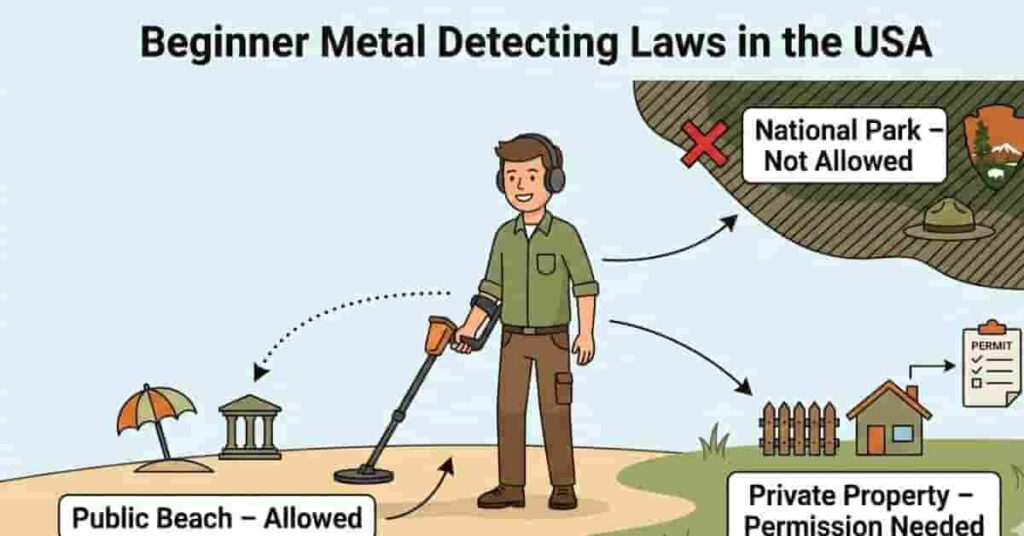
Short Answer (Featured Snippet) Yes, there are laws that regulate metal detecting in the United States. Federal, state, and local governments control where detection is allowed. Metal detecting is usually legal on many public beaches and on private property with permission. However, it becomes illegal in protected areas such as national parks or historic sites.
Metal detecting laws exist to protect cultural history, natural environments, and property rights. Because of this, the rules can change depending on the location. A place that allows detection in one city may restrict it in another.
In general, three levels of rules apply across the country:
- Federal laws are regulations created by the United States government that apply nationwide. These laws regulate national parks, land owned by the federal government, and protected archaeological sites, which are locations preserved for their historical significance.
- State laws control detection in state parks and state-managed public land.
- Local laws are the city or county government’s rules. They apply to areas like city parks, public beaches managed by the city or county, and community recreation areas, meaning public spaces set aside for local residents’ use.
For beginners, a major mistake is assuming all public land is open to hunting. In fact, many popular outdoor areas are legally off-limits.
Metal detecting is legal when you have landowner permission on private property, the area is not historically protected, and local rules allow it.
- The area is not historically protected land, which means it is not designated by law for preservation due to its cultural or historical importance.
- Local park rules allow recreational detecting.
It becomes illegal when someone:
- Detects in national parks or archaeological sites
- Removes historical artifacts protected by federal law
- Detects on private land without permission
Learning these basic rules helps beginners avoid fines and protect historical sites.
Takeaways
- Metal detecting is legal in many places, but always consider specific location rules.
- Federal, state, and local governments set specific restrictions you must follow.
- Protected historical areas usually ban detecting completely.
- Take action: check rules and get proper permissions before you go metal detecting to stay legal and responsible.
Understanding Metal Detecting and the Law in the United States
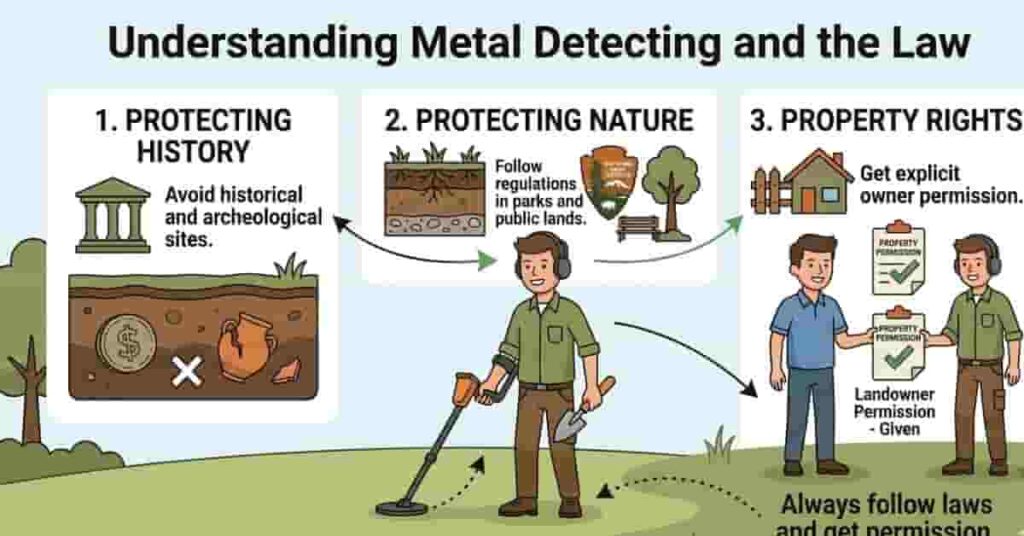
Metal detecting is a fun hobby, but there are important laws in the United States to protect history, nature, and private property. Understanding these rules lets beginners enjoy the hobby without causing harm or breaking the law.
Why These Laws Exist
Many metal detecting laws protect cultural and historical items at archaeological sites, which may have coins or artifacts valuable for understanding the past.
If people remove these objects without proper study, valuable historical information can disappear forever. Due to this, violating laws about artifact removal can lead to criminal charges, fines, or confiscation of found items. That is why some areas strictly limit or ban detecting activities.
Laws also protect the environment. Digging in parks or delicate ecosystems can harm habitats and landscapes. Regulations prevent damage but allow responsible recreation in approved areas.
Historical Artifact Protection
Some underground items are historical artifacts under federal law, making it illegal to remove them from protected sites without permission.
Federal laws like the Archaeological Resources Protection Act (ARPA) protect artifacts that are more than 100 years old on federal land. These laws help preserve historical sites for research, education, and future generations.
Environmental Protection
Many parks and public lands allow outdoor activities, but still limit digging or excavation. Even small holes can damage grass, soil structure, or sensitive habitats.
Because of this, some public areas only allow metal detecting under specific conditions. For example:
- Detection may be limited to designated areas.
- Digging tools may be restricted.
- Users may be required to fill in all holes.
These rules help keep public land safe and clean for everyone.
Trespassing and Property Rights
Property rights are key in metal detecting laws; detecting on private land almost always requires the owner’s permission.
Without permission, detecting on private property can be considered trespassing. This may result in criminal charges or fines. Even if you find something valuable, the landowner may legally own the item.
Experienced detectorists suggest written permission from landowners to protect both parties from misunderstandings.
Takeaways
- Metal detecting laws protect history, nature, and property rights.
- Archaeological artifacts are often protected by federal law.
- Environmental rules help prevent damage to parks and ecosystems.
- Before you go, always make sure you have clear permission and follow the laws and guidelines where you detect. Help preserve history, nature, and trust so future generations can enjoy this hobby—be a responsible detectorist every time you head out!
Federal Metal Detecting Laws (Public Lands & National Parks)
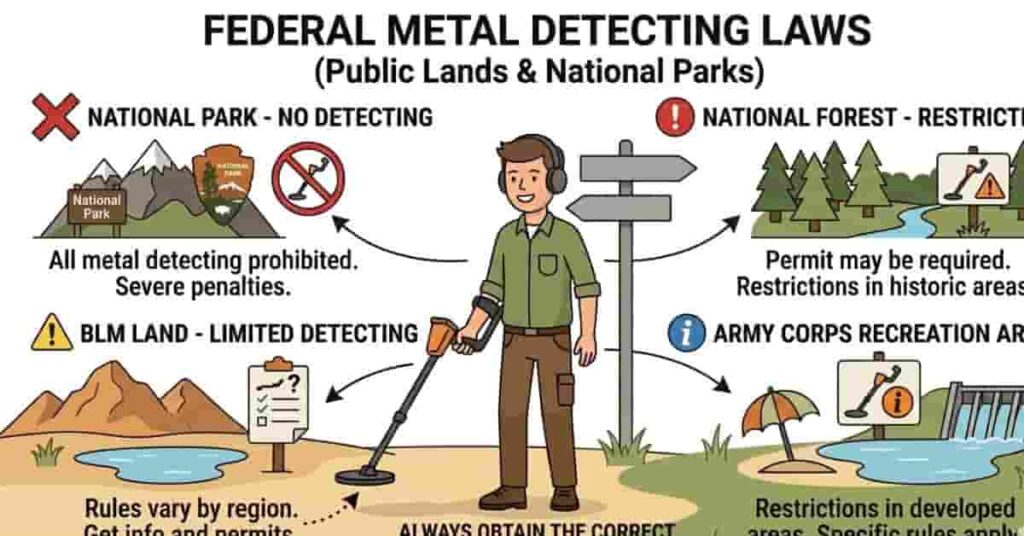
Federal land in the United States is managed to protect natural landscapes and historical resources, so rules for metal detecting are often stricter than in local parks.
Beginners often assume all public land is open for detecting. In reality, many federal lands either ban the activity or limit it to certain areas.
National Parks (Strictly Prohibited)
Metal detecting is not allowed in U.S. national parks. The National Park Service protects these areas for conservation, education, and historical preservation.
Visitors cannot use metal detectors, dig for objects, or remove items from the ground. Even small discoveries like coins or relics must remain where they are found.
Breaking this rule can lead to fines, equipment confiscation, or other penalties.
National Forests (Restricted)
National forests generally allow more activities, but metal detecting is usually limited to modern items like coins or jewelry.
However, important restrictions apply:
- Detecting near historical or archaeological sites is prohibited.
- Removing historical artifacts is illegal.
- Some locations may require special permission.
Local forest ranger offices often provide the most accurate rules for specific areas.
Bureau of Land Management (BLM) Land
BLM land is often open to recreation, and metal detecting may be allowed for modern items in some areas.
Federal protection laws still apply: detecting cannot disturb archaeological or historic sites, and removing protected artifacts from BLM land can lead to serious penalties.
Army Corps of Engineers Land
The U.S. Army Corps of Engineers manages recreation areas where metal detecting is sometimes allowed, especially at swimming beaches.
Rules can differ by location, so visitors should check local site regulations before visiting.
Key Federal Laws That Affect Metal Detecting
Several federal laws protect historical resources on public land.
Archaeological Resources Protection Act (ARPA)
This law makes it illegal to remove archaeological resources over 100 years old from federal land without special government permission.
Antiquities Act
The Antiquities Act allows the government to protect historic landmarks, structures, and objects on federal property by formally declaring them protected sites.
These laws exist to ensure that important artifacts are preserved for research and public understanding of history.
Takeaways
- Metal detecting is banned in national parks.
- National forests and BLM land may allow limited detection.
- Archaeological artifacts are protected by federal law.
- Before you start metal detecting on federal land, make sure to research and follow all relevant regulations. Contact the appropriate agency or local office to confirm current rules. Taking these steps protects historical resources and keeps you within the law—always act responsibly and stay informed before detecting.
Metal Detecting Laws by State (General Overview)
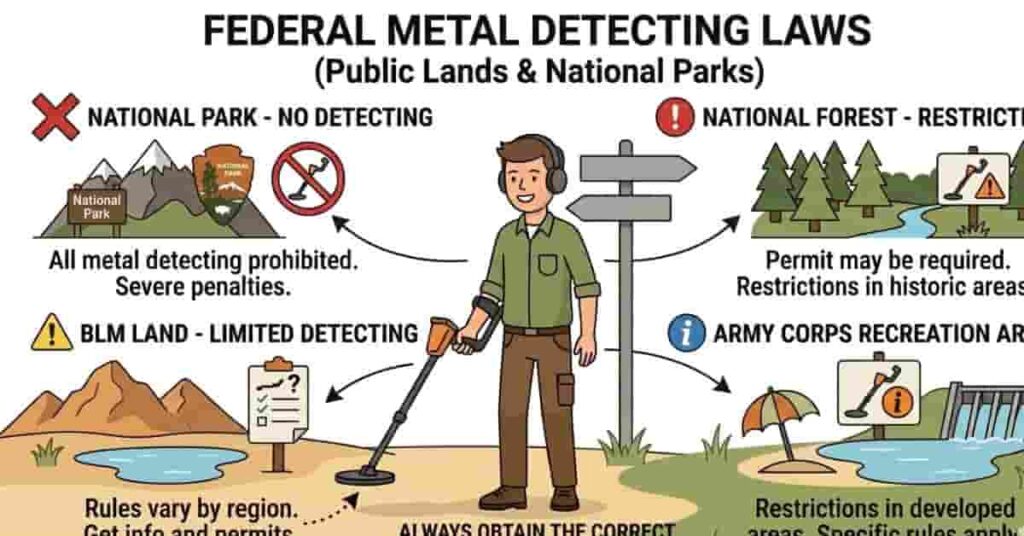
Metal detecting laws vary widely by state. Each manages its own parks, land, and resources, so legality can change across borders.
This confuses many beginners. A location may permit metal detecting in one state and ban it in another. Always check local rules first. Understanding these differences is important, as they shape where you can legally detect next.
State Parks vs City Parks
Many states control metal detecting through state park regulations. Some parks allow hobby detecting in certain areas, while others prohibit digging completely. Rules often depend on environmental protection and historical preservation policies.
City parks usually follow local government rules, which can be more flexible. Some cities allow metal detecting if users follow simple guidelines, such as filling holes and avoiding landscaped areas.
Common city park rules may include:
- Detecting is allowed only in open grassy areas
- No digging near historic markers or monuments
- All holes must be filled properly.
However, local regulations can change quickly. A quick check with the city parks department can prevent problems later.
Permit Requirements
Some states require a metal detecting permit before detecting in public parks or on beaches. These permits help park managers control digging and protect public land.
Permit rules often depend on the location. For example:
- Some parks allow detecting without a permit.
- Others require a free registration permit.
- Certain parks may require a paid annual permit.
The permit process usually involves submitting an application to the local parks department or authority, agreeing to follow specific rules about digging tools, protection of artifacts, and site safety, and may require a short review or approval before you can begin detecting.
Examples of State Differences
A few examples show how much rules can vary:
- California: Many state parks restrict metal detecting, especially in protected coastal areas.
- Texas: Some public areas allow detecting with basic guidelines.
- New York: Certain state parks allow metal detecting in designated zones.
These examples show why researching the rules before searching is essential.
Because laws can be complex, this overview won’t detail every state. Instead, detailed guides will explore each state’s rules separately.
Takeaways
- Metal detecting laws can vary greatly from one state to another.
- State parks usually have stricter rules than city parks.
- Some locations require permits before detecting.
- Take initiative: Review local regulations and obtain permits before every hunt for peace of mind and legal security.
Laws for Metal Detecting on Beaches
Beaches are one of the most popular places for treasure hunting. However, beach metal detecting laws can still vary depending on who manages the shoreline. Public beaches, private beaches, and city-managed areas often follow different rules.
Before you start detecting, it helps to understand how beach access and local regulations work.
Public Beaches
Many public beaches with recreational access contain lost coins, jewelry, and other valuables.
Even when detecting is allowed, common rules usually apply:
- Detect only in open recreation areas.
- Fill all holes after digging.
- Avoid protected dunes or vegetation zones.
- Do not remove historical artifacts.
Some beaches may also restrict digging tools to small hand scoops instead of large shovels.
Private Beaches
Private beaches follow property ownership rules. Resorts, hotels, or homeowners may control access to these areas.
Metal detecting on private beaches usually requires permission from the owner or property manager. Detecting without permission could be considered trespassing.
When permission is granted, many detectorists agree to simple conditions such as sharing valuable finds or avoiding busy guest areas.
Low Tide vs High Tide Areas
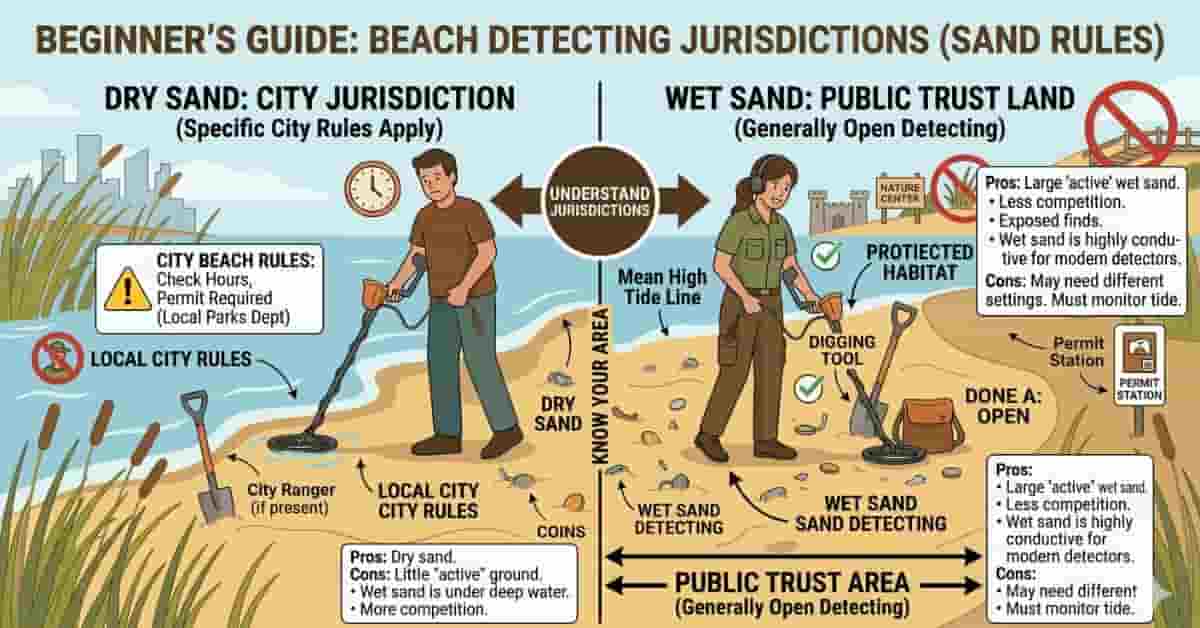
Beach detecting rules sometimes depend on the tide zone, as different parts of the shoreline may be managed by different authorities. For example, one agency might control the wet sand area (below high tide), while another manages the dry sand above the high tide line.
For example:
- Wet sand areas near the waterline may allow detection in some locations.
- Dry sand areas higher on the beach may follow local park rules.
Because management and rules can differ between tide zones, always check which authority sets the regulations for each specific beach area before detecting near the shoreline.
City-Managed Beaches
Many popular beaches are managed by city or county park departments. These locations often allow metal detecting but require responsible behavior.
Typical city beach guidelines include:
- Detect only during low-traffic hours.
- Avoid crowded swimming zones.
- Always remove trash and refill holes.
Some cities may also require a small permit or registration before detecting.
Takeaways
- Most public beaches allow detecting with basic rules.
- Private beaches require the owner or manager’s permission.
- Rules may differ in high and low tide zones.
- City-managed beaches may have extra local rules.
Metal Detecting on Private Property (Trespassing Laws)
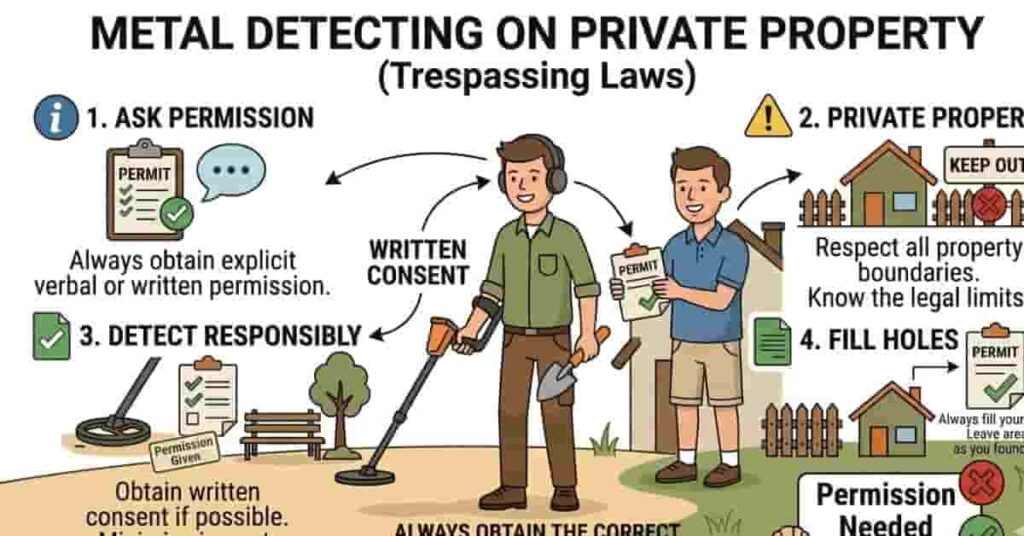
Private land can yield old coins, relics, and jewelry, but obtaining permission is essential. In the United States, entering private property without approval risks legal trouble.
Always clearly communicate with property owners before metal detecting on private land.
Permission Requirements
Most states require landowner permission, even for abandoned or unused land.
Responsible detectorists ask directly to avoid misunderstandings and ensure protection for all.
Common permission rules include:
- Always ask the property owner first.
- Respect any areas they ask you to avoid
- Agree on rules for digging and filling holes.
Getting permission also builds trust and may lead to future detection opportunities.
Written vs Verbal Consent
Permission is usually granted after a conversation with the property owner, either verbally or in writing.
Sometimes, written permission is an even safer route. A simple written note can help both you and the owner feel confident about the arrangement.
Written permission can also clarify:
- Areas where detecting is allowed
- Rules about digging and cleanup
- How will valuable finds be handled?
Taking this small step can make sure everyone feels comfortable and valued from the start.
Liability Issues
Some landowners worry about what might happen if someone gets hurt on their property, and that’s understandable. Addressing these concerns with kindness can really help.
Sharing a simple agreement that releases the landowner from responsibilitycan give them peace of mind. This extra thoughtfulness often helps owners feel good about allowing access.
Above all, show respect for property rules, work carefully, and enjoy building a positive relationship with the owner.
What Happens If You Find Something Valuable?
Finding something valuable on private land can raise ownership questions. In many situations, the property owner may legally own the item found on their land, and disputes over ownership can sometimes result in legal action if not resolved in advance.
Because of this, experienced hobbyists often discuss finding ownership before they start detecting.
Common agreements include:
- Sharing valuable discoveries
- Giving the item to the property owner
- By setting clear expectations together, everyone can enjoy this wonderful hobby with trust and respect.
Takeaways
- Always get permission before detecting on private property.
- Written permission can help avoid misunderstandings.
- Liability concerns may affect landowner decisions.
- Valuable finds may legally belong to the property owner.
What Happens If You Break Metal Detecting Laws?
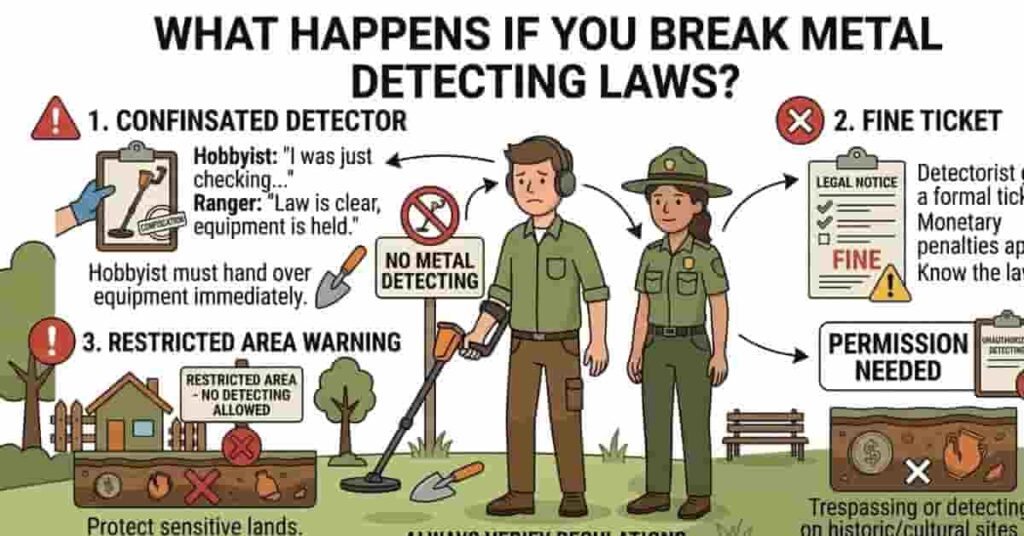
Breaking metal detecting rules brings harsh consequences. Many beginners think the worst is being asked to leave, but violating laws may mean fines, legal charges, or losing your equipment.
The specific consequences you might face depend on where the violation occurs.
For example, federal land, state parks, and local property each have their own enforcement rules.
Fines
Fines are the most common penalty for illegal metal detecting. Park rangers or local authorities may issue a citation if someone is detected in restricted areas.
Common situations that can lead to fines include:
- Detecting in protected parks or historic sites
- Digging in restricted public areas
- Ignoring posted park regulations
The amount of the fine depends on both the location and the seriousness of the violation. While some local infractions incur smaller penalties, protected areas usually result in higher fines.
Equipment Confiscation
Authorities may seize all equipment used during illegal detecting: your metal detector, digging tools, and recovered items.
Equipment seizure is more likely when detection occurs in protected areas such as national parks or archaeological sites.
For beginners, losing expensive equipment due to confiscation can be a major setback and emphasizes the importance of following rules.
Misdemeanor Charges
In some cases, illegal detection may lead to misdemeanor charges. This can happen when someone knowingly ignores posted rules or trespasses on restricted property.
A misdemeanor may involve:
- Court appearances
- Additional fines
- Possible probation depending on the situation
Although misdemeanor charges are uncommon for honest mistakes, multiple or deliberate violations can increase the severity of legal consequences.
Federal Penalties
Federal land violations mean the harshest penalties. Laws aggressively protect archaeological resources at national parks and federal sites.
Under federal law, removing protected artifacts from federal land without permission can result in:
- Significant fines
- Seizure of equipment and recovered items
- Possible criminal charges
These laws are in place to protect historical artifacts and cultural heritage, making it important to follow proper procedures when metal detecting.
Takeaways
- Breaking metal detecting laws can result in fines, legal penalties, or equipment confiscation.
- Authorities may confiscate metal detectors and tools used illegally.
- Serious violations may result in misdemeanor charges.
- Federal land violations often carry the strongest penalties.
Do You Need a Permit for Metal Detecting?
In many places, metal detecting is allowed without special paperwork. However, some parks and public areas may require a metal detecting permit before you begin. Permit rules depend on the land manager and the type of location.
Understanding when permits apply helps beginners avoid fines and follow local regulations.
When Permits Are Required
Some government agencies require permits to control digging activity and protect public spaces. Permits are more often needed in areas managed for recreation, while open public land or private property may have different rules.
You may need a permit when detecting in:
- Certain state parks
- Some city or county parks
- Public beaches managed by local authorities
- Recreation areas near lakes or reservoirs
Permits come with different rules based on location. Some may limit only digging depth or tool types, while others restrict detecting in protected zones.
Where to Apply
Permit applications usually come from the agency that manages the land. This may include a state park office, a city parks department, or a recreation authority.
Common places to apply include:
- State park visitor centers
- Local parks and recreation offices
- Official city or county websites
Some locations allow online registration, while others issue permits in person.
Typical Costs
Permit costs vary. Some are free; others charge a small annual fee.
Typical options may include:
- Free registration permits for hobby use.
- Low-cost annual permits for public parks
- Temporary permits for special recreation areas
If a fee exists, it usually helps maintain park facilities and protect natural areas.
When No Permit Is Needed
Many places allow metal detecting without a permit. This often includes:
- Private property with permission
- Some public beaches
- Certain city parks that allow recreational detecting
Even when no permit is required, park rules still apply. Always check posted signs or local regulations before detecting.
Takeaways
- Some parks require a permit for detecting.
- Permits are issued by state or city park departments.
- Costs are typically low or free.
- Private land with permission usually does not require a permit.
Tips to Stay Legal While Metal Detecting
Metal detecting is much more enjoyable when you know you are following the rules. Many legal problems, such as fines, confiscation of equipment, or trespassing charges, happen because beginners skip a simple step before detecting. Learning a few responsible habits can help you avoid fines and protect the hobby.
Here are some friendly tips to help you stay safe and legal on your metal detecting adventures across the United States.
Check Local Rules Before You Start
Laws can change depending on the location. Detecting on federal land without permission can result in confiscation of finds or legal action. State parks and city parks may also have specific regulations with penalties for violations.
Before exploring a new area, check with the park authority or local government for their rules. A quick search or friendly phone call can save you a lot of trouble down the road.
Even experienced detectorists always confirm the rules for new areas.
Avoid Historical or Protected Sites
Historical locations are full of stories and special finds, but they’re protected for good reason. That’s why detecting in these areas is usually off-limits.
Avoid places such as:
- Historic landmarks or monuments
- Archaeological sites
- Protected heritage locations
These sites are protected by law, and removing artifacts can lead to heavy penalties, including significant fines or criminal charges.
Always Fill Your Holes
Responsible digging is one of the best ways to show care for the hobby. Leaving holes behind hurts public spaces and creates risks for everyone who visits.
Good detecting habits include:
- Cutting small, neat plugs in grass areas
- Replacing soil carefully
- Leaving the ground looking untouched
Park managers are more likely to allow detection when hobbyists follow these practices.
Carry Proof of Permission
When you’re detecting on private property, it’s always smart to have proof that you’ve got the green light. A simple note or message from the owner works well.
If someone asks about your detecting, showing your permission will clear things up quickly and politely.
Many detectorists save written proof of permission on their phone for easy access.
Respect Posted Signs
Signs exist for a reason. If an area clearly says “No Digging” or “No Metal Detecting,” it is best to move to another location to avoid fines or legal issues.
Ignoring posted rules can lead to fines or removal from the area.
Following posted signs keeps the hobby welcome in more locations.
Pro Tip
Experienced hobbyists like to follow the ‘leave no trace’ mindset. This means picking up trash, filling your holes, and leaving spaces even better than you found them.
Conclusion
Metal detecting is exciting, but knowing the rules ensures a safer, more rewarding experience. In this guide, we covered the basics of Metal Detecting Laws in the USA, including federal rules, state differences, beach regulations, and private property permissions.
By understanding these laws, you’ll avoid fines, ensure you can keep your finds, and maintain access to your favorite detection spots. Obeying regulations not only makes your experience safer but also helps preserve the hobby for everyone by protecting public spaces and historical artifacts.
If you’re just getting started, take time to research local treasure hunting laws and park rules before heading out.
Have questions or a detecting story to share? Leave a comment below and join our growing community of detectorists. Dive deeper by exploring our other guides for beginner tips, equipment advice, and detailed state-by-state rules—take action now for a successful, enjoyable hobby!

Ethan Callaway is a passionate metal detecting enthusiast based in Savannah, Georgia, USA. Currently pursuing a B.S. in Archaeology & Historical Preservation at the University of Georgia, he combines his love for treasure hunting with research-backed insights on metal detecting techniques, safety practices, and site guidance.
Through MetalDetectingUSA.com, Ethan shares practical tips, honest product reviews, and beginner-friendly advice to help both new and experienced detectorists explore metal detecting across the United States with more confidence and understanding.