
Introduction
Ever found something shiny on the beach and wondered if you can legally keep it?
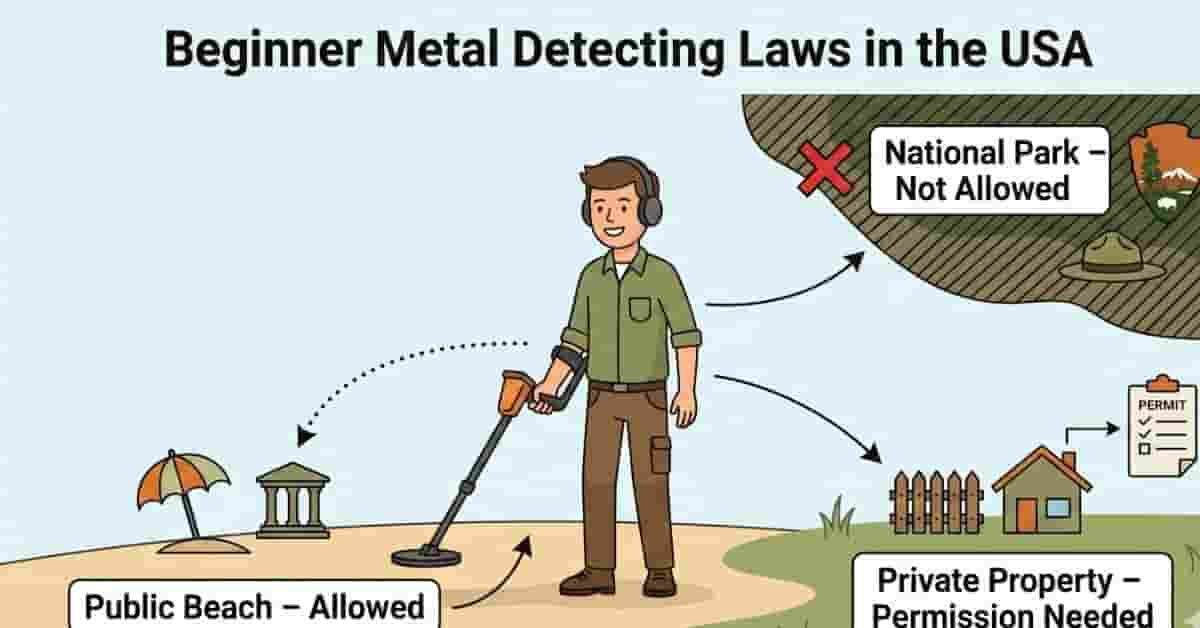
Many beginners don’t realize that metal detecting on the beach laws in the USA can vary widely. What’s allowed on one beach might be restricted on another. Rules depend on location, ownership, and local authorities. Ignoring these differences can lead to fines or the loss of your gear. That’s why understanding beach metal detecting regulations is so important before you start.
This guide will break everything down in simple terms. You’ll learn where you can detect, when permits are needed, and which areas to avoid. We’ll also cover key rules around public vs private beaches and tidal zones.
By the end, you’ll know exactly how to detect legally and safely—no confusion, just clear rules to enjoy the hobby.
Is Metal Detecting on the Beach Legal?
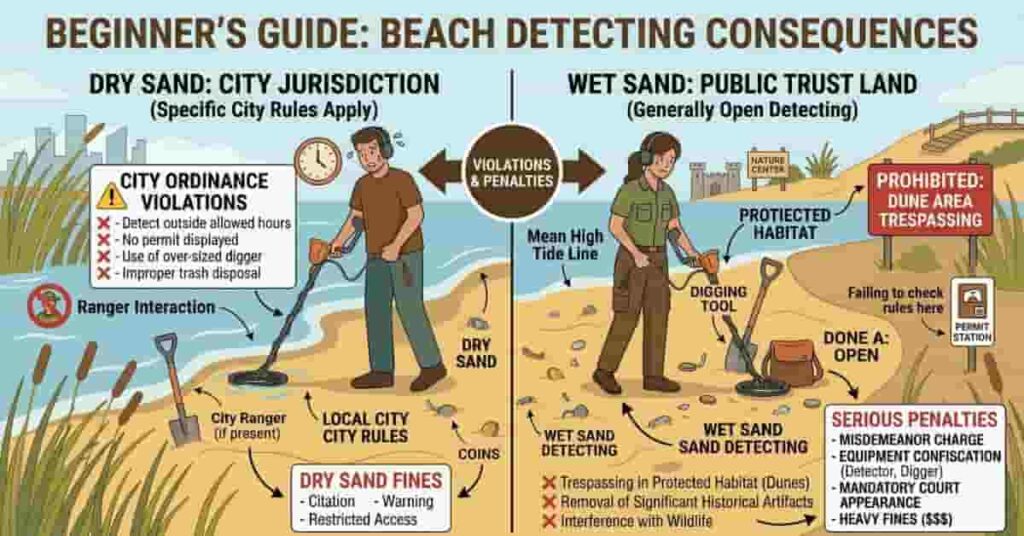
Metal detecting on the beach: laws in the USA vary by state. In most cases, it depends on location, ownership, and local regulations. Some beaches allow free access, while others require permission or restrict certain areas.
Public beaches are often open to metal detecting, especially those managed by cities. However, local rules can still limit when and where you can detect. State-owned beaches may have stricter regulations or require permits before you begin.
Private beaches are different. You must always obtain the property owner’s permission before detecting. This includes resort beaches or areas controlled by homeowner associations (HOAs).
Permits are sometimes required, especially in state parks or protected coastal zones. Some beaches also have seasonal restrictions or banned areas, such as dune areas or wildlife zones.
Key Takeaways
- Laws vary by location and beach ownership.
- Public beaches may allow detecting, but rules still apply.
- Private beaches require the owner’s permission.
- Permits may be needed in certain areas.
Public Beaches vs Private Beaches – What’s the Legal Difference?
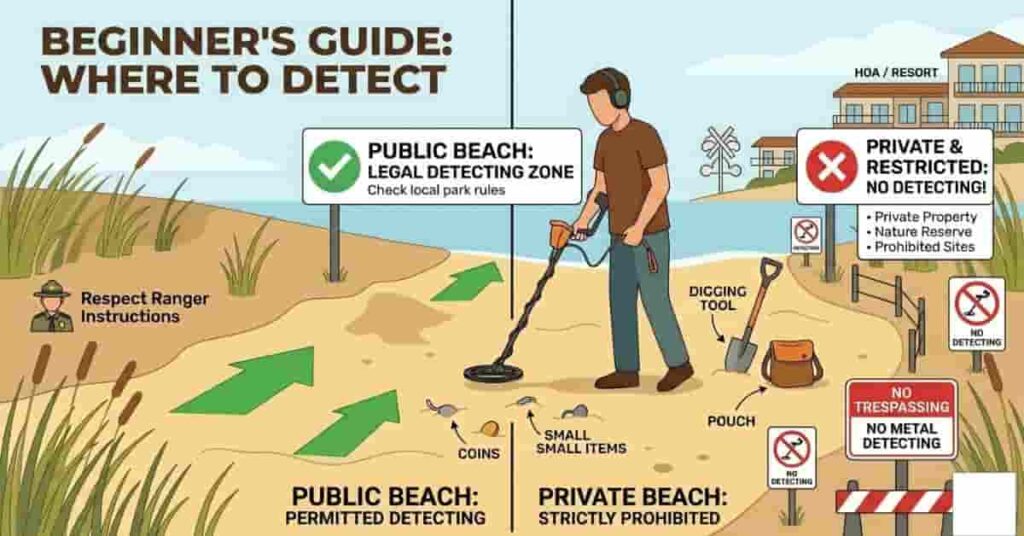
Understanding the difference between public and private beaches is key to understanding metal detecting laws on the beach in the USA. Many beginners assume all beaches are open, but that’s not true. Access and rules depend on who owns or manages the land.
Public beaches are usually more flexible, but still follow local regulations. Private beaches, on the other hand, require clear permission before you arrive. Knowing this difference helps you avoid fines and stay within legal limits.
Metal Detecting on Public Beaches
Metal detecting is often allowed on public beaches, especially those managed by cities or counties. These areas are usually open to recreational activities, including detecting. However, rules can vary based on local ordinances.
City-managed beaches may allow detection without permits, but some restrict it in certain zones. For example, dunes or protected areas are often off-limits. Always check posted signs or the city’s official website before you start.
State-managed beaches can have stricter rules. Some require permits, while others limit detecting to specific hours or areas. Seasonal restrictions may also apply during peak tourist times or wildlife nesting periods.
Pro Tips:
- Check local city or county websites before visiting.
- Look for signs at beach entrances.
- Avoid restricted zones, such as dunes and marked areas.
- Detect during early morning or low-traffic hours.
Metal Detecting on Private Beaches
Private beaches follow completely different rules. These areas are owned by individuals, resorts, or homeowner associations (HOAs). You cannot metal detect here without the owner’s permission.
Resort-owned beaches often have strict policies to protect guests and property. Even if the beach looks empty, it may still be private land. HOA-controlled beaches also enforce their own rules, which may ban detecting entirely.
Ignoring these rules can lead to trespassing charges or fines. It’s always better to ask first and get clear approval.
Pro Tips:
- Always ask for written or verbal permission.
- Respect property boundaries and signs.
- Avoid detecting near private buildings or guest areas.
- Leave the area clean to maintain good relationships.
City Beaches vs State Beaches – Different Rules Apply
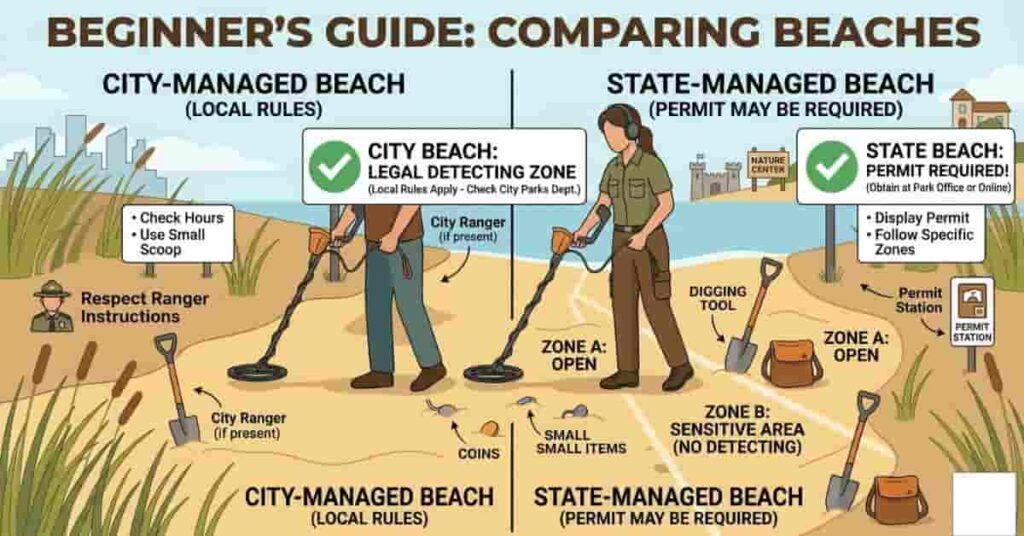
Not all public beaches follow the same rules. In the USA, city beaches and state beaches often have different metal-detecting regulations. Understanding who manages the beach helps you follow the correct rules and avoid trouble.
This difference in management leads to different rules. To help you navigate the beach metal detecting regulations, let’s look at city and state beach policies separately.
City Beaches (Local Government Rules)
City-managed beaches are often more beginner-friendly. Many allow metal detecting without a permit, especially in open areas like dry sand. However, local ordinances still apply and can vary from one city to another.
Some cities restrict detection in certain zones. These may include dunes, protected habitats, or high-traffic areas. Time limits can also apply, such as early morning or off-peak hours only.
It’s always smart to check the city’s official website before visiting. Rules are usually listed under parks or recreation sections.
Pro Tips:
- Start with city beaches if you’re a beginner.
- Check local rules online before you go.
- Avoid marked or protected zones.
- Follow posted signs at beach entrances.
State Beaches (State Park Authority Rules)
State beaches usually have stricter control because they fall under state park systems. Many require permits for metal detecting, even for casual hobbyists. Some beaches may ban detecting completely.
These areas often include protected land, such as wildlife zones or historical sites. Detecting in these zones without permission can lead to fines or equipment confiscation.
Permit rules can also vary by state. Some allow detection only in specific areas, such as wet sand or designated zones.
Pro Tips:
- Always check state park websites for current rules.
- Apply for permits if required before your visit.
- Stay away from historical or protected areas.
- Follow all posted guidelines strictly.
Low Tide vs High Tide Laws Explained
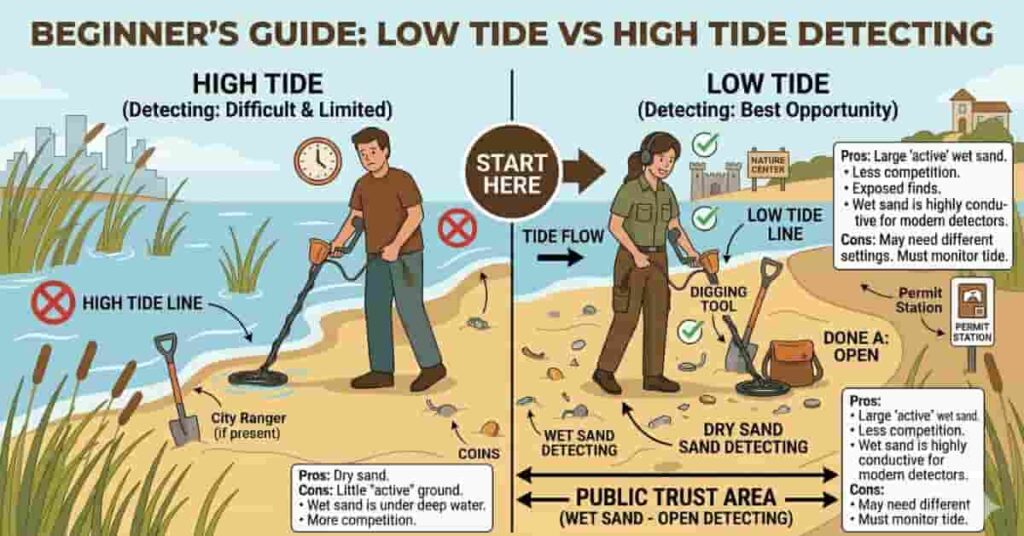
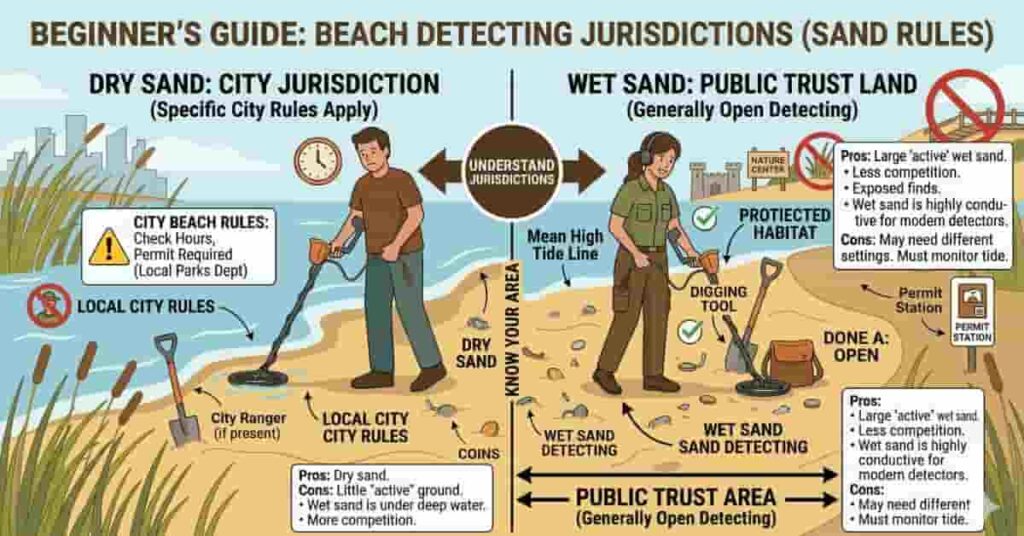
Tide levels can change how metal detecting laws apply on the beach in the USA. The key idea here is the mean high tide line. This invisible line marks the average point where high tide reaches the shore.
Everything below this line is often treated as public land. This is based on the public trust doctrine, which means certain coastal areas are preserved for public use. For this reason, detecting in wet sand is sometimes allowed, even when dry sand areas have restrictions.
However, this doesn’t mean all wet sand is always open. Local rules can vary widely based on county, city, or park authorities, and some areas may have additional or different restrictions due to wildlife protection, cultural sites, or geographic boundaries.
Understanding the Tidal Zone
To better understand these rules, it helps to remember that the beach is usually divided into two main parts: dry sand and wet sand. The dry sand area sits above the high tide line and is often managed by cities or private owners. The wet sand area lies below it and may fall under public trust land.
This difference is important because ownership affects permission. You might be allowed to detect in wet sand, but restricted in dry sand just a few steps away.
Additionally, another key point is environmental protection. Even in tidal zones, areas like dunes or nesting sites are often off-limits.
Why Wet Sand May Be Treated Differently
Because of this, wet sand areas are often seen as shared public space. This is why many detectors prefer working during low tide. More ground becomes accessible, and legal restrictions may be fewer in some locations.
Still, you must check and follow any local regulations, as some beaches set their own limits on detecting regardless of tide levels. These rules can depend on whether the area is under city jurisdiction, in a state park, or designated as a protected or historical zone.
Key Takeaways
- The mean high tide line separates dry and wet sand areas.
- Wet sand is often considered public under the public trust doctrine.
- Dry sand may be subject to stricter rules or private ownership.
- Tide levels can affect where detecting is allowed.
Wet Sand vs Dry Sand – Are the Rules Different?
Yes, the rules can change depending on where you stand. In many areas, metal-detecting laws on the beach treat dry sand and wet sand differently. This difference comes down to ownership, access, and environmental protection.
Dry sand is usually above the high tide line, while wet sand sits below it and may fall under public use rules. Because of this distinction, you might be allowed to detect in one area but not the other.
Dry Sand Rules (Often City Jurisdiction)
Dry sand areas are often managed by the city or local authorities. These zones include places where people sit, walk, or place umbrellas. Many city beaches allow metal detecting, but local rules still apply.
Some cities restrict detection during busy hours. Others may limit certain zones, especially near dunes or protected areas. In rare cases, permits may be required.
Pro Tips:
- Check city rules before detecting on dry sand.
- Avoid crowded areas to stay safe and respectful.
- Follow time restrictions if they exist.
- Stay away from dunes and marked zones.
Wet Sand Rules (Public Trust Areas)
Wet sand is often treated as public land under general coastal principles. This makes it a popular spot for metal detecting, especially during low tide. More items are also collected here due to wave movement.
However, this increased opportunity does not mean that detection is always unrestricted. Some beaches still limit detecting in wet sand, especially in protected or sensitive areas.
Environmental & Protected Areas
No matter where you detect, certain areas are always off-limits. For example, sand dunes are usually protected to prevent erosion, while wildlife zones—such as nesting areas—also carry strict restrictions.
Ignoring these rules can lead to fines or environmental damage. Always respect signs and barriers.
Key Takeaways
- Dry sand is often controlled by city rules.
- Wet sand may be open to public use under the principles.
- Rules can differ even within the same beach.
- Dunes and wildlife areas are usually protected.
Do You Need a Permit to Metal Detect on the Beach?
In many cases, you don’t need a permit. But under metal-detecting laws on the beach, some locations do require one. It depends on who manages the beach and how the area is protected.
City beaches often allow casual detecting without permits. However, when moving to state beaches and protected zones, official approval may be required. Skipping this step can lead to fines or being asked to leave.
When Permits Are Required
Permits are usually needed in state-managed beaches or park areas. These locations often protect wildlife, history, or natural features. Authorities may limit detection to certain zones or times.
Some permits are free, while others require a small fee. You may also need to follow extra rules, such as reporting valuable finds.
Pro Tips:
- Check if the beach is city- or state-managed
- Apply for permits before your visit.
- Carry your permit while detecting.
- Follow all listed conditions.
Seasonal & Event-Based Restrictions
Even without permit requirements, timing matters. Many beaches restrict detecting during busy months, allowing it only in early mornings or off-peak hours.
Special events can also affect access. Festivals, competitions, or beach cleanups may temporarily restrict detecting activities.
How to Check Local Beach Rules
To stay legal, check the rules before you go. Cities and states often post guidelines online or at beach entrances.
Look for sections related to parks, recreation, or coastal management. If rules are unclear, contacting local authorities is a smart move.
Pro Tips:
- Visit official city or state websites.
- Check the signs at the beach entrance.
- Call local offices if rules are unclear.
- Stay updated on any temporary changes.
Restricted Areas Where Metal Detecting Is Usually Prohibited
Not every beach allows metal detecting. Under metal-detecting laws on the beach, certain areas are off-limits to protect nature, history, and public safety. Ignoring these rules can result in fines, equipment confiscation, or legal trouble.
Common Restricted Areas
State parks restrict metal detecting to preserve habitats. Only those with special permits may detect. These rules cover both dry and wet sand.
Detecting in sand dunes is banned. Dunes prevent erosion and shelter wildlife.
Do not detect in bird, turtle, or wildlife nesting zones during breeding or nesting seasons.
You cannot detect on beaches with historical landmarks. Taking items or disturbing these areas is a serious offense.
Archaeological Sites: Some beaches may contain buried artifacts from past civilizations. Metal detecting in these areas is usually forbidden to prevent the destruction of valuable heritage.
Pro Tips
- Always check for posted signs and notices.
- Avoid areas marked with ropes, flags, or barriers.
- Research state or city maps showing restricted zones
- Respect all wildlife and historical protections.
What Happens If You Break Beach Metal Detecting Laws?
Breaking metal detecting laws on the beach can lead to serious consequences. Even if it’s unintentional, ignoring rules may result in fines, legal trouble, or the loss of your equipment. Understanding the risks helps beginners avoid costly mistakes.
Common Consequences
Fines: Many cities and states issue monetary penalties for illegal detection. Fines can range from small tickets to several hundred dollars, depending on the violation.
Equipment Confiscation: Authorities may seize your metal detector and tools if you are caught detecting in restricted zones. This can happen even on public beaches if rules aren’t followed.
Trespassing Charges: Trespassing on private property or in restricted areas without permission can result in trespassing charges. This may involve court appearances and additional fines.
Misdemeanor Violations: In some cases, violating beach metal detecting laws can be classified as a misdemeanor. This could include illegal digging in protected dunes, historical sites, or state park areas.
Pro Tips
- Always check local and state rules before detecting.
- Avoid restricted zones and follow posted signs.
- Carry permits if required, and have ID ready.
- Respect private property and protected areas.
Tips to Legally Metal Detect on Any Beach
Following the metal-detecting laws on the beach ensures you enjoy the hobby without fines or trouble. Simple habits can make a big difference for beginners in the USA.
Key Tips for Legal Detecting
- Check City and State Websites: Before visiting, review official rules for the beach you plan to explore. This helps you know about permits, restricted zones, and time limits.
- Look for Posted Signs: Beaches often display local rules at entrances or along the shoreline. Pay attention to them to avoid accidental violations.
- Avoid Dunes & Marked Zones: Protected dunes, wildlife areas, and historical sites are off-limits. Respect all ropes, signs, or flagged areas.
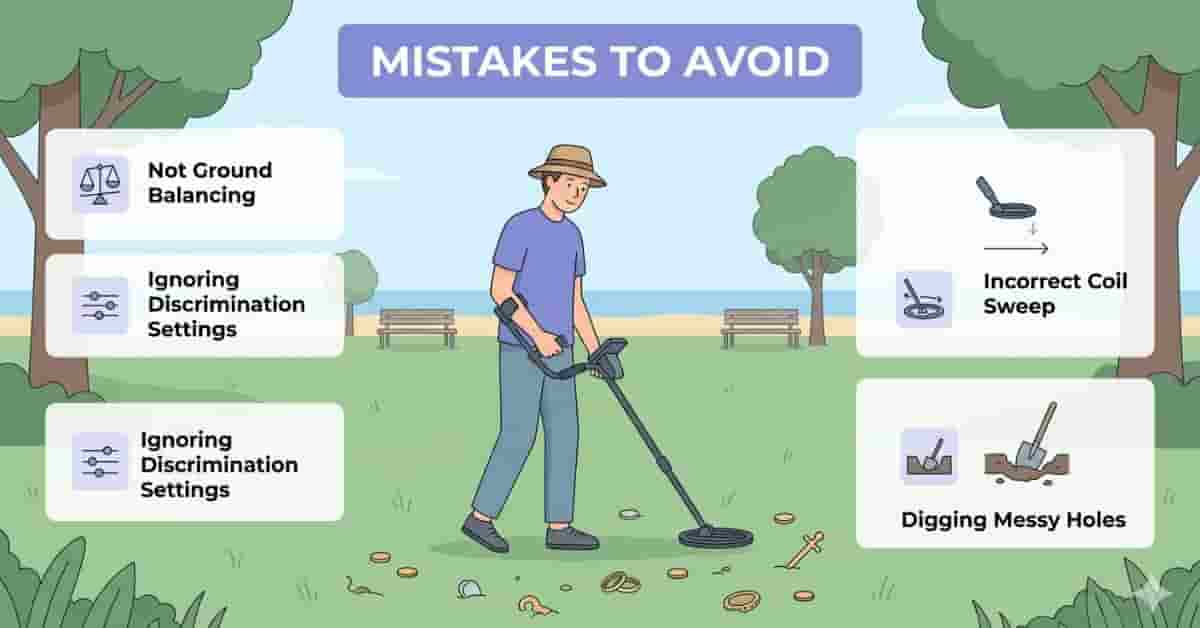
- Fill Your Holes: Always fill any holes you dig. This prevents accidents, preserves the beach, and shows responsible detecting behavior.
- Carry ID & Permits (If Required): Some beaches require permits, and carrying ID is often mandatory. Keep them on hand while detecting.
- Detect During Allowed Hours: Many locations restrict detecting to daylight or off-peak hours. Follow these limits to stay compliant.
By practicing these habits, you can detect safely, enjoy the hobby, and respect the environment. Responsible detection also helps maintain access for everyone.
Conclusion
In this guide, we covered everything beginners need to know about beach detecting, including public vs private beaches, tide zones, permits, and restricted areas. Following metal-detecting laws on the beach ensures you enjoy the hobby safely and legally while protecting the environment and respecting property.
Remember, wet and dry sand areas may have different rules, city and state beaches vary, and certain zones like dunes or wildlife nesting areas are always off-limits. Checking local regulations, carrying permits when needed, and filling holes are simple steps that keep your detecting experience trouble-free.
Ready to start your beach adventures? Share your finds and experiences in the comments below. Then, visit our other guides on this site to build your confidence and become a responsible metal detecting enthusiast in the USA.

Ethan Callaway is a passionate metal detecting enthusiast based in Savannah, Georgia, USA. Currently pursuing a B.S. in Archaeology & Historical Preservation at the University of Georgia, he combines his love for treasure hunting with research-backed insights on metal detecting techniques, safety practices, and site guidance.
Through MetalDetectingUSA.com, Ethan shares practical tips, honest product reviews, and beginner-friendly advice to help both new and experienced detectorists explore metal detecting across the United States with more confidence and understanding.