
Table of Contents
Introlduction
Why do some beachgoers find gold rings, while others leave empty-handed?
Apply proven beach metal detecting tips to turn empty pouches into pockets full of coins. Avoid beginner mistakes—target the right spots, and set your detector correctly. Beaches change with tides, sand shifts, and foot traffic. Be ready to adapt and win.
Master beach patterns, and your jewelry finds will increase. Avoid common mistakes; protect your results with smart choices.
Follow this guide for proven beach detecting success. Know where to search, when to hunt, and how to tune your detector. Finish with a focused plan—and start finding more gold and coins every hunt.
Why Beach Metal Detecting Is Different From Land Hunting
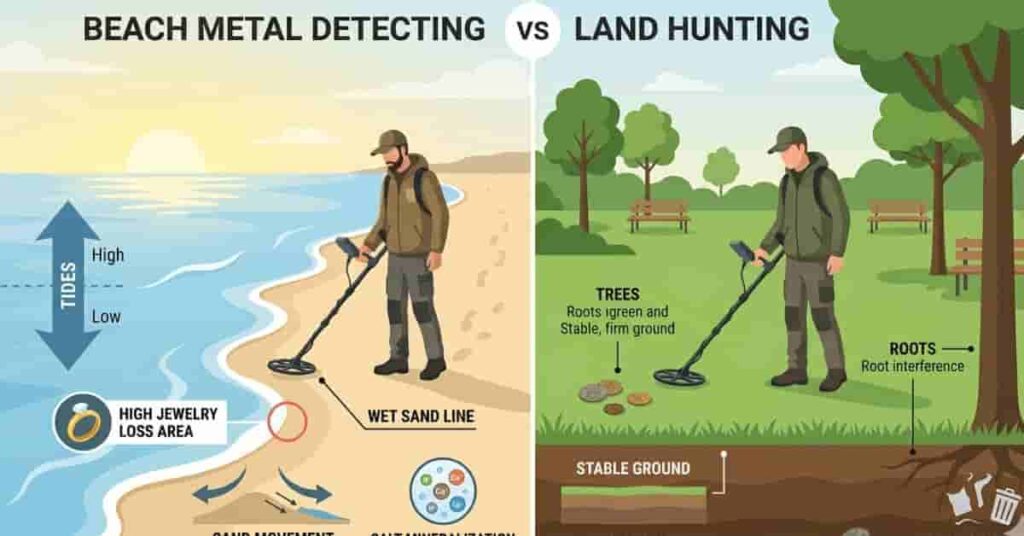
Beach detecting isn’t like land hunting. Knowing the differences helps you find more targets from the start.
Constant Sand Movement
Unlike parks or fields, beach sand is always moving. Wind, waves, and foot traffic shift sand daily. A spot rich in targets today may be empty tomorrow. At the same time, new valuables get uncovered after storms or strong waves. This constant change makes beaches unpredictable but very rewarding.
Tides Change Everything
Tides influence where you search. Low tide reveals areas usually underwater, often containing older coins and jewelry. High tide limits your search area and lowers your chances of finding valuables.
High Jewelry Loss Rate
Beaches have one big advantage—they’re where people lose valuables all the time. Swimmers, tourists, and sunbathers often drop rings, chains, and coins. Busy beaches in the USA can turn into gold hotspots, especially during peak seasons.
Salt Mineralization Challenges
Wet salt sand can challenge your metal detector by causing false signals or reducing depth. Setting your detector properly is essential for this environment, unlike regular land.
Takeaways:
- Beaches change daily due to sand movement and tides.
- Low tide offers the best chances for valuable finds.
- High human activity means more jewelry is lost.
- Saltwater conditions require special detector settings.
Understanding Beach Types Before You Start
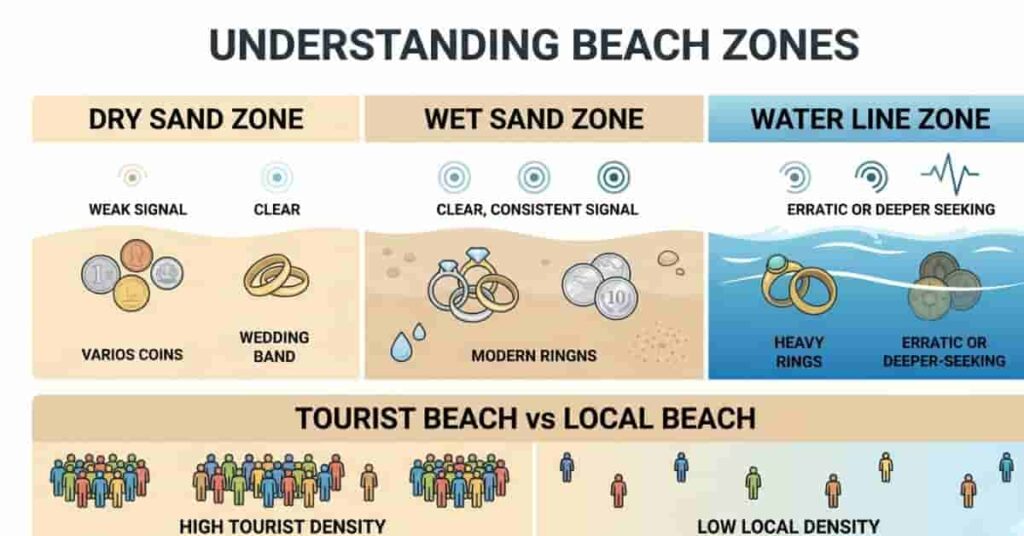
Not all beaches work the same way, and choosing the right one can save you hours. Many beginners fail because they hunt randomly without understanding beach types. Learning this first will improve your results quickly and sharpen your beach metal detecting tips.
Different beach zones hold different kinds of targets. Some areas are easy but less rewarding, while others are harder but full of valuable finds. If you know where to focus, you increase your chances of finding gold and coins.
Dry Sand vs Wet Sand
Dry sand is the easiest place to start. It’s stable, easy to dig, and perfect for beginners. You’ll mostly find modern coins, bottle caps, and cheap jewelry here.
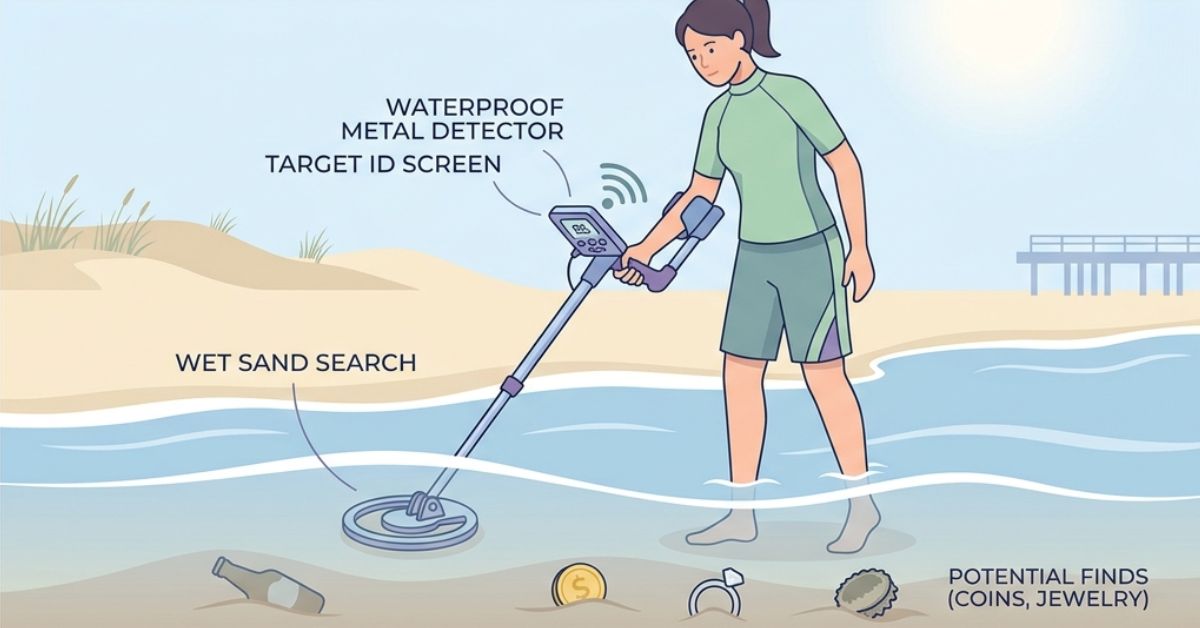
Wet sand near the waterline is where the real value lies. Waves push heavier items, such as gold rings, into this zone. However, wet sand can be harder to detect due to the presence of salt minerals.
Pro Tips:
- Start in dry sand if you’re new.
- Move to wet sand once you learn your detector.
- Focus on the “wet-dry line” to find better targets.
Saltwater vs Freshwater Beaches
Saltwater beaches are more challenging but more rewarding. Salt can cause false signals, so proper settings are important. However, these beaches often produce gold jewelry.
Freshwater beaches are easier to detect. Lakes and rivers have less mineral interference, making them beginner-friendly. You may find coins and lost items, but gold is less common.
Pro Tips:
- Use lower sensitivity on saltwater beaches.
- Practice in freshwater before moving to ocean beaches
- Invest in a detector that performs well in salt conditions.
Tourist Beaches vs Local Beaches
Tourist beaches are gold mines during peak seasons. More visitors mean more lost valuables. Focus on busy areas like towel lines and entrances.
Local beaches are quieter but still valuable. They often have older, less-discovered targets. These spots require patience but can surprise you.
Pro Tips:
- Hunt tourist beaches after weekends or holidays.
- Try local beaches for less competition.
- Search high-traffic zones first.
10 Beach Metal Detecting Tips That Actually Work (Beginner to Pro)
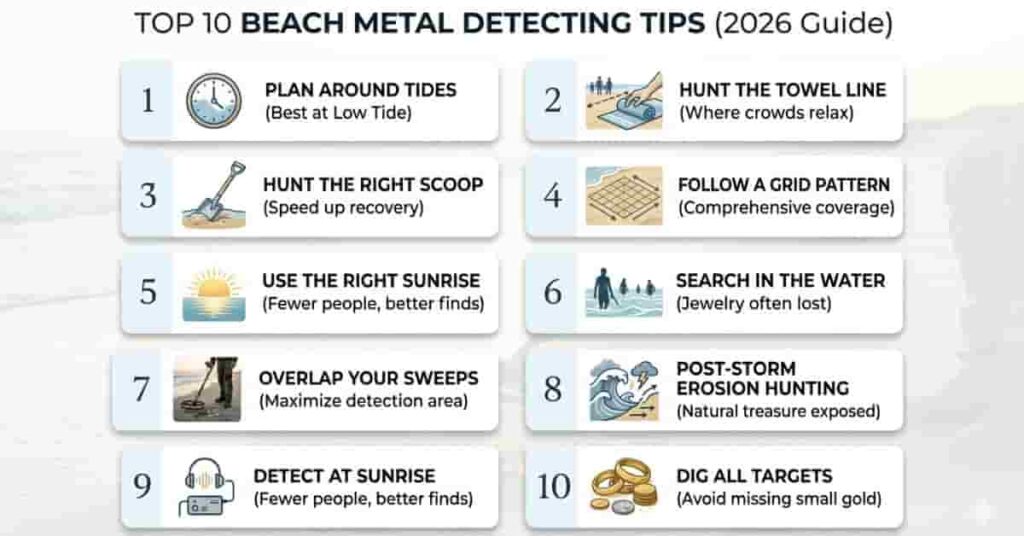
If you want real results, you need proven beach metal detecting tips and tricks that work in real conditions. Many beginners walk for hours without a single good find. The difference is not luck—it’s strategy.
These 10 tips for metal detecting at the beach are simple, practical, and beginner-friendly. Follow them step by step, and you’ll start finding more coins and even gold.
1. Hunt During Low Tide
Low tide exposes areas that stay underwater most of the day. These spots often hold older and heavier items. You’ll also get more ground to cover, increasing your chances.
Pro Tip: Check local tide charts and plan your hunt around the lowest tide.
2. Focus on the Towel Line
The towel line is where people sit, relax, and handle valuables. Rings, coins, and phones often fall here.
Pro Tip: Look for areas with heavy footprints and flattened sand.
3. Detect Near Beach Entrances
People adjust their belongings as they enter or leave the beach. This leads to coins and jewelry being dropped.
Pro Tip: Start your hunt near paths, stairs, and boardwalk access points.
4. Check Around Volleyball Nets & Activity Areas
Active zones, such as volleyball courts and play areas, are high-loss areas. Movement increases the chance of items falling.
Pro Tip: Scan slowly around poles and boundary lines.
5. Use a Sand Scoop Instead of a Shovel
A sand scoop speeds recovery and keeps it cleaner. It also helps you avoid losing targets in loose sand.
Pro Tip: Choose a sturdy scoop with small holes for wet sand.
6. Lower Sensitivity in Wet Salt Sand
Wet salt sand can cause false signals. Lowering sensitivity helps stabilize your detector.
Pro Tip: Adjust gradually until signals become clear and consistent.
7. Follow Sand Cuts After Storms
Storms can wash away the top layers of sand, exposing deeper targets. These “cuts” are prime hunting zones.
Pro Tip: Look for steep sand edges or uneven surfaces after bad weather.
8. Search in a Grid Pattern
Random swinging wastes time and misses targets. A grid pattern ensures full coverage of an area.
Pro Tip: Mark your path mentally and overlap each sweep slightly.
9. Re-Scan Every Hole
Many targets sit close together. If you leave too early, you may miss valuable items.
Pro Tip: Always scan the hole again after removing a target.
10. Detect Early Morning for Best Results
Early mornings mean fewer people and less competition. You also get fresh drops from the previous day.
Pro Tip: Arrive at sunrise for the best chance of untouched finds.
Best Settings for Metal Detecting on the Beach
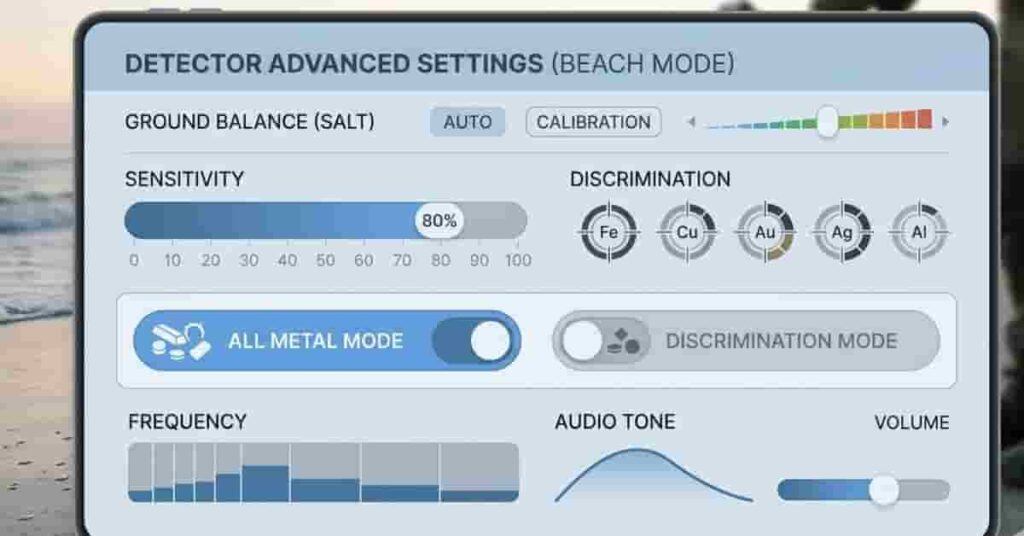
Getting your settings right is just as important as choosing the right spot. Many beginners struggle because their detectors give false signals or miss targets. These metal detecting tips for beach hunting will help you adjust your machine for better accuracy and depth.
Beach conditions, especially wet salt sand, can confuse even good detectors. With the right setup, you’ll hear cleaner signals and recover more valuable finds.
Ground Balance for Salt
Saltwater creates mineral interference that can cause constant noise. Ground balancing helps your detector ignore this background signal.
Most modern detectors have automatic ground balance, but manual adjustment gives better control. Proper balance means fewer false signals and deeper detection.
Pro Tips:
- Use auto ground balance if you’re a beginner.
- Re-adjust when moving from dry to wet sand
- Test your settings by sweeping over clean ground.
Sensitivity Adjustments
High sensitivity sounds good, but it can create unstable signals in wet sand. Lowering it slightly makes your detector more stable and easier to control.
You don’t need maximum sensitivity to find gold. Clear signals are more important than noisy ones.
Pro Tips:
- Start high, then reduce until signals stabilize.
- Increase sensitivity in dry sand.
- Decrease it near the waterline.
Discrimination Strategy
Discrimination helps you ignore unwanted targets, such as iron and trash. However, excessive filtering can block valuable items, such as gold rings.
Gold often falls in the same range as pull tabs. If you reject too much, you may miss good finds.
Pro Tips:
- Keep discrimination low for better results.
- Dig more signals when unsure.
- Avoid fully blocking mid-range targets.
All-Metal Mode vs Discrimination
All-metal mode detects everything, giving maximum depth and sensitivity. It’s great for serious gold hunters.
Discrimination mode filters out junk but may slightly reduce depth. Beginners often prefer it for easier hunting.
Common Beach Detecting Mistakes to Avoid
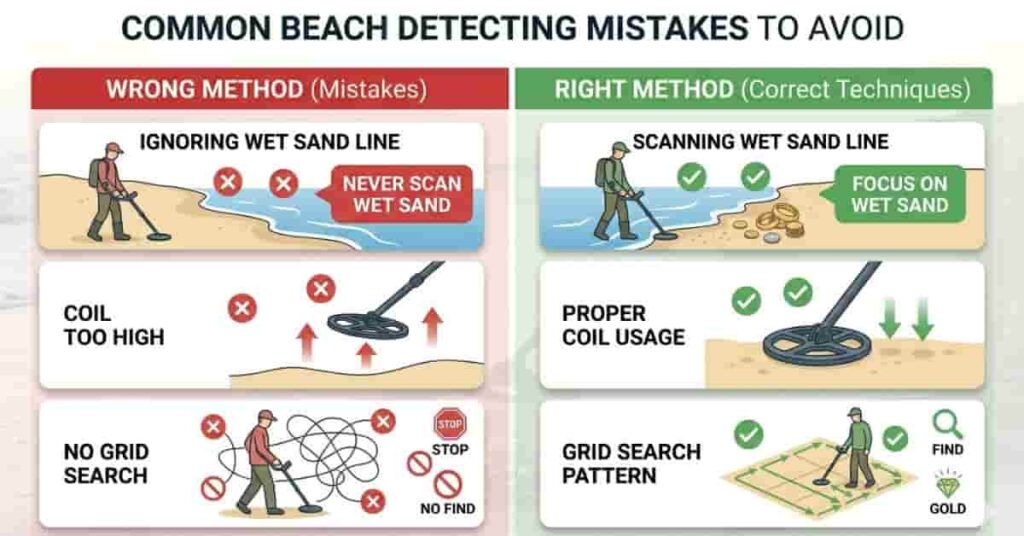
Even with the best gear, small mistakes can ruin your results. Many beginners repeat the same errors and miss easy finds. Avoiding these will instantly improve your success and strengthen your overall beach-hunting metal detecting tips.
Beach detecting rewards smart decisions, not just effort. If you fix these common mistakes early, you’ll save time and recover better targets.
Detecting Only Dry Sand
Dry sand is easy to use, but it often traps low-value items. Many beginners stay here and miss better zones.
Ignoring the Wet Sand Line
The wet sand line is where waves deposit heavier material, such as gold. Skipping it means missing your best chance.
Hunting During High Tide
High tide limits your search area and hides productive zones. You’ll have less ground and fewer targets.
Using the Wrong Coil
Large coils cover more ground but struggle in trashy areas. Small coils offer better target separation.
Not Securing Your Finds
Loose items can fall out while digging or walking. This leads to lost valuables after you’ve already found them.
Pro Tips:
- Use a secure fanny pack.
- Empty your pouch regularly.
- Double-check holes before moving on.
Where to Search First on a Busy Beach
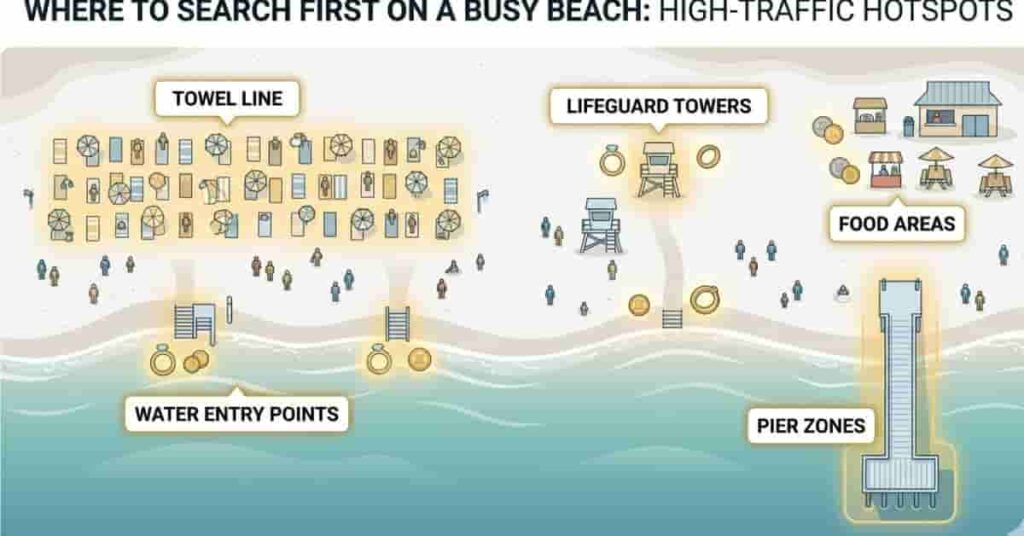
Busy beaches are full of targets, but only if you start in the right spots. Many beginners waste time in empty areas and miss high-value zones. These tips for metal detecting on beaches will help you focus on where people most often lose items.
When crowds gather, valuables drop. Your job is to think like a visitor and detect where activity is highest. Start with these proven hotspots.
Water Entry Points
This is where people enter and exit the water. They adjust towels, shake sand off, and often lose rings or coins.
Towel Line
The towel line is a classic hotspot. People sit, relax, and handle valuables here, increasing the risk of theft.
Lifeguard Towers
People gather around lifeguard towers for safety and visibility. This creates steady foot traffic and dropped items.
Food Areas
Food stands and snack zones attract crowds. People pull out cash, phones, and jewelry, increasing the likelihood of drops.
Pier Zones
Piers are high-activity areas with constant movement. Items fall while people walk, fish, or take photos.
Pro Tips:
- Detect near entrances and railings.
- Check shaded resting spots.
- Watch for older, deeper targets.
When Is the Best Time to Metal Detect at the Beach?
Timing can make or break your success on the beach. You can visit the same spot twice and get completely different results. Knowing when to go is one of the most powerful tips for beach metal detecting.
Beaches constantly change due to weather, crowds, and tides. If you choose the right time, you’ll find fresh drops and deeper targets with less effort.
After Storms
Storms can remove layers of sand, exposing hidden valuables. This creates “cuts” that make older items reachable.
After Holidays
Busy holidays bring large crowds, which means more lost items. The day after is often full of fresh targets.
Early Mornings
Early morning hunts give you a big advantage. Fewer people means less competition and fresh finds from the previous day.
After Beach Events
Events like concerts, parties, or sports games lead to high levels of activity. This increases the chances of losing valuables.
Pro Tips:
- Hunt right after the event ends or the next morning
- Focus on gathering and seating areas.
- Scan slowly for small targets.
What Can You Realistically Find on the Beach?
Beach detecting is exciting because every hunt can surprise you. But results depend on location, timing, and patience. Most beginners expect gold immediately, but beaches offer a mix of common and valuable items. These expectations help you stay motivated and follow better metal detecting tips for beach hunting.
You won’t always find treasure, but beaches in the USA are known for steady losses from tourists and swimmers. Over time, small finds can add up to valuable rewards.
Gold Rings
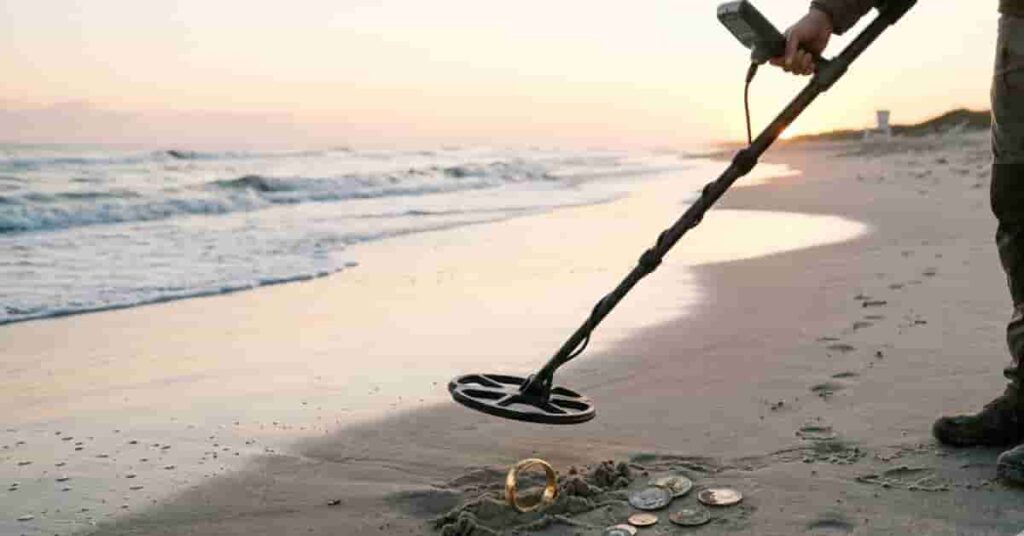
Gold rings are the most exciting finds for beach detectorists. They are often lost while swimming, playing, or applying sunscreen. Wet sand and water entry points are the best places to search.
Silver Jewelry
Silver items such as earrings, bracelets, and chains are more common than gold items. They often appear in towel lines and crowded areas. Modern Coins
Coins are the most frequent finds on any beach. People drop them while buying food, parking, or walking.
Watches
Watches are less common but highly valuable when found. They usually fall off during swimming or sports activities.
Lost Chains
Chains and necklaces can be tricky because they may break and scatter in the sand. They are often found in wet sand zones.
Conclusion
Beach detecting becomes much more successful when you understand timing, locations, and proper technique. In this guide, we covered how beaches work, where to search, and how to improve your results step by step.
With the right beach metal detecting tips, you can move from random searching to a smart hunting strategy that increases your chances of finding gold, coins, and jewelry. Simple changes like checking tide timing, focusing on high-traffic zones, and using correct settings make a big difference.
Start applying these metal detecting tips for beach hunting on your next trip. Share your finds or experiences in the comments, and explore more guides on our site to improve your skills even further.

Ethan Callaway is a passionate metal detecting enthusiast based in Savannah, Georgia, USA. Currently pursuing a B.S. in Archaeology & Historical Preservation at the University of Georgia, he combines his love for treasure hunting with research-backed insights on metal detecting techniques, safety practices, and site guidance.
Through MetalDetectingUSA.com, Ethan shares practical tips, honest product reviews, and beginner-friendly advice to help both new and experienced detectorists explore metal detecting across the United States with more confidence and understanding.