
Table of Contents
Introduction
Ever wonder why some detectorists find old coins in a park while others leave empty-handed?
The secret is often the location, not the metal detector. Learning the right metal detecting tips for parks can help beginners find more coins, jewelry, and relics without wasting hours searching the wrong areas. Many public parks, old home sites, and curb strips across the USA still hide valuable finds if you know where to look and how to research them.
In this guide, you’ll discover proven location strategies, practical hunting techniques, and beginner-friendly advice for finding better targets. You’ll also learn how to identify older ground, avoid common mistakes, and follow responsible detecting practices. Whether you’re exploring a neighborhood park or researching historic home sites, these tips for metal detecting parks will help you hunt with more confidence and improve your chances of making exciting discoveries.
Why Location Selection Matters More Than Your Detector
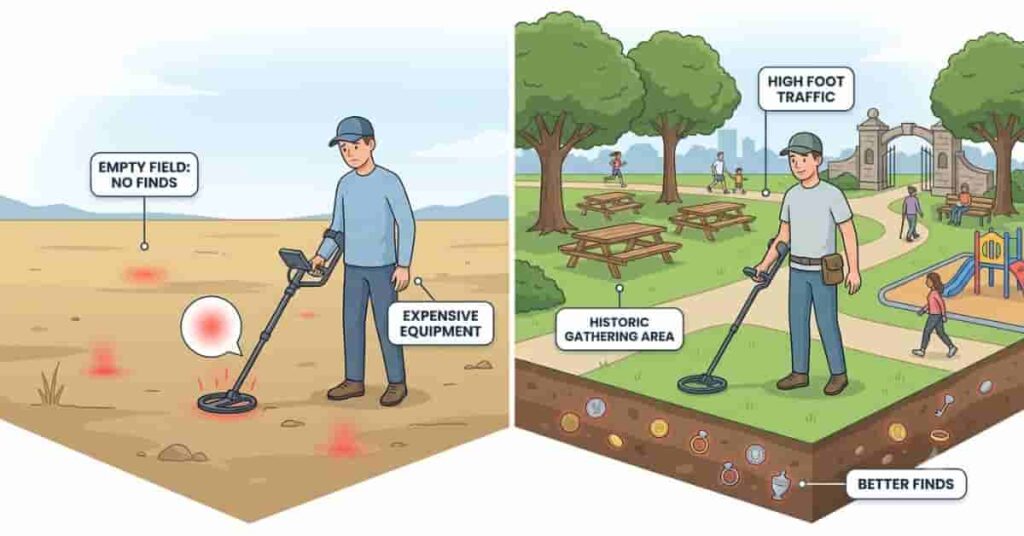
Many beginners believe an expensive detector guarantees better finds. In reality, choosing the right location has a much bigger impact. Even a basic detector can uncover coins, jewelry, and relics when you search in the right place. That’s why experienced detectorists spend time researching locations before they ever turn on their machines.
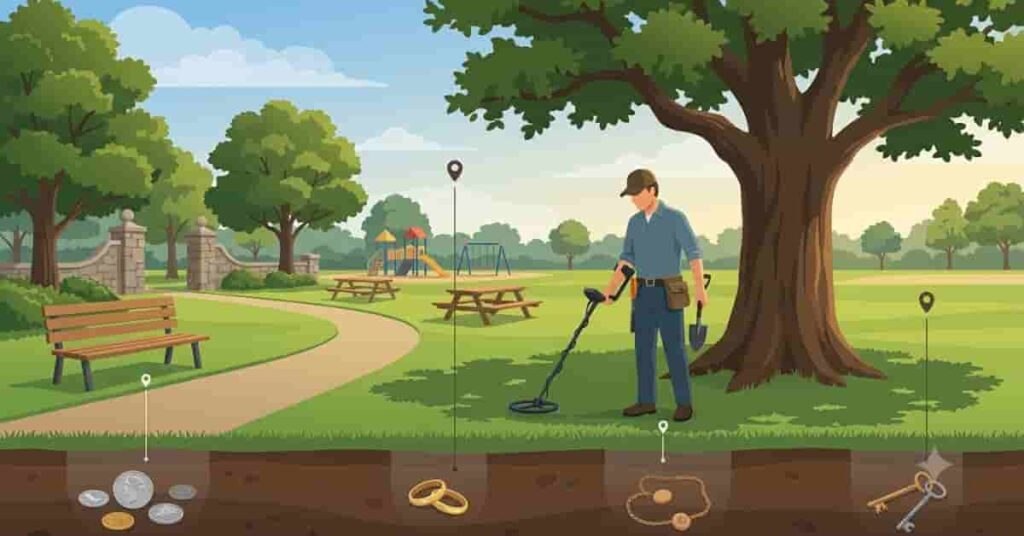
Random hunting often leads to frustration. You might spend hours scanning empty ground simply because people rarely visited that area. Instead, focus on places where people gathered, relaxed, or traveled. Parks with picnic areas, sports fields, walking paths, and old shade trees usually produce more targets because thousands of people have used them over the years. These simple metal detecting parks tips can help you recover more valuable finds without upgrading your equipment.
Another key factor is understanding micro-locations. A large park may look promising, but every section has a different history. One corner could be nearly untouched, while another has seen decades of foot traffic. Look for benches, playground edges, old entrances, event spaces, and grassy areas where people often sat or played. These smaller hotspots usually hold more dropped items than open fields with little activity.
Expert Tip: Before you start detecting, spend five minutes walking around the site. Watch where people gather today and think about where they likely gathered years ago. This simple habit often leads to better finds than covering a larger area too quickly.
18 Advanced Location-Based Metal Detecting Tips
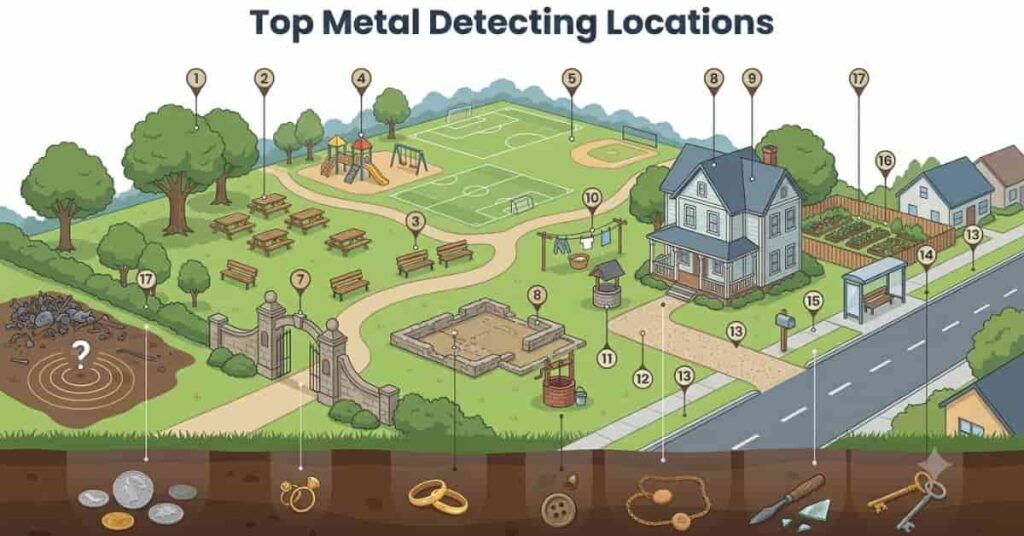
Successful detectorists rarely rely on luck. They find better targets because they know where to search. The best metal detecting tips for parks focus on locating places where people spent time, walked often, or gathered for events. These areas naturally collect more lost coins, jewelry, and other valuable items.
Before you start swinging your detector, take a few minutes to study the location. Look for older features, signs of heavy foot traffic, and places where people stopped to rest or socialize. A small, well-chosen area often produces better results than hours of searching an empty field.
The 18 location-based tips below highlight the highest-potential spots in parks, old home sites, curb strips, and other public areas. Start with the most obvious locations, then move to overlooked sections after covering the busy areas. This simple strategy helps beginners recover more finds while learning how different locations produce different types of targets.
Quick Location Checklist
- Search near large shade trees.
- Hunt around benches and picnic tables.
- Focus on event areas and fairgrounds.
- Check playground edges.
- Follow busy walking paths.
- Detect around old park entrances.
- Research old home sites.
- Look for overlooked high-traffic spots.
- Slow down in productive areas.
- Revisit successful locations during future hunts.
Park Detecting Strategy
1. Detect Near Large Old Shade Trees
Large, mature shade trees have attracted visitors for decades. Families gathered beneath them for picnics, children played nearby, and people rested in the shade during hot summer days. Every visit created an opportunity for someone to drop a coin, ring, key, or other small item.
Focus on the ground around the tree rather than directly against the trunk. Start several feet away and work outward in overlapping circles. Many valuable targets settle where people spread blankets or sat in folding chairs instead of leaning against the tree itself.
Older trees usually offer the best potential because they have witnessed years of park activity. If the tree appears on historic photos or maps, the surrounding ground may contain older coins and relics.
Pro Tip: Slow your sweep speed around large trees. Roots and uneven ground can hide good signals that are easy to miss with a fast swing.
2. Hunt Around Benches & Picnic Tables
Benches and picnic tables are some of the most productive places in public parks. People constantly reach into their pockets, remove gloves, open bags, and handle wallets or phones while sitting down. Small items often fall unnoticed into the grass below.
Search completely around each bench or table instead of scanning only one side. Pay extra attention to the ends, where people stand up or sit down. These movements increase the chance of dropping coins or jewelry.
Older picnic shelters deserve extra attention because they have hosted countless family gatherings, birthday parties, and community events over many years.
Pro Tip: Use a smaller search coil if the area contains lots of metal trash. Better target separation helps you hear valuable signals hidden among bottle caps and pull tabs.
3. Focus on Event Areas & Fairgrounds
Parks that host concerts, festivals, sports tournaments, or community celebrations often produce excellent finds. Large crowds increase the chances of people losing coins, jewelry, watches, and other personal items.
Look for open grassy fields used during annual events. Temporary stages, food vendor locations, and spectator seating areas are especially promising. Even if an event happened months ago, valuable targets may still remain underground.
Some parks also sit on former fairgrounds or community gathering places. Research local history before your hunt because older event sites can produce older coins and interesting relics.
Pro Tip: Hunt a few days after a large public event if local rules allow. Fresh drops are often easier to recover before heavy foot traffic pushes them deeper into the soil.
4. Check Near Playground Perimeters
Playgrounds often receive constant use, making them popular detecting locations where permitted. Instead of searching directly inside play equipment areas, concentrate on the surrounding edges and grassy borders.
Parents frequently stand or sit around the perimeter while watching children. During that time, coins, rings, earrings, and keys can easily slip from pockets.
Search around nearby benches, shade trees, and entrances leading into the playground. These transition areas usually receive heavy foot traffic but less attention from detectorists.
Always respect local regulations and avoid damaging protective surfaces such as rubber mats or wood chips if detecting is not allowed there.
Pro Tip: Early mornings often provide a quieter environment, making it easier to hear faint signals around busy playground areas.
5. Target High-Traffic Walking Paths
Walking paths connect nearly every popular feature inside a park. Thousands of visitors travel these routes every year, increasing the likelihood of dropped items.
Pay close attention to intersections, sharp turns, resting spots, and areas where people stop to talk. Targets often collect where visitors slow down, change direction, or remove items from their pockets.
Don’t ignore grassy strips beside the path. People often step aside to tie a shoe, answer a phone call, or let others pass, creating another opportunity for valuables to fall unnoticed.
Pro Tip: Search both sides of the path before moving on. Many detectorists only scan the center, leaving nearby targets behind.
6. Search Around Old Park Entrances
Old park entrances deserve more attention than many beginners realize. Visitors naturally adjust bags, reach for tickets, check pockets, or greet friends as they enter or leave. These simple actions create ideal conditions for losing small valuables.
Historic entrances are especially valuable because they have served generations of park visitors. Even if a new entrance exists today, the original access point may still hold older coins beneath the surface.
Look for stone gateways, decorative signs, old sidewalks, stairways, or worn paths leading into the park. Historic maps and aerial photographs can also reveal entrances that no longer exist.
Work slowly and overlap each sweep because entrance areas often contain many different signals from years of activity.
Pro Tip: If multiple entrances exist, begin with the oldest one first. Older access points often produce deeper and more interesting finds than recently developed areas.
Old Home Site & Foundation Hunting
7. Locate Stone Foundations
Old stone foundations are some of the best places to search for historic coins and relics. Even if the house disappeared decades ago, the foundation often marks where daily life once took place. Families lived, worked, and entertained guests around these structures, creating many opportunities for valuable items to be lost.
Before detecting, research old maps, aerial photos, and local property records to confirm the home’s location. Walk the area and look for stacked stones, brick piles, cellar holes, or uneven ground that may indicate a former building. These clues can help you identify productive search areas.
Once you find the foundation, search slowly around the outside walls before moving toward the center. Pay extra attention to entrances, walkways, and corners where people frequently walked. Many experienced detectorists consider these areas among the best tips for metal detecting old foundations because they often produce older finds.
Pro Tip: Use lower discrimination when hunting old foundations. Valuable relics and old coins can appear near iron nails and building debris.
8. Search Near Front Porch Areas
The front porch was once the busiest part of many homes. Family members welcomed visitors, relaxed after work, and spent warm evenings sitting outside. These everyday activities made the porch area a common place for coins, buttons, jewelry, and small personal items to fall.
If the porch no longer exists, look for signs such as stone steps, brick fragments, or a worn pathway leading toward the foundation. These features often reveal where the entrance once stood.
Search in a grid pattern and overlap your swings carefully. Many good targets remain hidden among nails left behind after the house was demolished. A slower pace helps separate valuable signals from iron trash.
Pro Tip: After searching directly in front of the porch, expand your search several yards into the yard. Visitors often gathered nearby while talking or waiting to enter.
9. Detect Around Old Clotheslines
Old clotheslines are easy to overlook, but they can produce surprising finds. Hanging laundry required people to carry baskets, bend down, and reach into their pockets. Coins, rings, and other small items often slipped into the grass without being noticed.
Look for two large posts, concrete footings, or open spaces behind the home where clothes would have received plenty of sunlight. Historic photographs and longtime local residents may also provide useful clues.
Move slowly between the clothesline posts and continue several feet beyond each end. Many targets are scattered around the working area rather than directly beneath the line.
Pro Tip: If you find several household relics in one spot, continue searching nearby. Productive clothesline areas often contain multiple historical items.
10. Hunt Near Large Shade Trees on Property
Large shade trees were natural gathering places around old homes. Families relaxed under them, children played nearby, and neighbors visited during warm weather. Years of activity make these locations excellent places to search.
Focus on the open ground surrounding the tree instead of hugging the trunk. Search outward in overlapping circles because people usually sat several feet away where there was more room for chairs or blankets.
Older trees are especially valuable because they may have stood on the property for generations. If the tree appears healthy and has likely been there since the home was occupied, it deserves a careful search.
Pro Tip: Search after rainfall when possible. Moist soil often improves target signals and makes faint finds easier to hear.
11. Check Around Old Wells & Water Pumps
Before modern plumbing, wells and hand pumps served as daily gathering places. Family members visited them several times each day for drinking water, cooking, and washing. Frequent use increased the chance of losing coins and other small items.
Look for circular stone structures, metal pump bases, or depressions in the ground that may indicate an old well. Always keep a safe distance from abandoned wells because they can be unstable or hidden by vegetation.
Search the surrounding area rather than standing directly beside the structure. People often placed buckets nearby or paused while carrying water, creating additional opportunities for dropped items.
Pro Tip: Safety comes first. Never enter or dig near an abandoned well unless you know the area is secure.
12. Scan Near Driveways & Entry Paths
Driveways and entry paths connected every visitor to the home. Family members, delivery workers, and guests walked these routes thousands of times over the years. Constant foot traffic makes them excellent places to search for older coins and relics.
Look for worn ground, old gravel, brick walkways, or rows of mature trees that may mark the original entrance. Even if a modern driveway replaced the old one, traces of the original path may still remain.
Work along both sides of the path instead of scanning only the center. People often stepped aside to greet visitors, unload wagons, or carry supplies into the home. These small movements created opportunities for valuables to fall unnoticed.
These simple metal detecting tips for old home sites can help you search more efficiently while preserving the site’s history. Careful research, patience, and slow detector swings usually produce the best results.
Pro Tip: Finish one complete path before moving to another area. A systematic search reduces missed targets and makes it easier to cover the property thoroughly.
Backyard & Curb Strip Strategy
13. Hunt the Strip Between Sidewalk & Road
The narrow strip of grass between the sidewalk and the road, often called a curb strip or boulevard, is one of the most overlooked places to detect. Thousands of people walk across these areas every year while getting into cars, crossing streets, waiting for rides, or walking their dogs. That steady foot traffic creates plenty of opportunities for coins, jewelry, and small personal items to be lost.
Older curb strips usually produce the best results because they have seen decades of daily use. Before you begin, confirm that detecting is allowed in your city. Some municipalities treat curb strips as public land, while others have different rules.
Search methodically along the entire strip instead of swinging randomly. Overlap each sweep and pay close attention to areas near intersections and corners where people naturally slow down or stop. These simple curb strip metal detecting tips and tricks can help you recover more targets from a surprisingly small area.
Pro Tip: Use a smaller search coil if the curb strip contains many utility covers or metal trash. Better target separation makes valuable signals easier to identify.
14. Focus Near Bus Stops & Mailboxes
Bus stops and community mailboxes receive constant daily traffic. People often reach into their pockets for keys, wallets, phones, or transit passes while waiting. These routine movements increase the chance of dropping coins or jewelry without noticing.
Search the grass around benches, signposts, and waiting areas instead of focusing only on the sidewalk. If a bus stop has existed for many years, it may hold both modern coins and older finds. Community mailboxes also deserve attention because residents visit them almost every day.
Work slowly around the edges of these locations where people stand while waiting. Many detectorists walk past these small areas, making them less hunted than larger parks.
Pro Tip: Hunt during quieter hours when pedestrian traffic is light. You’ll have more space to detect safely and carefully.
15. Detect Older Neighborhoods First
The age of a neighborhood often matters more than its size. Older communities have had more time for people to lose coins, jewelry, tokens, and relics. Homes built before the mid-1900s can offer excellent opportunities, especially when public access areas remain unchanged.
Research local history before choosing a location. Historic maps, city records, and aerial photographs can help identify neighborhoods that have existed for decades. Mature trees, original sidewalks, and older street layouts also suggest a long history of activity.
When following these curb strip tips metal detecting, begin with the oldest streets before exploring newer developments. Older neighborhoods often produce deeper targets that many detectorists miss because they hunt too quickly.
Pro Tip: Revisit productive streets every few months. Weather, soil movement, and seasonal conditions can expose targets that were previously difficult to detect.
16. Ask for Backyard Permission in Pre-1950 Homes
Private backyards around older homes can hold impressive finds, but always ask the property owner for permission before detecting. A polite conversation and respectful attitude often lead to better opportunities than simply moving on to another location.
Homes built before 1950 are especially appealing because families lived, played, and worked on these properties for many years. Focus on areas where people gathered, such as back patios, gardens, clotheslines, large shade trees, and walkways. These locations often produce older coins, buttons, toys, and household relics.
Fill every plug neatly, remove all trash you recover, and leave the yard looking exactly as you found it. Responsible behavior increases the chances that other detectorists will receive permission in the future. These tips for backyard metal detecting help build trust while protecting both the property and the hobby.
Pro Tip: Carry a small finds pouch and a clean digging cloth. Property owners appreciate detectorists who keep their yards tidy throughout the hunt.
Cache & Hidden Finds Strategy
17. Look for Unusual Iron Clusters
Most detectorists ignore iron signals because they usually come from old nails, cans, or scrap metal. However, an unusual concentration of iron can sometimes point to a location worth investigating. Around older home sites, farms, and historic properties, several iron objects close together may indicate the remains of a building, storage area, or another place where people spent time.
Instead of digging every iron signal, pay attention to patterns. If you notice many iron targets in one small area, slow down and search carefully. Valuable coins and relics often sit among old nails because they were dropped around homes, sheds, or workspaces. Using lower discrimination can help you hear non-ferrous targets that are partially masked by nearby iron.
Keep your expectations realistic. An iron cluster does not mean a hidden cache is waiting underground. More often, it simply marks a historically active location that deserves a closer look.
Pro Tip: After recovering a few iron objects, scan the same spot again from a different direction. Changing your sweep angle can reveal good targets hidden by nearby iron.
18. Investigate Isolated Deep Signals
Deep, repeatable signals deserve extra attention, especially at older locations. While many deep targets turn out to be large pieces of iron or buried junk, some can be older coins, relics, or other interesting historical items. The key is to investigate carefully instead of assuming every deep signal is worthless.
Listen for signals that remain consistent from multiple directions. If the target sounds clear and repeats as you cross it, mark the spot and recover it using neat digging techniques. Large or irregular signals may indicate buried scrap metal, while smaller, more focused signals often deserve closer inspection.
Avoid chasing every weak or broken signal. Ground minerals, moisture, and nearby trash can affect detector performance. Learning how your detector responds to deep targets takes practice, so treat each recovery as a learning opportunity.
When searching for older finds, patience matters more than speed. A slow, methodical approach helps you recover quality targets while reducing unnecessary digging.
Pro Tip: Keep notes about deep targets you recover. Over time, you’ll learn how your detector sounds on valuable finds compared to large pieces of junk.
How to Identify “Old Ground” in Modern Cities
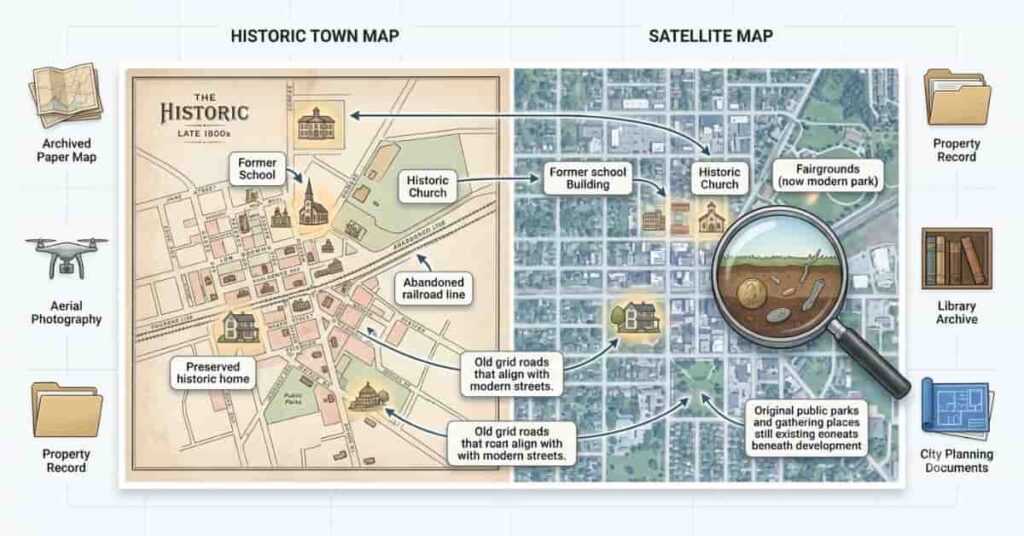
Finding older coins and relics starts long before you switch on your metal detector. One of the best ways to improve your success is learning how to identify “old ground.” These are places where people lived, worked, or gathered many years ago, even if modern buildings or parks now cover the area. A little research can save hours of searching and help you focus on locations with the highest potential.
Start by comparing several historical sources instead of relying on just one. Old maps, aerial photographs, and public records often reveal forgotten homes, schools, churches, parks, and roads. When multiple sources point to the same location, you can feel more confident that the site has historical value. This research method works well whether you’re exploring public parks, old home sites, or curb strips.
Pre-1900 Maps
Historic maps from the late 1800s can show buildings, roads, railroads, churches, and town centers that no longer exist. Compare these maps with modern satellite images to locate areas where people once gathered. Old park entrances, former neighborhoods, and abandoned buildings often become excellent places to detect where permitted.
Historic Aerial Imagery
Aerial photographs help you see how a city has changed over time. Older images may reveal farmhouses, fairgrounds, schools, walking paths, or open fields that disappeared during development. Even if the buildings are gone, the ground beneath them may still contain historical finds.
Property Records
County property records and local tax archives often include construction dates for older homes and buildings. These records help you identify neighborhoods with a long history of activity. Older properties usually offer better detecting opportunities than recently developed areas.
City Planning Archives
Many city libraries, museums, and planning departments preserve historical documents, zoning maps, and development plans. These archives can uncover forgotten parks, demolished schools, trolley routes, and community gathering places. Combining this information with old maps creates a much clearer picture of where to search.
Park Detecting Etiquette & Legal Considerations (USA Focus)
Knowing where to detect is only part of the hobby. Responsible detectorists also understand the rules and respect the places they visit. Following proper etiquette protects public spaces, builds trust with property owners, and helps keep metal detecting welcome in communities across the United States.
Laws can vary between cities, counties, state parks, and federal lands. Some public parks allow metal detecting with few restrictions, while others require a permit or prohibit it entirely. Always check local regulations before your hunt. Spending a few minutes researching the rules can save you from fines or having to leave a site early.
Check City Regulations
Never assume every public park allows metal detecting. Contact your city’s parks department or visit its official website to learn about local policies. Some parks allow detecting only in certain areas, while others restrict digging or require permission before you begin.
Get Permission When Needed
Always ask permission before detecting on private property. A polite request and clear explanation of your hobby often leave a positive impression. If the owner agrees, discuss where you can search and any conditions they want you to follow.
Fill Every Plug Cleanly
A well-repaired plug is one of the easiest ways to show respect for the property. Cut neat plugs, replace the soil carefully, and press the grass back into place. Before leaving, remove any trash you recover and make sure the area looks untouched.
Avoid Restricted Areas
Stay away from archaeological sites, protected historical locations, cemeteries, and environmentally sensitive areas unless you have the proper authorization. Many of these places are protected by law, and detecting there can damage important historical resources.
Following these simple practices helps protect both the land and the reputation of the metal detecting community. Responsible behavior also increases the chances that parks and property owners will continue allowing the hobby in the future.
Common Location Mistakes That Kill Your Finds
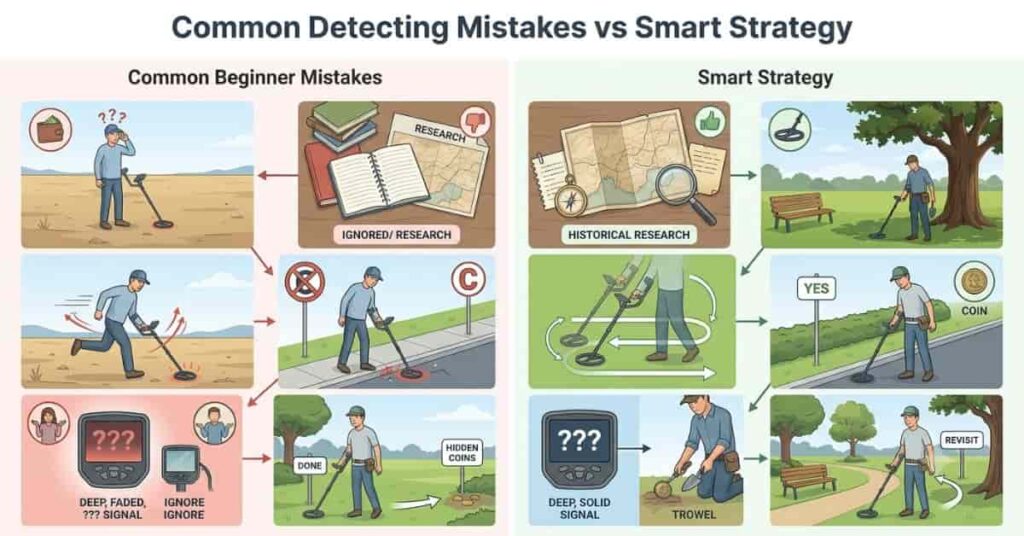
Even experienced detectorists have slow days, but many beginners struggle because of simple location mistakes. Success doesn’t depend on covering the most ground. It comes from choosing the right places, researching them well, and searching carefully. Avoiding a few common errors can dramatically improve your results without buying a new detector.
The following mistakes often cause detectorists to miss valuable coins, jewelry, and relics. Learning to recognize and avoid them will help you spend more time recovering good targets and less time searching unproductive ground.
Hunting Random Areas
Walking into a park and detecting wherever you start is one of the biggest mistakes beginners make. Large open fields may look promising, but they often receive very little foot traffic. Instead, focus on places where people gathered, rested, or walked regularly.
Look for benches, picnic tables, playgrounds, old shade trees, sports fields, and park entrances. These high-traffic areas usually produce more finds because they have seen years of daily activity.
Ignoring Research
Research is one of the most valuable tools you can use. Historic maps, aerial photographs, and property records often reveal forgotten homes, old roads, fairgrounds, and gathering places that no longer appear on modern maps.
Spending 20 minutes researching before a hunt can save hours of detecting in the wrong location. Experienced detectorists often spend as much time planning as they do searching.
Detecting Only Surface-Level Signals
Many beginners recover a few shallow coins and then move on too quickly. Older coins and relics often lie deeper because they have remained underground for many years.
Listen carefully for repeatable deep signals and overlap your sweeps. A slower search speed helps your detector identify targets that might otherwise be missed.
Skipping Curb Strips
Curb strips are easy to overlook because they are small. However, these narrow grassy areas receive constant foot traffic from pedestrians, commuters, and neighborhood residents.
Older curb strips can produce coins, jewelry, and tokens that many detectorists miss simply because they focus only on parks or beaches.
Not Revisiting Productive Sites
Finding several good targets doesn’t mean a location is finished. Changes in soil moisture, seasonal conditions, and improved detector settings can reveal signals that were previously hidden.
Return to successful locations from different directions and use slower sweep patterns. Many experienced detectorists recover valuable finds on their second or third visit to the same site.
How to Consistently Find Older Coins & Relics in Public Areas
Finding older coins and relics takes more than luck. It requires patience, research, and a consistent search strategy. Many beginners recover modern coins because they move too quickly or avoid challenging signals. Small changes in your approach can help you uncover older finds that others leave behind.
The best locations often include historic parks, old fairgrounds, former home sites, and public spaces that have welcomed visitors for decades. Once you’ve chosen the right location, focus on searching carefully instead of covering as much ground as possible. A slow, methodical hunt almost always produces better results than rushing through a large area.
Hunt Slowly and Methodically
A slow sweep gives your detector more time to identify weak or partially hidden targets. Fast swings can cause deep coins and small relics to blend into the background or disappear among nearby trash.
Search in straight lines and overlap each sweep by about one-third of the coil’s width. When you find a good target, slow down even more and carefully scan the surrounding area. Older coins often appear in small clusters where people once gathered.
Lower Discrimination When Appropriate
High discrimination settings can make detecting easier by filtering unwanted metals. However, they can also hide valuable older targets that sit close to iron nails or other debris.
When searching older locations, consider lowering your discrimination slightly if your detector allows it. This helps you hear more signals and improves your chances of finding coins or relics that other detectorists may have missed. Take time to learn how your detector responds before making major adjustments.
Investigate Deep, Repeatable Signals
Older coins usually sit deeper than recently lost items because they have remained underground for many years. Don’t ignore a signal simply because it isn’t loud.
If a target gives a clear, repeatable tone from different directions, recover it carefully. Many valuable discoveries begin as faint signals that less patient detectorists choose to skip.
Focus on the Oldest Parts of the Location
Not every section of a park or public area has the same history. Concentrate on places with the longest record of human activity, such as mature shade trees, original park entrances, historic pathways, picnic areas, and former gathering spots.
Historic maps, aerial photographs, and local records can help identify these older sections before you begin detecting. Combining good research with careful searching gives you the best chance of finding older coins and relics.
Conclusion
Metal detecting is more rewarding when you combine good research with smart location choices. From busy parks and old home sites to curb strips and historic public spaces, every location has the potential to reveal something valuable. By following these metal detecting tips for parks, you’ll spend less time searching empty ground and more time recovering coins, jewelry, and interesting relics.
Remember, success doesn’t come from owning the most expensive detector. It comes from choosing the right locations, hunting patiently, and respecting local laws and property owners. Every hunt is a chance to improve your skills and learn something new.
Have a favorite park or a memorable find? Share your experience in the comments below. If you’re ready to improve your detecting skills even further, explore our beginner guides, location strategies, and equipment tips here on Metal Detecting USA.
Frequently Asked Questions
Below are answers to the most common questions about metal detecting in parks, old home sites, and other public locations in the United States.
Is it legal to metal detect in parks?
What is a curb strip?
How do I find old home sites?
Are backyards productive for metal detecting?
What are the best places to metal detect in a park?
What is the best time to metal detect in parks?
Do I need an expensive metal detector to find old coins?
Should I dig every signal?
Can I metal detect at old home sites?
How can I increase my chances of finding older coins?

Ethan Callaway is a passionate metal detecting enthusiast based in Savannah, Georgia, USA. Currently pursuing a B.S. in Archaeology & Historical Preservation at the University of Georgia, he combines his love for treasure hunting with research-backed insights on metal detecting techniques, safety practices, and site guidance.
Through MetalDetectingUSA.com, Ethan shares practical tips, honest product reviews, and beginner-friendly advice to help both new and experienced detectorists explore metal detecting across the United States with more confidence and understanding.