

Table of Contents
In Simple Terms, How Do Metal Detectors Work?
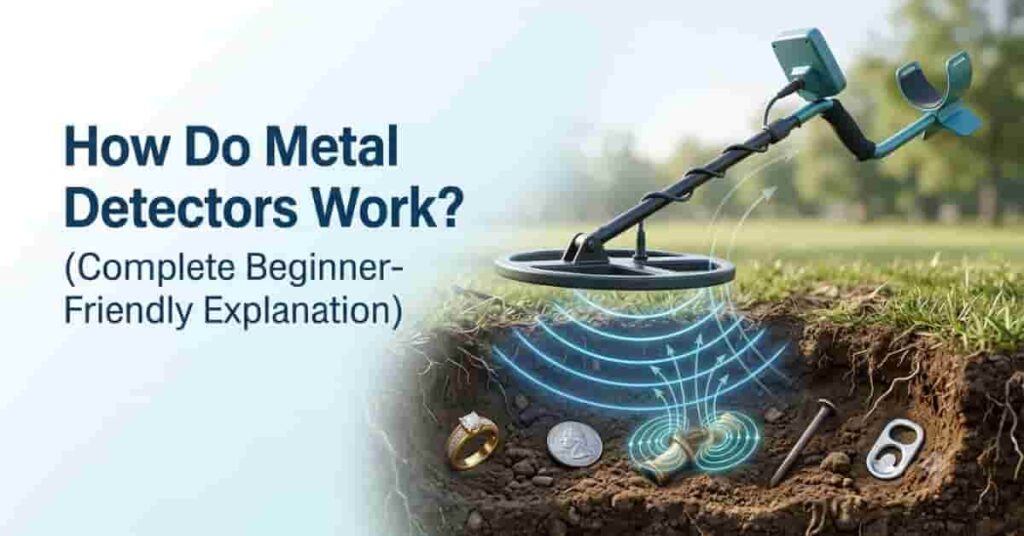
Metal detectors work by creating an electromagnetic field through the search coil. When this field encounters a metal object, the metal disrupts the signal by producing its own magnetic response. The detector senses this change, processes the signal, and alerts you with a sound, vibration, or target ID on the display. Different detector technologies use this same basic principle to locate buried metal objects.
Introlduction
Have you ever wondered how a metal detector can find a hidden coin beneath the ground?
If you’re asking how do metal detectors work, you’re not alone. Many beginners are curious about the science behind these devices before buying one or starting their first treasure hunt. Whether you’re searching for old coins, jewelry, relics, or even gold, understanding the basics helps you use your detector with more confidence and better results.
The good news is that the technology is much easier to understand than it sounds. Metal detectors use electromagnetic fields to locate metal objects hidden beneath the surface. Once you know how they detect targets, choosing the right settings and interpreting signals becomes much simpler.
In this beginner-friendly guide, you’ll learn how metal detectors work step by step, what happens when the search coil passes over metal, the different technologies available, and the key factors that affect depth, accuracy, and performance. By the end, you’ll understand exactly how these amazing devices turn invisible metal into a clear audio alert.
The Basic Science Behind How Metal Detectors Work
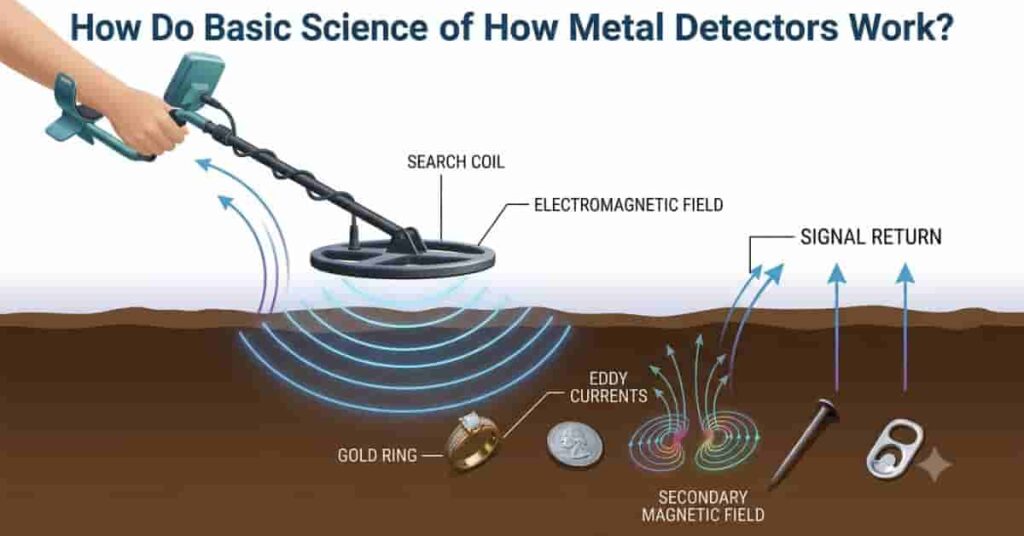
Understanding the science behind how do metal detectors work makes it easier to use one with confidence. While the technology may seem advanced, it relies on a simple principle of electromagnetism. A metal detector creates an electromagnetic field and watches for changes in that field. When a metal object enters the field, the detector recognizes the difference and alerts you.
Every modern detector follows the same basic process. First, the search coil sends an electromagnetic field into the ground. Next, a buried metal object reacts to that field and creates its own electrical response. Finally, the detector receives the returning signal, analyzes it, and produces a sound or visual target ID.
The strength of the returned signal depends on several factors, including the metal type, object size, depth, and soil conditions. Highly conductive metals, such as silver and copper, often produce stronger signals than smaller or less conductive objects.
Expert Tip: Don’t think of a metal detector as a machine that “sees” underground. Instead, imagine it listening for tiny changes in an invisible electromagnetic field. This simple idea explains how every detector works, from entry-level models to professional machines.
Electromagnetic Fields Explained Simply
An electromagnetic field is an invisible area of energy created by electricity flowing through the metal detector’s search coil. When you switch on the detector, the transmitter coil sends this field into the ground. The field spreads below the surface, searching for objects made of metal.
Most soil does not change the field very much. However, metal conducts electricity differently than soil, sand, or rocks. When the electromagnetic field reaches a metal object, it interacts with that object instead of passing through unchanged.
You cannot see or feel this field, but it works continuously while you sweep the detector. The larger the search coil, the wider the field it creates. However, a wider field does not always mean better performance because soil conditions and target size also affect detection.
How Metal Objects Create Eddy Currents
When an electromagnetic field reaches a metal object, it causes tiny electrical currents to flow inside the metal. These circulating currents are called eddy currents. They form naturally because conductive metals respond to changing magnetic fields.
The eddy currents generate their own small magnetic field. This new field travels back toward the detector’s receiver coil. Different metals produce different responses because they vary in conductivity, size, shape, and composition.
For example, a silver coin usually creates a stronger signal than a small iron nail. Likewise, a large brass relic often produces a clearer response than a tiny piece of aluminum foil. The detector measures these differences to help identify possible targets before you dig.
Pro Tip: Stronger signals do not always mean valuable finds. Large pieces of scrap metal can produce powerful responses, so learning target identification takes practice.
Signal Detection and Feedback
After the metal creates a secondary magnetic field, the receiver coil detects the returning signal. The detector’s control box processes this information in a fraction of a second. It compares the signal with stored patterns and estimates the target’s properties.
The detector then gives you feedback through audio tones, vibration, or a screen display. Many modern detectors also show a target ID number that helps estimate whether the object may be iron, aluminum, copper, silver, or another metal. Although these readings are helpful, they are estimates rather than guarantees.
As you gain experience, you’ll begin to recognize how different targets sound. A clean, repeatable tone often points to a solid object, while broken or inconsistent signals may indicate trash, deep targets, or highly mineralized soil.
Main Parts of a Metal Detector and Their Role
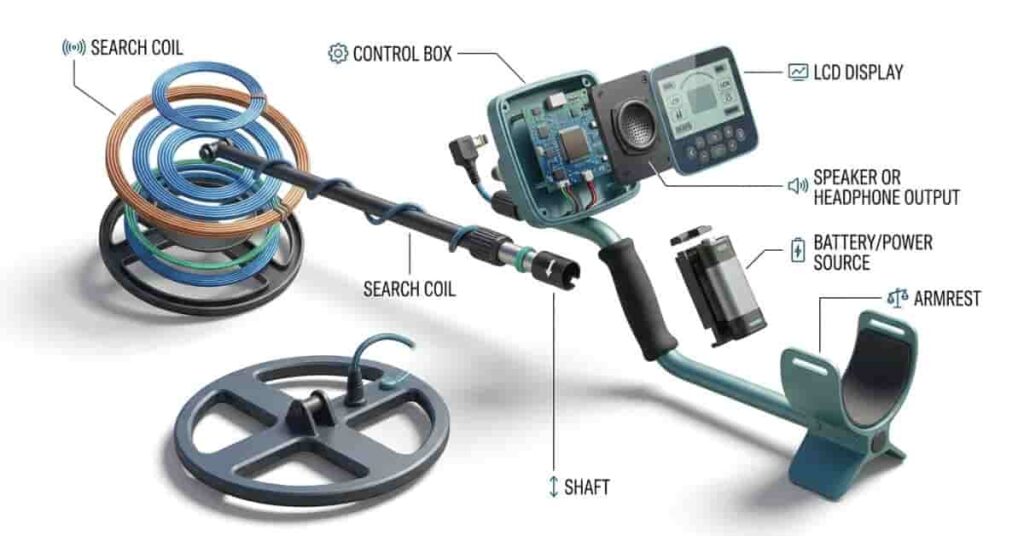
Every metal detector has several key parts that work together to find buried metal objects. Each component plays a specific role, from creating an electromagnetic field to processing signals and alerting you when a target is found. Understanding these parts will help you learn how do metal detectors work and make it easier to choose and use the right detector.
Although metal detectors come in different sizes and price ranges, their core components are very similar. Whether you’re searching for coins in a park or relics on a beach, the same basic system powers the detection process.
Expert Tip: Before your first hunt, take a few minutes to identify each part of your detector. Knowing what each component does will help you adjust settings more confidently in the field.
Search Coil (Transmitter & Receiver)
The search coil is the most important part of a metal detector because it performs the actual detection. It sits at the bottom of the detector and moves over the ground during each sweep. Inside the coil are transmitter and receiver components that work together.
The transmitter creates an electromagnetic field that spreads into the soil. When the field reaches a metal object, the object produces a secondary magnetic field. The receiver detects this returning signal and sends it to the control box for analysis.
Search coils come in different sizes and shapes. Larger coils can detect bigger objects at greater depths, while smaller coils perform better in trash-filled areas and help separate nearby targets.
Control Box
The control box acts as the detector’s brain. It receives signals from the search coil, analyzes them, and decides how to alert you. This is where the detector processes information about the target’s size, depth, and likely metal type.
Most control boxes include settings such as sensitivity, discrimination, ground balance, and search modes. Many modern detectors also offer target ID numbers, pinpoint functions, and customizable audio tones.
Learning how to adjust these settings can improve performance in different environments. For example, reducing sensitivity may help when detecting in highly mineralized soil or areas with heavy electrical interference.
Shaft and Stabilizer
The shaft connects the search coil to the control box and gives the detector its structure. Most shafts are adjustable, allowing users to set a comfortable length for better control during long detecting sessions.
Many detectors also include an armrest or stabilizer near the handle. This supports your forearm and helps distribute the detector’s weight more evenly. Better balance reduces arm fatigue and makes it easier to maintain a smooth, consistent sweep.
A properly adjusted shaft also keeps the search coil flat against the ground. This improves coverage and helps maintain accurate target detection.
Pro Tip: Adjust the shaft so your elbow stays slightly bent and the search coil rests flat on the ground while standing naturally.
Power Source
Every metal detector needs a reliable power source to operate. Most beginner and mid-range detectors use rechargeable lithium-ion batteries or replaceable AA batteries. Some professional models include built-in rechargeable battery packs for longer detecting sessions.
The battery powers every part of the detector, including the search coil, control box, display, and audio system. A weak battery can reduce performance or cause unstable signals, especially during extended hunts.
Always check the battery level before heading out. Carrying a spare battery or portable charger is a good habit, especially if you plan to detect for several hours.
Pro Tip: Recharge batteries after each trip instead of waiting until they are completely empty. This helps ensure reliable performance on your next hunt.
Audio & Display System
The audio and display system lets you know when the detector finds a possible target. Most detectors produce different tones based on the type or conductivity of the detected metal. Higher-end models also display target ID numbers, estimated depth, battery status, and selected search mode.
Audio feedback is often faster than looking at the screen, so many experienced detectorists rely on sound first and use the display for confirmation. Wearing headphones can also make faint signals easier to hear, especially in noisy locations.
Remember that the display provides an estimate, not a guarantee. Digging a variety of targets is the best way to learn how different metals sound and appear on your detector.
Step-by-Step: What Happens When You Sweep a Metal Detector?
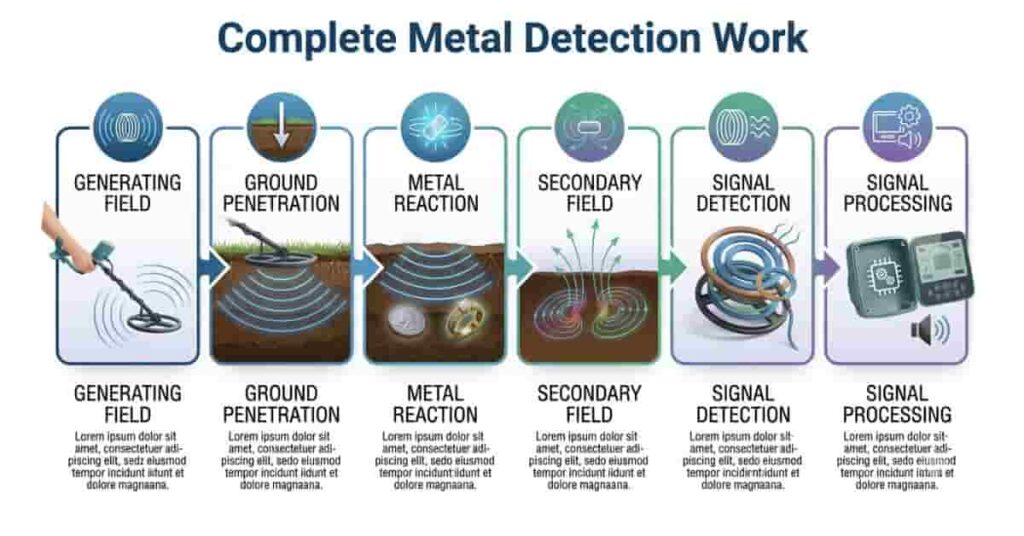
When you understand each step of the detection process, it becomes much easier to see how do metal detectors work. Every sweep follows the same sequence, whether you’re searching for coins in a park or relics in an old field. The detector creates an electromagnetic field, looks for changes, and turns those changes into useful information.
Although this happens in a fraction of a second, several important steps take place before you hear a beep or see a target ID on the screen.
Expert Tip: A slow, steady sweep gives the detector more time to analyze each signal. Rushing often causes weak or deep targets to be missed.
Step 1: The Search Coil Generates an Electromagnetic Field
As soon as you switch on the detector, the search coil begins producing an electromagnetic field. This invisible field extends below the coil and into the ground. It continuously scans the area as you move the detector from side to side.
The field is harmless and designed specifically to detect conductive metal objects beneath the surface.
Step 2: The Electromagnetic Field Penetrates the Ground
The electromagnetic field passes through soil, sand, grass, and many other natural materials with very little interference. As long as no metal is present, the detector receives almost no significant change in the returning signal.
Detection depth depends on several factors, including soil conditions, coil size, detector settings, and the size of the buried object.
Step 3: A Metal Object Reacts to the Field
When the electromagnetic field reaches a buried metal object, the object responds immediately. Conductive metals allow electrical currents to flow inside them. These small circulating currents are called eddy currents.
Different metals react differently because they vary in conductivity, size, shape, and composition. This is why a silver coin often produces a different response than an iron nail or aluminum pull tab.
Step 4: A Secondary Magnetic Field Is Created
The eddy currents generate their own secondary magnetic field around the metal object. This new field is different from the one produced by the search coil.
Its strength depends on the target’s characteristics. Larger, highly conductive objects usually create stronger signals than very small or deeply buried items.
Step 5: The Receiver Coil Detects the Change
The receiver coil listens for changes in the electromagnetic field. When it detects the returning secondary field, it sends the signal to the control box for processing.
Modern detectors can recognize even small differences in signal strength. This allows them to estimate the target’s size, depth, and likely metal type.
Step 6: The Processor Converts the Signal into a Tone or Target ID
The detector’s processor analyzes the returning signal within milliseconds. It compares the signal with built-in detection patterns and then alerts you.
Depending on your detector, you may hear a specific tone, feel a vibration, or see a target ID number on the display. Many detectors combine all three to help you decide whether the target is worth digging.
Remember that no detector identifies every target with complete accuracy. Soil conditions, nearby trash, and target orientation can all affect the reading. Experienced detectorists often confirm a target by sweeping over it from different directions before digging.
Different Technologies Used in Modern Metal Detectors
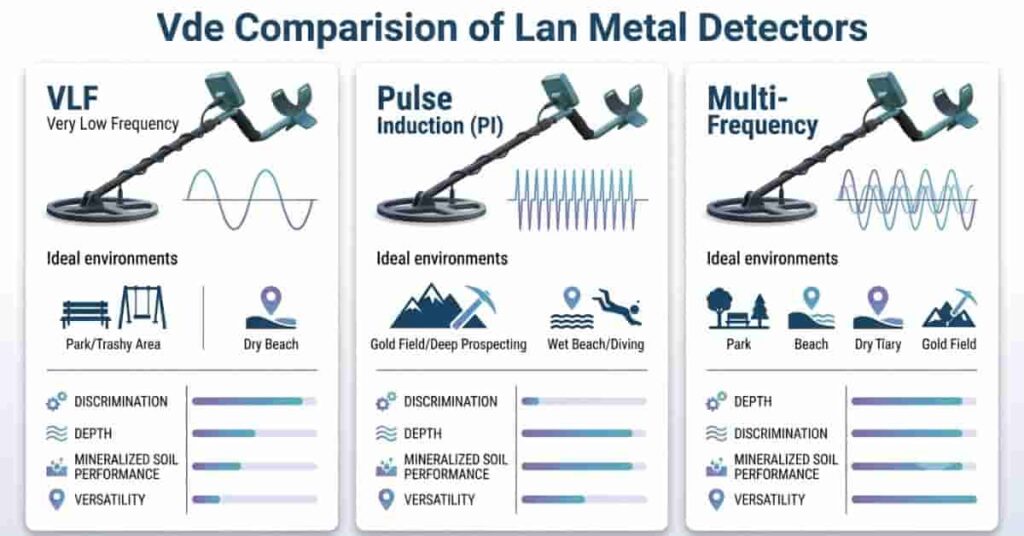
Not all metal detectors use the same detection technology. While they all rely on electromagnetic fields, the way they generate and process signals can vary. Understanding these technologies helps you choose the right detector for your goals and explains why some models perform better in certain environments.
The three most common technologies are Very Low Frequency (VLF), Pulse Induction (PI), and Multi-Frequency. Each has unique strengths, making it suitable for different types of treasure hunting.
Expert Tip: If you’re buying your first detector, start with a VLF model. It offers the best balance of price, ease of use, and performance for most beginners.
VLF (Very Low Frequency) – How It Works
Very Low Frequency (VLF) is the most common technology found in beginner and mid-range metal detectors. It uses two coils inside the search coil assembly. One coil transmits an electromagnetic field, while the other receives the returning signal after it interacts with a metal object.
The detector analyzes the difference between the transmitted and received signals. This allows it to estimate the target’s conductivity and identify the likely metal type. VLF detectors also support discrimination, making it easier to ignore unwanted metals like iron while focusing on coins, jewelry, and relics.
VLF detectors work well in parks, fields, and dry beaches. However, highly mineralized soil and wet salt sand can sometimes reduce their performance.
Pulse Induction (PI) – How It Works
Pulse Induction (PI) detectors use a different approach. Instead of transmitting a continuous electromagnetic field, they send powerful bursts, or pulses, of electricity through the search coil. After each pulse, the detector listens for signals returning from buried metal objects.
Because PI detectors measure how quickly these signals fade, they handle mineralized ground much better than most VLF models. This makes them popular for gold prospecting, saltwater beaches, and areas with difficult soil conditions.
The main drawback is that many PI detectors offer limited target discrimination. As a result, they often detect valuable objects and unwanted scrap metal with similar responses.
Multi-Frequency Technology – How It Works
Multi-Frequency technology combines the strengths of different frequencies by transmitting several frequencies at the same time. Instead of focusing on a single frequency, the detector analyzes multiple signal responses simultaneously.
This approach improves target identification and helps the detector adapt to a wider range of metals and ground conditions. Multi-Frequency detectors perform well in parks, farmland, freshwater locations, and saltwater beaches without requiring frequent adjustments.
Although these detectors are often more expensive, they provide excellent versatility. Many experienced detectorists choose Multi-Frequency models because they can detect small jewelry, coins, and deeper targets with impressive accuracy across different environments.
Technology Comparison
| Feature | VLF | Pulse Induction (PI) | Multi-Frequency |
|---|---|---|---|
| Best For | Coins, jewelry, relics | Gold prospecting, saltwater beaches | All-around detecting |
| Target Identification | Excellent | Limited | Excellent |
| Iron Discrimination | Excellent | Limited | Excellent |
| Mineralized Soil | Good | Excellent | Excellent |
| Wet Salt Beaches | Fair | Excellent | Excellent |
| Beginner Friendly | Excellent | Moderate | Good |
| Typical Cost | Low to Medium | Medium to High | Medium to High |
How Deep Do Metal Detectors Work?
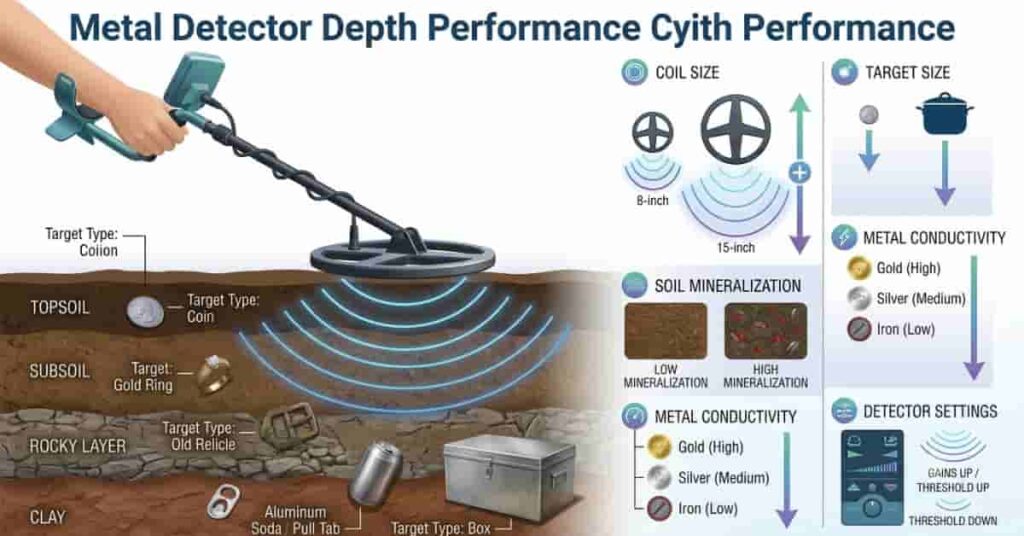
One of the most common questions beginners ask is, “How deep can a metal detector detect?” The answer depends on several factors rather than a fixed number. While some targets may be found just below the surface, others can be detected much deeper under the right conditions. Understanding these factors gives you realistic expectations and helps you get the best performance from your detector.
No metal detector can guarantee a specific detection depth. Soil conditions, target characteristics, and detector settings all influence how deep a signal can be detected.
The Main Factors That Affect Detection Depth
Coil Size
The search coil has a major impact on detection depth. Larger coils create a wider and deeper electromagnetic field, making them better for locating large buried objects. Smaller coils usually detect shallow targets more accurately and perform better in areas with lots of trash.
Target Size
Larger metal objects generally produce stronger signals than smaller ones. For example, a large relic or metal container is often easier to detect than a tiny gold earring buried at the same depth.
Soil Mineralization
Highly mineralized soil contains natural minerals that can interfere with detection signals. This “ground noise” makes it harder for the detector to recognize weak targets. Detectors with effective ground balance handle these conditions much better.
Metal Conductivity
Highly conductive metals, such as silver and copper, usually create stronger responses than metals with lower conductivity. Small gold items can be challenging because of their size, even though gold is highly conductive.
Detector Settings
Settings such as sensitivity, ground balance, and recovery speed affect detection depth. Higher sensitivity may increase depth, but it can also produce false signals if set too high.
Do Metal Detectors Work on All Types of Metal?
Yes, metal detectors can detect almost every type of metal. However, they do not detect every metal equally well. Different metals produce different signal strengths because they vary in conductivity and magnetic properties. Modern detectors also allow you to ignore certain metals through discrimination settings.
Understanding the difference between ferrous and non-ferrous metals helps you interpret signals more accurately.
Ferrous Metals
Ferrous metals contain iron. Common examples include iron nails, steel objects, and cast iron tools. These metals are usually magnetic and often produce lower target ID numbers. Many detectorists use discrimination to reduce unwanted iron signals in areas with heavy trash.
Non-Ferrous Metals
Non-ferrous metals do not contain significant amounts of iron. They include gold, silver, copper, brass, aluminum, and lead. These metals are often the primary targets because they include coins, jewelry, and valuable relics.
Gold
Metal detectors can detect gold, but success depends on the size of the gold item and the detector’s operating frequency. Small gold nuggets and thin jewelry produce weaker signals than larger gold objects. Specialized gold detectors often perform better in highly mineralized ground.
Silver
Silver is one of the easiest valuable metals to detect because of its high conductivity. Silver coins often produce strong, clear signals and high target ID readings.
Aluminum
Aluminum is highly conductive and creates strong signals. Unfortunately, beverage cans, pull tabs, and foil can sound similar to valuable targets, making aluminum one of the most common types of trash recovered.
Iron
Iron is easy to detect but is often considered unwanted during coin and jewelry hunting. However, relic hunters frequently search for iron artifacts because they may have historical value.
Expert Tip: Don’t rely only on discrimination. Occasionally digging uncertain signals can lead to valuable finds that share similar readings with common trash.
What Affects How Well a Metal Detector Works?
Even the best metal detector cannot perform at its maximum in every environment. Ground conditions, weather, and nearby objects all influence detection accuracy. Learning how these factors affect performance helps you adjust your detector and avoid unnecessary frustration.
Wet Soil
Moist soil often improves conductivity, allowing signals to travel more efficiently. Many detectorists notice better performance after light rainfall. However, very wet ground can sometimes increase mineral interference in certain locations.
Saltwater
Saltwater is one of the most challenging environments for many detectors. The salt conducts electricity and can create false signals, especially with basic VLF models. Multi-Frequency and Pulse Induction detectors usually perform much better on saltwater beaches.
Snow
Snow itself usually has little effect on detection. Frozen ground, however, can make it difficult to recover targets. Ice mixed with mineral-rich soil may also reduce signal quality in some conditions.
Trash Density
Areas filled with nails, pull tabs, bottle caps, and other metal debris create overlapping signals. Smaller search coils and faster recovery speeds help separate valuable targets from surrounding trash.
Ground Balance
Ground balance allows the detector to compensate for naturally occurring minerals in the soil. Proper ground balance reduces false signals and improves target detection, especially in difficult ground conditions.
Expert Tip: Before searching a new location, perform a ground balance if your detector supports it. This simple adjustment can noticeably improve stability and target accuracy.
Why Metal Detectors Produce Different Sounds
One of the most useful features of a metal detector is its ability to produce different sounds for different targets. Instead of giving the same beep every time, modern detectors analyze the returning signal and provide audio feedback that helps you decide whether a target is worth digging. Learning these sounds is an important step in understanding how do metal detectors work and improving your success rate.
The detector creates different tones by analyzing factors such as the target’s conductivity, size, shape, and depth. Many models also display a target ID number alongside the audio signal, giving you another clue about what may be buried.
Expert Tip: Experienced detectorists often trust the audio first and use the display to confirm the target. Clear, repeatable tones usually deserve a closer look.
Target ID Numbers
Most modern metal detectors assign a numerical value to each detected object. This is called the Target ID (TID). The number estimates the type of metal based on how it responds to the detector’s electromagnetic field.
For example, iron usually appears in the lower range, while silver and copper coins often appear in the higher range. Aluminum items can fall in the middle, which is why pull tabs sometimes resemble valuable jewelry.
Keep in mind that Target ID numbers are estimates. Soil conditions, target depth, and nearby metal can change the reading.
Tone Differences
Many detectors use multiple audio tones instead of a single beep. Each tone represents a different range of target conductivity.
Common Myths About How Metal Detectors Work
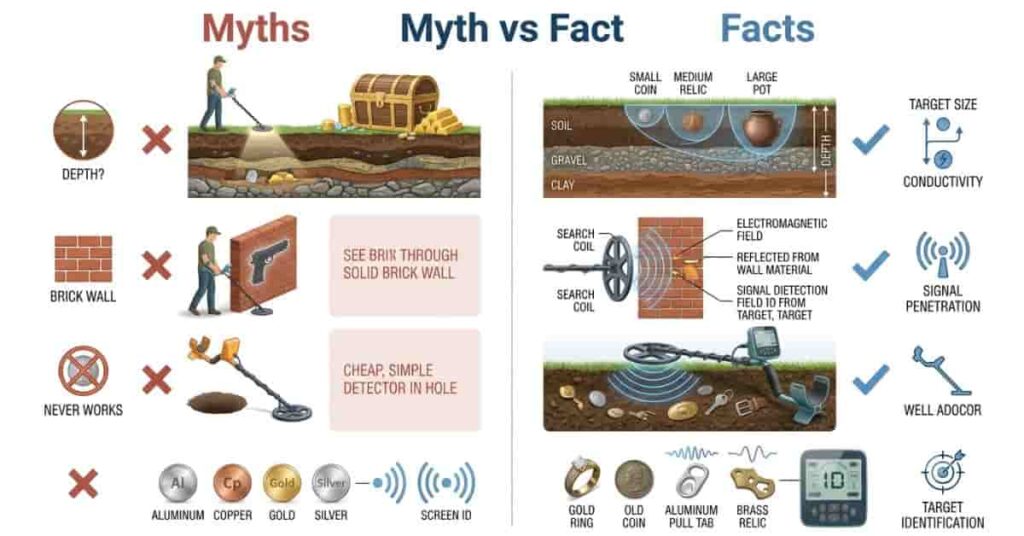
Metal detectors have been featured in movies, television shows, and online videos for years. Unfortunately, many of these portrayals are unrealistic. Believing these myths can lead to disappointment, especially for beginners. Understanding what metal detectors can and cannot do helps you set realistic expectations and enjoy the hobby more.
Expert Tip: A good detector improves your chances of finding valuable items, but patience, practice, and choosing the right location matter just as much.
Myth 1: Metal Detectors Can Detect Treasure at Unlimited Depth
This is one of the biggest misconceptions. Every metal detector has practical depth limits. Detection depth depends on factors such as coil size, target size, soil mineralization, detector technology, and settings.
Large objects are usually easier to detect at greater depths than small coins or jewelry. No detector can find every buried object regardless of depth.
Myth 2: Metal Detectors Can See Through Walls
Metal detectors do not create images or “see” through solid objects. They simply detect changes in an electromagnetic field caused by nearby metal.
Although they can detect metal hidden inside walls or floors in some situations, they cannot reveal what the object looks like or what surrounds it.
Myth 3: Cheap Metal Detectors Never Work
Affordable detectors can be excellent for beginners. Many entry-level models successfully locate coins, jewelry, and other common targets in parks, yards, and beaches.
Premium detectors usually offer better depth, faster processing, and advanced features, but they are not the only way to enjoy successful detecting.
Myth 4: All Metals Sound the Same
Modern metal detectors produce different tones and Target ID numbers for different metals. While some targets can sound similar, especially aluminum and certain gold items, experienced users learn to recognize subtle differences through practice.
No detector identifies every target perfectly, but combining audio, Target ID, and consistent sweep techniques greatly improves accuracy.
CONCLUSION
Now you know how do metal detectors work and why they can detect buried metal using electromagnetic fields. You also learned how detector technologies, key components, ground conditions, and settings affect performance. With this knowledge, you’ll have a stronger foundation for choosing a detector and interpreting the signals you hear in the field.
Remember, successful metal detecting takes practice as much as good equipment. Spend time learning your detector’s settings, experiment with different search modes, and practice identifying targets before heading to new locations. The more familiar you become with your detector, the better your results will be.
If you found this guide helpful, share it with other beginners or leave a comment with your questions or first detecting experience. You can also explore our other metal detecting guides to improve your skills and make every hunt more rewarding.