
Table of Contents
Introduction
Could your next metal-detecting trip uncover a gold nugget hiding beneath American soil?
Knowing where to find gold with a metal detector can make a huge difference for beginners. Productive ground often has a history of gold mining, placer deposits, or natural gold discoveries. The right location can matter more than having the most expensive detector.
In the United States, gold can appear in many forms and environments. Natural gold includes nuggets and placer deposits found in gold-bearing areas. Lost gold includes rings, jewelry, coins, and other valuables.
This guide explains the best places to find gold with a metal detector across the USA. You’ll learn which states and regions have strong gold potential. You’ll also discover important tips for choosing legal and productive detecting locations.
If you’re still learning the basics, our guide on [how to find gold with a metal detector] explains the key techniques beginners should know before choosing a location.
By the end, you’ll know where to start your search and what makes an area worth detecting.
Where to Find Gold With a Metal Detector
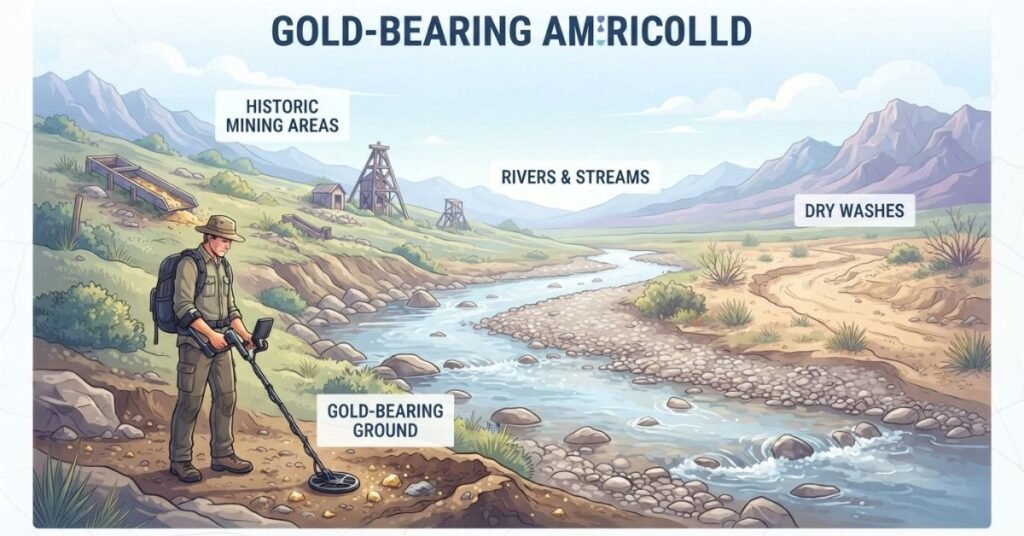
The best places to find gold with a metal detector are areas with known gold history or documented placer deposits. Focus on historic mining districts, gold-bearing rivers, streams, dry washes, and creek beds. Some beaches can also produce lost gold jewelry, especially where people have gathered.
The key to where to find gold with a metal detector is understanding the type of gold you’re searching for. Natural gold often occurs in areas where erosion has moved and concentrated gold into placer deposits. Lost jewelry follows a different pattern and usually appears near places where people spend time.
Major Places to Search
Promising locations can include:
- Historic gold-mining areas: Old mining districts may contain natural gold and missed targets.
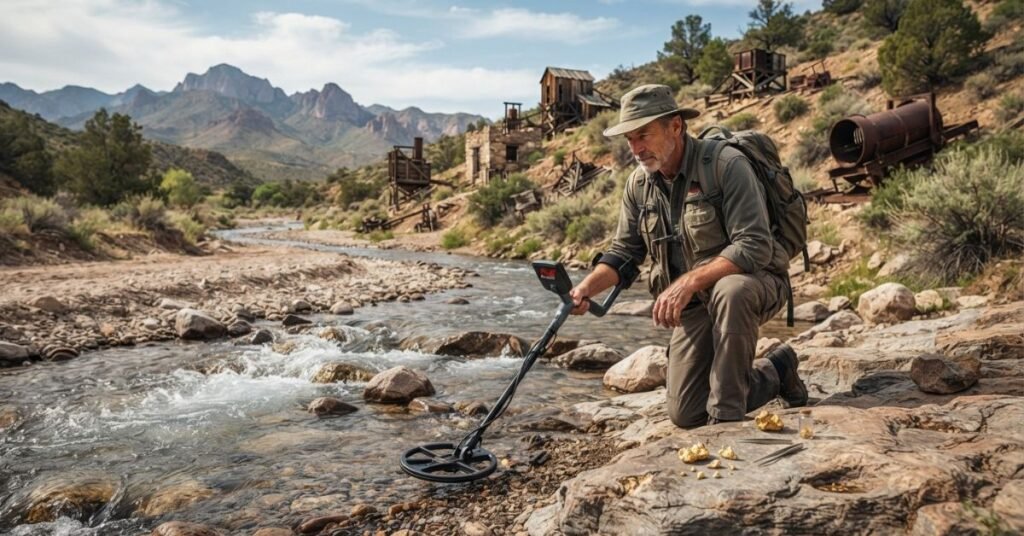
- Rivers and streams: Moving water can concentrate heavy gold in cracks, gravel bars, and other traps.
- Dry washes and creek beds: These areas can hold placer gold after repeated erosion and seasonal flooding.
- Documented placer-gold areas: Locations with recorded gold discoveries offer stronger starting points.
- Certain beaches: Popular swimming areas can produce lost rings, coins, and other gold jewelry.
Finding a productive location takes more than spotting an old mining site. You also need to study the local geology, gold history, terrain, and access rules. Next, look for ground features that can naturally collect or preserve gold.
Where Does Gold Naturally Occur?
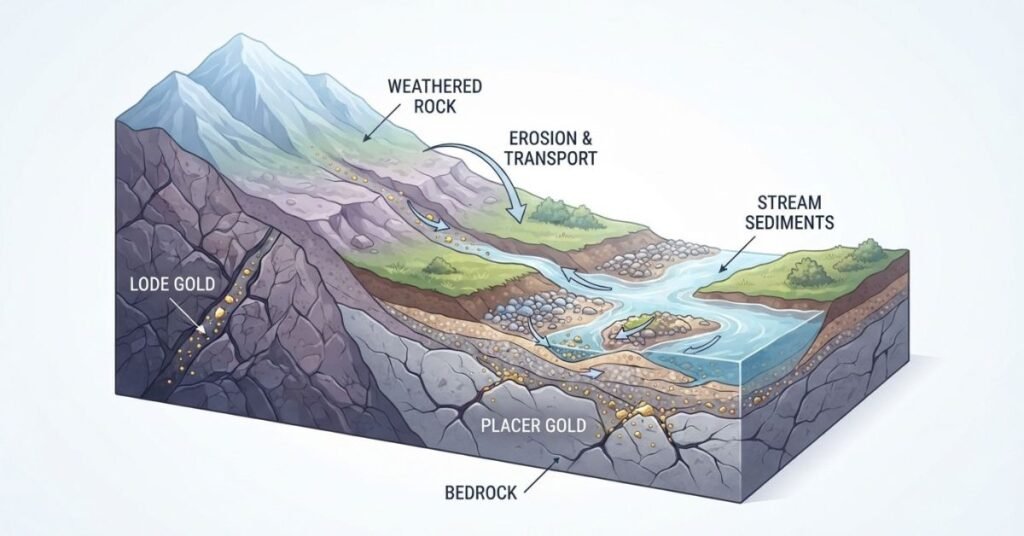
Gold occurs naturally in many different geological settings, but it isn’t spread evenly across the ground. Productive areas usually have a history of gold formation, erosion, transport, or concentration.
Before focusing on specific locations, it also helps to understand [whether a metal detector can actually find gold] and what factors affect gold detection.
Two basic types help explain where detectorists should search: lode gold and placer gold. Lode gold remains connected to the original rock or mineralized vein. Placer gold breaks away through weathering and can collect in soil, gravel, streams, and other deposits.
Understanding this difference helps you recognize more promising ground. Metal detectors are especially useful where gold occurs near the surface or becomes exposed through erosion.
Placer Gold vs. Lode Gold
Lode gold occurs within solid rock, often in veins or mineralized zones. Finding it usually requires geological knowledge and sometimes specialized mining or prospecting methods.
Placer gold forms when weathering breaks gold-bearing rock apart. Water and erosion can then move the heavier gold into new locations. Over time, natural processes can concentrate gold in gravel, soil, and stream deposits.
Metal detecting is particularly relevant to shallow or exposed placer gold. A detector can locate larger gold pieces near the surface when conditions are suitable.
However, detector performance depends on several factors. Gold size, depth, soil mineralization, detector settings, and ground conditions all matter.
For beginners, known placer-gold areas can provide a more practical starting point. Always confirm that detecting is legal before searching.
Why Gold Accumulates in Rivers and Streams
Gold is extremely dense compared with most common rocks and minerals. This allows moving water to transport lighter material more easily than heavier material.
During floods or strong water movement, gravel and sediment can shift downstream. Gold may settle when water loses enough energy to move heavier particles.
Natural traps can therefore become important search areas. These include inside bends, behind larger rocks, and areas where coarse gravel collects.
Bedrock surfaces can also interrupt the movement of sediment. Gold may settle where heavier material becomes trapped instead of continuing downstream.
These conditions don’t guarantee gold, but they can help identify ground worth investigating. Look for locations where geology and water movement have naturally concentrated heavy material.
Bedrock Cracks and Natural Gold Traps
Exposed bedrock can create natural traps for placer gold. Cracks, grooves, depressions, and uneven surfaces can catch heavy material moving across the rock.
When water carries gravel over irregular bedrock, lighter material may continue moving. Heavier particles can settle into cracks and other low points.
This makes exposed bedrock worth examining in known gold-bearing areas. Pay particular attention to natural depressions and cracks below gravel deposits.
Not every crack contains gold. The surrounding geology and local gold history still matter.
Detectorists should also avoid disturbing protected sites or unstable ground. Use safe digging practices and follow local land-management rules.
Black Sand as a Possible Indicator
Black sand often contains heavy minerals such as magnetite and other iron-rich materials. It can accumulate in the same areas where water concentrates other heavy particles.
For this reason, black sand can sometimes provide a useful clue when prospecting for placer gold. However, black sand does not prove that gold is present.
You should treat it as one geological indicator rather than a guarantee. A stronger prospecting area combines several clues, such as documented gold history, suitable geology, exposed bedrock, and natural sediment traps.
Best Places to Find Gold With a Metal Detector
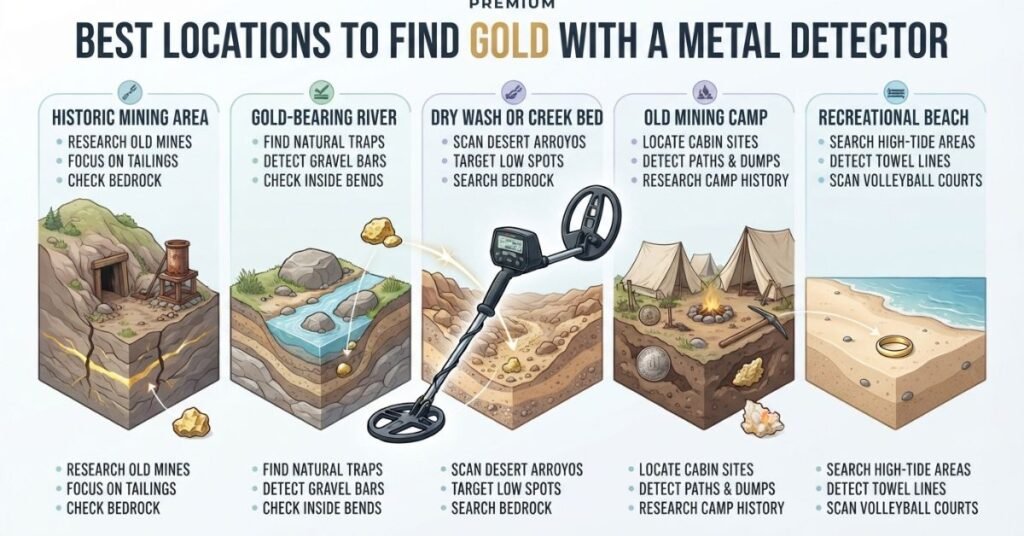
The best places to find gold with a metal detector usually have a documented connection to gold production or natural gold concentration. Historical records can help narrow a large search area into smaller, more promising zones.
For beginners, historic gold-mining districts are often worth researching first. These areas may contain old prospecting grounds, placer deposits, and locations that previous miners overlooked.
However, productive ground must also be legal and accessible. Land ownership, mining claims, protected areas, and local regulations can limit where you may detect.
1. Historic Gold Mining Areas
Historic gold-mining areas are among the most logical places to research for natural gold. Past discoveries show that gold occurred in the surrounding geological system.
Old mining districts can include both lode and placer deposits. Previous prospectors may also have worked only the easiest or richest ground.
That doesn’t mean every historic site still contains gold. Modern detectorists need to identify areas that remain accessible and legally open to detecting.
Potential areas to investigate include:
- Former mining grounds where detecting is permitted
- Historic prospecting areas
- Old workings that are legally accessible
- Areas surrounding documented gold activity
- Known placer-gold deposits
- Public land where local rules allow metal detecting
Research should come before swinging the detector. Historical records, geological maps, land-management information, and old maps can reveal useful clues.
What to Look For
Start by looking for evidence that connects the location to previous gold activity. Historical mining evidence can help identify areas worth researching further.
Useful clues may include:
- Historical mining records
- Geological maps and reports
- Old prospecting or mining maps
- Tailings and old processing areas
- Exposed bedrock
- Natural gravel deposits
- Documented placer-gold occurrences
Old tailings can sometimes show where earlier miners processed gold-bearing material. Their presence alone doesn’t guarantee that detectable gold remains.
Safety should always come first around historical workings. Never enter abandoned mine shafts, tunnels, or unstable structures. Stay on safe ground and confirm access rights before detecting.
A strong location combines geological potential, historical evidence, and legal access. That combination is much more useful than simply choosing a place because it looks old.
2. Rivers and Streams
Rivers and streams can be productive places to search for placer gold in known gold-bearing regions. Moving water can transport sediment and gradually concentrate heavier materials.
Gold may settle when water slows or encounters natural obstacles. These conditions can create small areas where heavy material collects over time.
However, not every river or stream is gold-bearing. Focus your research on waterways connected to documented gold deposits or historic mining activity.
Promising Features
Certain natural features can deserve closer attention:
- Inside bends: Slower water can deposit heavier sediment along parts of a bend.
- Bedrock cracks: Crevices can trap heavy material carried across exposed rock.
- Behind large rocks: Boulders can create lower-energy areas where sediment settles.
- Natural depressions: Low spots can collect gravel and other heavy material.
- Heavy-sediment areas: Concentrations of coarse gravel may indicate repeated sediment movement.
Look for these features within areas that already have a documented gold history. The feature itself doesn’t prove that gold is present.
3. Dry Washes and Creek Beds
Dry washes and seasonal creek beds can be important prospecting environments in parts of the western United States. Flash floods and seasonal water movement can transport sediment through desert landscapes.
When water eventually slows, heavier materials can settle in natural traps. These deposits may remain after the channel becomes dry.
Areas worth researching include desert washes, seasonal drainage channels, and exposed bedrock within known placer-gold regions.
Pay attention to natural depressions, bedrock cracks, and places where coarse sediment has accumulated. These features can reveal how water previously moved material through the landscape.
Still, geology matters more than appearance. A dry wash isn’t automatically gold-bearing. Prioritize locations with documented placer deposits or established gold activity.
Always check land ownership and current access rules before detecting. Desert areas can include private property, mining claims, protected land, and other restricted locations.
4. Areas Around Historic Mining Camps
Historic mining camps can be interesting because they may contain evidence of both natural gold and human activity. Miners often worked areas where gold occurred naturally, while camps created opportunities for objects to be lost.
Natural gold may occur in nearby placer deposits or other gold-bearing ground. Lost objects can include coins, jewelry, tools, and other manufactured items.
This makes historic camps different from remote placer locations. You may encounter targets connected to both the geological history and the people who lived or worked there.
However, historical sites require extra care. Some locations have preservation protections that restrict metal detecting or digging.
Before visiting, check:
- Land ownership and access rights
- Mining claims or other active rights
- Federal, state, or local regulations
- Historic-site preservation rules
- Permission requirements
- Current land-management restrictions
Never assume that an abandoned-looking site is open to detecting. Research the location first, follow posted rules, and avoid disturbing historic structures or protected archaeological material.
5. Beaches and Recreational Areas for Lost Gold
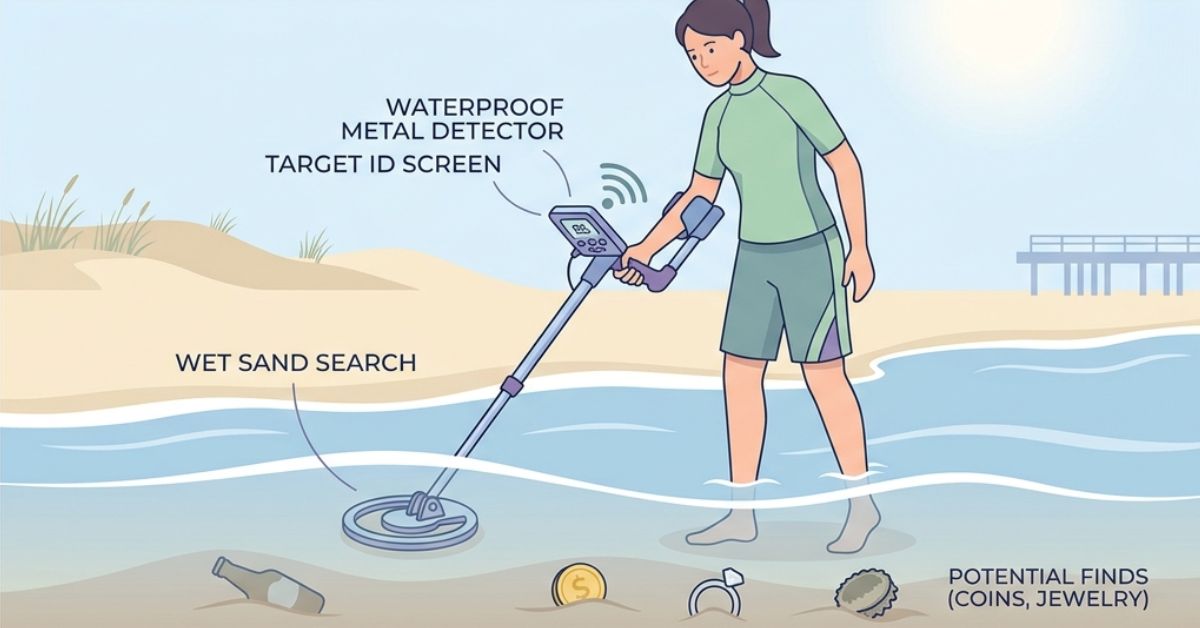
Beaches can offer good opportunities for finding lost gold jewelry, but they serve a different purpose from natural gold prospecting. Ordinary beaches generally aren’t places to expect naturally occurring gold nuggets.
Instead, beach detecting focuses on items people accidentally lose during recreation. Crowded areas can produce targets because visitors frequently remove jewelry before swimming or participating in activities.
Potential areas to investigate include:
- Tourist beaches: Busy shorelines can see heavy visitor activity throughout the year.
- Swimming areas: People may lose rings, chains, and pendants while entering or leaving the water.
- Volleyball areas: Active recreation can cause jewelry to fall from pockets or clothing.
- High-use recreational zones: Popular gathering areas can create more opportunities for lost valuables.
Common gold targets include rings, chains, pendants, earrings, and other jewelry. The best approach is to focus on places with regular human activity rather than searching randomly along an entire beach.
Check local rules before detecting. Some beaches restrict metal detecting, digging, or collecting finds. Rules can also differ between public beaches, parks, private property, and protected areas.
For beach hunting, your goal is usually lost gold, not natural gold. Understanding that difference helps you choose the right location and set realistic expectations.
Best States for Finding Gold With a Metal Detector
Gold potential varies widely across the United States. Geology, mining history, land access, and local regulations all affect where you can legally search.
A state with strong gold history isn’t automatically the best choice for every detectorist. The most useful location depends on the specific district and whether detecting is permitted there.
California
California is one of the most historically important gold-prospecting regions in the United States. James Marshall’s 1848 discovery near Coloma triggered the famous California Gold Rush.
The state contains major historic gold regions, including the Sierra Nevada foothills and northern California’s Klamath gold fields. Many areas have both placer and lode-gold histories.
For detectorists, documented placer districts can be especially interesting. California State Parks records numerous historic mining communities and gold-producing areas across the state.
Always research the exact property before detecting. Historic sites, state parks, private land, and active mining claims can have different rules.
Arizona
Arizona is well known for desert landscapes and historic mining districts. Its gold history includes placer deposits that developed through erosion and movement of material across dry terrain.
Dry washes and seasonal drainage channels can be relevant in areas with documented placer-gold activity. Exposed bedrock and natural sediment traps may also deserve attention.
However, desert ground can have complicated access conditions. Check land ownership, mining claims, protected areas, and current detecting rules before searching.
Nevada
Nevada has a long history of gold production and numerous historic mining districts. Much of the state’s terrain is dry, making geological research especially important.
Potential detecting areas can include gold-bearing districts with documented placer activity. Historic workings may also provide clues about where earlier prospectors searched.
Don’t assume every desert wash or mining district contains detectable gold. Focus on documented geology and legal access instead.
Colorado
Colorado has a long gold-mining history, particularly in its mountain districts. Gold Rush-era discoveries helped establish several important mining communities.
The state has a history of both placer and lode-gold deposits. Placer gold can occur in stream and gravel environments, while lode gold remains associated with mineralized rock.
For detectorists, research should focus on specific gold-bearing districts rather than the state as a whole. Land status and local regulations also determine where detecting is allowed.
Alaska
Alaska has an extensive gold-mining history and remains important for placer-gold activity. State resources describe placer deposits as naturally concentrated heavy minerals in streambeds, floodplains, beach sands, and other sediments.
Remote terrain can make some Alaska locations difficult to reach. Access, transportation, weather, land ownership, and local regulations require careful planning.
Alaska also has historic mining districts with both placer and lode-gold histories. The Willow Creek Mining District, for example, developed through placer and later lode-gold activity.
Recreational detecting still requires checking current rules for the exact location.
Other Gold-Producing States
California, Arizona, Nevada, Colorado, and Alaska aren’t the only states with gold. Other states also contain documented gold occurrences and historic mining districts.
The best opportunity depends on the specific geology, gold history, land status, and detecting regulations. Research the exact area rather than assuming an entire state is productive.
How to Find Gold Coins With a Metal Detector
Finding gold coins is different from prospecting for natural gold nuggets. Coins are manufactured objects, so their distribution usually follows historical human activity rather than geological processes.
That makes historical research especially valuable. Instead of studying only geology, look for places where people lived, worked, traveled, or gathered.
Historic Towns and Settlements
Old towns and settlements can provide useful targets when detecting is legally permitted. Past residents and visitors may have lost coins through everyday activities.
Research old maps, property records, photographs, and historical accounts. These sources can help identify former streets, gathering areas, and occupied sections.
Avoid assuming that every abandoned settlement is open for detecting. Historic preservation laws and private ownership can restrict collecting.
Old Parks Where Detecting Is Permitted
Older parks may contain coins lost by visitors over many years. Areas near paths, gathering spaces, and recreational zones can be worth researching.
However, park rules vary significantly. Confirm that metal detecting and digging are allowed before bringing your equipment.
Fairgrounds and Former Gathering Areas
Fairgrounds and former event spaces can be interesting because large groups once gathered there. People could lose coins and jewelry during busy events.
Look for historical records showing where entrances, seating, activity areas, or former event grounds were located.
Always verify current land ownership and permission requirements.
Private Property With Permission
Private property can offer valuable opportunities when you have the owner’s clear permission. Older homes, farms, yards, and former gathering areas may have long histories of human activity.
Ask for permission before detecting or digging. Discuss where you can search and how you will handle significant historical finds.
Gold coins are manufactured objects, so where people lived and gathered matters more than natural gold geology. Historical research can therefore make your search much more targeted.
Where to Find Gold Rings and Jewelry With a Metal Detector
Finding gold rings and jewelry is different from searching for natural gold. Jewelry is lost through human activity, so the most useful clues involve where people spend time.
Popular recreational locations can create more opportunities for lost items. However, this doesn’t guarantee gold finds, and local rules always determine where you can legally detect.
Beaches
Beaches can be productive areas for searching for lost gold jewelry. Swimmers may lose rings, chains, pendants, and earrings while entering or leaving the water.
Focus on areas with regular foot traffic and recreational activity. Check local beach rules before detecting, because restrictions can vary by location.
Swimming Areas
Swimming areas can offer another opportunity to search for lost jewelry. Rings and other items can slip off when people swim, play, or adjust clothing.
Shallow water, entry points, and heavily used shoreline areas may deserve research. Always confirm whether water detecting and digging are permitted.
Parks and Recreational Areas
Parks attract people for walking, sports, picnics, and other activities. These activities create opportunities for people to accidentally lose jewelry.
Older recreational areas may also have a longer history of human use. Research the site’s history and check current detecting rules before searching.
Event and Gathering Areas
Places that hosted fairs, festivals, sporting events, or other gatherings can contain lost valuables. Large crowds create more opportunities for dropped rings, chains, and other jewelry.
Former gathering areas can be especially interesting when historical records confirm past activity. Current ownership and preservation rules still apply.
Why Researching Human Activity Matters
A simple principle helps explain lost-jewelry hunting: more human activity can create more opportunities for lost items. People remove jewelry, handle belongings, and move around busy recreational spaces.
That doesn’t mean every crowded location contains valuable finds. Search results depend on visitor activity, site history, competition, ground conditions, and other factors.
Always verify local regulations before detecting. You may need permission on private property or face restrictions in public parks, beaches, and protected areas.
How to Research Gold Locations Before You Visit
Good research can help you avoid wasting time on locations with little documented potential. It also helps you understand whether a site is legal and safe to search.
Combine geological information with historical records and current land information. No single map or website provides everything you need.
Study Geological Maps
Geological maps can help identify areas associated with known gold activity. They provide useful background before you choose a specific detecting location.
Look for:
- Known gold-bearing formations
- Documented placer deposits
- Historic mining districts
- Areas with recorded gold occurrences
For natural gold prospecting, geology can help explain why gold may occur in a particular landscape. Use these clues alongside historical and land-access information.
Research Historical Mining Records
Historical records can reveal where people previously searched for or recovered gold. Old reports may identify mines, discoveries, districts, and prospecting activity.
Useful information includes:
- Old mines and workings
- Documented gold discoveries
- Historic mining districts
- Previous prospecting activity
- Historical production records
These records don’t guarantee that detectable gold remains. Instead, they help you narrow a large region into areas worth researching.
Use Government Land and Geological Resources
Government resources can provide important information about geology, land status, and regulations. Check official sources before planning a detecting trip.
Verify:
- Land ownership
- Current land status
- Mining and prospecting rules
- Protected areas
- Recreation restrictions
- Access requirements
Rules can change between states and land-management agencies. Always check current information for the exact location.
Check Historical Maps and Records
Old maps can show roads, settlements, mines, trails, and other features that may have changed over time. Comparing them with modern maps can reveal how historical activity relates to today’s landscape.
Look for former gathering areas, old transportation routes, mining sites, and watercourses. Then determine whether those locations remain accessible and legal to search.
Historical maps work best when combined with geological information. A location becomes more interesting when several independent clues point toward the same area.
Talk to Local Prospecting Communities
Local prospecting clubs can provide practical knowledge about regional geology, detecting conditions, and access rules. Experienced members may also understand local history better than general online sources.
Historical societies can help with old maps, photographs, mining records, and information about former settlements.
Online forums can also provide useful leads, but treat individual claims carefully. A detectorist’s personal experience doesn’t guarantee the same results elsewhere.
Use community information as a starting point, then verify important claims with reliable geological, historical, and government sources.
How to Tell Whether an Area Has Gold Potential
Before detecting, look for evidence that connects an area to natural gold or past human activity. Several independent clues can make a location more interesting.
No single sign guarantees a gold find. Treat each clue as an indicator that helps you decide where further research may be worthwhile.
Historical Gold Production
Documented gold production provides strong evidence that gold occurred in an area. Historical records can identify mines, prospecting districts, and previous discoveries.
Look for reliable records from geological agencies, historical archives, or land-management sources. These records can help narrow your search to specific districts.
Placer Deposits
Documented placer deposits can indicate that natural processes concentrated gold in loose sediments. These deposits may occur along streams, old channels, washes, or other sedimentary environments.
Placer history becomes especially useful when combined with suitable terrain and legal access.
Gold-Bearing Geology
Certain geological formations and mineralized zones can be associated with gold deposits. Geological maps can help you understand whether an area has a documented connection to gold.
This doesn’t mean every rock formation contains detectable gold. Use geological information as part of a broader location assessment.
Black Sand and Heavy Minerals
Black sand can indicate a concentration of heavy minerals in sediment. Since gold is also heavy, these areas can sometimes deserve closer attention during placer prospecting.
Still, black sand doesn’t prove gold is present. It should support other evidence rather than serve as a standalone reason to detect.
Old Mining Evidence
Tailings, historic workings, exposed bedrock, and other mining evidence can reveal previous gold-related activity. Old maps and records can help explain what you see on the ground.
Avoid entering abandoned shafts, tunnels, or unstable structures. Also confirm that detecting and collecting are legally permitted.
These signs indicate potential, not guaranteed results. The strongest approach combines geology, historical evidence, site conditions, and legal access.
How to Choose Between Different Gold-Detecting Locations
Different locations suit different types of detecting. Natural gold prospecting depends heavily on geology and sediment movement, while lost-gold hunting depends more on human activity.
Use this comparison to decide which type of location deserves more research.
| Location | Natural Gold Potential | Lost Gold Potential | Research Importance |
|---|---|---|---|
| Historic mining area | High potential in suitable districts | Moderate | Very high |
| Gold-bearing river | High potential in suitable areas | Low to moderate | High |
| Dry wash | Potential in gold-bearing regions | Low | High |
| Beach | Usually low for natural gold | High for jewelry | Moderate |
| Old park | Usually low for natural gold | Potential | Very high |
These descriptions are relative, not guarantees. A historic mining area may have little detectable gold, while a recreational site could produce an unexpected jewelry find.
Start with your goal. Choose documented gold-bearing ground when searching for natural nuggets. Choose places with substantial human activity when searching for lost rings, coins, or jewelry.
In both cases, research remains essential. Confirm the area’s history, land status, access rules, and detecting restrictions before you visit.
Once you know where to search, understanding [how deep a metal detector can detect gold] can help you choose better targets and search more effectively.
Is It Legal to Use a Metal Detector for Gold?
Using a metal detector for gold can be legal in the United States, but the rules depend on the land and activity. Public land does not automatically mean metal detecting is allowed.
Land ownership, managing agencies, mining claims, protected areas, archaeological resources, and local regulations can all affect access. Always check the exact location before detecting.
Private Property
Private property generally requires permission from the landowner before you detect or dig. Get clear permission before entering the property or recovering targets.
For valuable finds, it’s also wise to agree on ownership and recovery terms beforehand. A simple written agreement can prevent disputes later.
Private land can still have other legal restrictions. Check applicable state and local requirements when necessary.
Federal Land
Federal land includes areas managed by different agencies. Each agency and land designation can have different rules for detecting, prospecting, digging, and collecting.
Some activities may qualify as low-impact recreational prospecting. Other activities may require additional authorization or may be prohibited.
The Bureau of Land Management, for example, allows some recreational collection of precious metals using hand tools or metal detectors when conditions are met. Restrictions can apply to developed recreation sites, wilderness areas, mining claims, and specially managed lands.
BLM Land
BLM-managed land is not governed by one simple detecting rule. Rules can vary based on land designation, resource protections, mining claims, and local restrictions.
BLM guidance recognizes metal detectors as a possible tool for low-disturbance mineral prospecting. However, location-specific restrictions still apply.
For example, existing mining claims can require permission from the claim holder. Specially managed areas may also prohibit collection or metal detecting.
Check the relevant BLM field office and current land information before your trip.
National Parks
National parks have particularly strict restrictions. The National Park Service states that visitors may not possess or use metal detectors in national parks, except for authorized activities.
This restriction applies even when someone only wants to search for modern coins or jewelry. Historic and archaeological resources receive strong federal protection.
Do not assume a beach, trail, or open area inside a national park is available for detecting. Check the specific park’s official regulations before visiting.
State and Local Land
State and local rules can differ significantly. A state park, national forest, city park, recreation area, or municipal beach may each have different requirements.
Some locations may allow detecting in designated areas. Others may restrict digging, collecting, or detecting completely.
Always check the agency responsible for the exact property. Posted signs and current official guidance should take priority over old forum posts or videos.
Always Verify Current Rules Before Detecting
Regulations can change, and land boundaries are not always obvious in the field. Verify the current rules before you travel.
Useful sources include:
- Official BLM land and field-office resources
- National Park Service regulations
- U.S. Forest Service offices and regulations
- State park or natural-resource agencies
- Local park departments
- Official land-status and ownership records
For federal lands, the National Park Service specifically warns that metal detecting is prohibited in national parks. The BLM also recommends checking local restrictions and land conditions before collecting minerals.
Never treat “public land” as automatic permission to detect. Confirm the exact land designation, current rules, and access conditions first.
Common Mistakes When Choosing a Gold-Detecting Location
Choosing a location without proper research can waste time or create legal problems. A strong search begins before you turn on your detector.
Searching Without Checking Gold History
A location may look promising but have no documented connection to gold. Research historical discoveries, placer deposits, and mining districts first.
Gold history doesn’t guarantee a find, but it provides useful evidence for choosing where to investigate.
Assuming Every River Contains Gold
Water alone doesn’t make a river a gold-bearing location. Focus on waterways connected to documented gold deposits or suitable geological conditions.
Natural traps become more useful when the surrounding region already has a gold history.
Ignoring Land Ownership
A promising location may sit on private property, an active mining claim, or restricted public land.
Always determine who controls the land before entering or detecting.
Detecting in Restricted Areas
Protected areas can prohibit metal detecting, digging, or collecting. National parks are a clear example, with NPS rules prohibiting possession and use of metal detectors.
Never rely on the absence of signs as proof that detecting is legal.
Relying Only on Online Stories
Personal detecting stories can provide useful leads, but they aren’t guarantees. Ground conditions, access, geology, and local rules can differ between locations.
Use online reports as clues, then verify important claims through reliable sources.
Choosing Popular Locations Without Research
Popular locations can attract many detectorists. Popularity alone doesn’t prove that an area has strong gold potential.
Research the site’s history, geology, and access before deciding where to search.
Ignoring Geological Information
Natural gold follows geological and physical processes. Ignoring geology can lead you toward attractive-looking ground with little evidence of gold.
Combine geological maps, historical records, land information, and field observations before choosing a location.
The strongest approach is simple: research first, verify access, then detect responsibly.
conclusion
Finding where to find gold with a metal detector starts with research, not luck. We covered historic mining areas, rivers, dry washes, beaches, and other promising locations across the USA.
The best places to find gold with a metal detector depend on geology, gold history, human activity, and legal access. Geological maps and historical records can help you identify better ground. Always verify land ownership and current detecting rules before you visit.
You don’t need to know everything before your first search. Start with one well-researched location and learn from each trip.
Have you found gold or jewelry with a metal detector? Share your experience in the comments. You can also explore more metal-detecting guides and resources on our website.
Frequently Asked Questions
The best places include historic gold-mining districts, known placer-gold areas, rivers, streams, and dry washes. Focus on locations with documented gold history and legal detecting access.
California is one of the best-known states for gold detecting because of its extensive Gold Rush history and many gold-bearing regions. Alaska, Arizona, Nevada, and Colorado also have important gold-producing areas.
Yes. Gold nuggets can occur in rivers and streams within gold-bearing regions. Search around exposed bedrock, cracks, natural depressions, and areas where heavy sediments collect.
Legal locations depend on land ownership, agency rules, and local regulations. Some private property, BLM-managed land, and other public areas may allow detecting under specific conditions. Always verify current rules before searching.
Yes. Metal detectors can find gold coins, especially in places with a history of human activity. Historic towns, old gathering areas, private property with permission, and permitted parks can offer opportunities.
Yes, but beaches are generally better for finding lost gold jewelry than natural gold. Busy swimming areas, recreation zones, and places where people gather can be promising. Check local detecting rules first.
California, Alaska, Arizona, Nevada, and Colorado are strong choices because they have significant gold-mining histories and known gold-bearing areas. Your best option also depends on access and local regulations.
Start with geological maps, historical mining records, land-status maps, and government resources. Look for documented gold deposits, historic mining districts, and legal access before planning your trip.

Ethan Callaway is a passionate metal detecting enthusiast based in Savannah, Georgia, USA. Currently pursuing a B.S. in Archaeology & Historical Preservation at the University of Georgia, he combines his love for treasure hunting with research-backed insights on metal detecting techniques, safety practices, and site guidance.
Through MetalDetectingUSA.com, Ethan shares practical tips, honest product reviews, and beginner-friendly advice to help both new and experienced detectorists explore metal detecting across the United States with more confidence and understanding.